
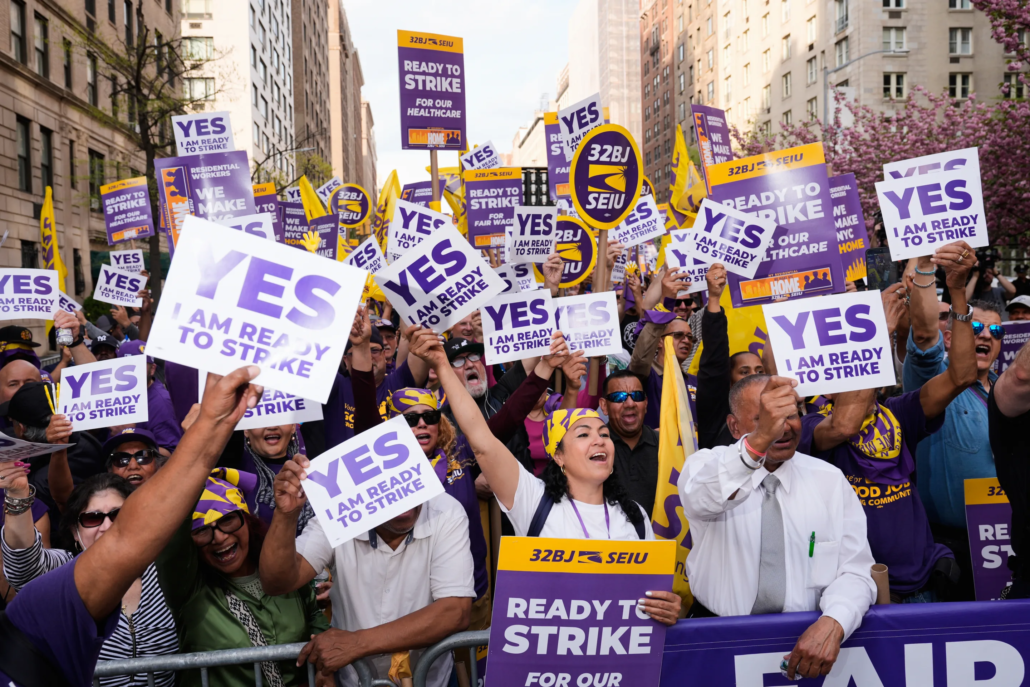
NYC Doormen Authorize Strike as Contract Fight Raises Pressure on Building Owners
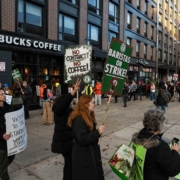
Thousands of New York City doormen, superintendents, porters, and other residential building workers have voted to authorize a strike, setting up what could become the city’s first walkout of these workers in 35 years if a contract agreement is not reached by midnight Monday.
The workers are represented by 32BJ SEIU, which says roughly 34,000 employees are covered under the expiring contract. If negotiations fail, the strike could disrupt daily life for an estimated 1.5 million renters, condo owners, and co-op residents across the city. In many buildings, residents would suddenly have to manage tasks normally handled by staff, from packages and trash to hallway upkeep and front-door coverage.
At the center of the dispute are familiar but increasingly explosive issues in New York: wages, pensions, and health care. The union says building owners want workers to start contributing to health insurance premiums and are also seeking to create a lower-paid classification for new hires. Union leaders argue that these proposals would erode standards for a workforce that already struggles to keep up with the cost of living in the New York metro area.
According to the union, doorpersons earn about $62,000 a year on average, though pay varies by role. Union President Manny Pastreich accused building owners of trying to reduce labor costs at the expense of workers who help keep residential buildings functioning every day. The union is also pushing for higher wages and stronger pension protections, though it has not yet publicly detailed a precise wage proposal.
Building owners, represented by the Realty Advisory Board on Labor Relations, argue that they too are under growing financial pressure. The group says rising costs are squeezing the industry, particularly as city politics shift and as Mayor Zohran Mamdani pushes for a rent freeze on the city’s roughly 1 million rent-stabilized apartments. The board maintains that controlling costs is necessary for the long-term sustainability of both the buildings and the workforce they employ.
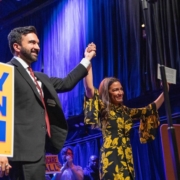
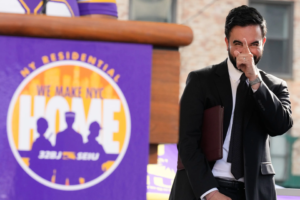 The potential strike has already drawn political attention. Mamdani and other elected Democrats joined the workers’ demonstration in Manhattan, signaling the broader symbolic weight of this labor battle. This is not just a contract dispute over one sector. It sits at the intersection of labor rights, housing costs, rent politics, and the question of who is expected to absorb financial pressure in an increasingly unaffordable city.
That is what makes this standoff especially significant. Doormen and building staff are often invisible until they are gone, yet they play an essential role in the daily functioning of city life, especially in large residential buildings. Their work goes far beyond opening doors. They manage deliveries, assist residents, help maintain safety and cleanliness, and in some cases handle physically demanding maintenance tasks that keep older buildings running.
The last strike by these workers took place in 1991 and lasted 12 days. Since then, the union has authorized strikes at times without ultimately walking out. Whether this latest showdown ends in a deal or an actual strike, it has already exposed deeper tensions in New York over labor, affordability, and the future of urban living.





Leave a Reply
Want to join the discussion?Feel free to contribute!