Charlie Kirk’s death and the hypocrisy of tolerance

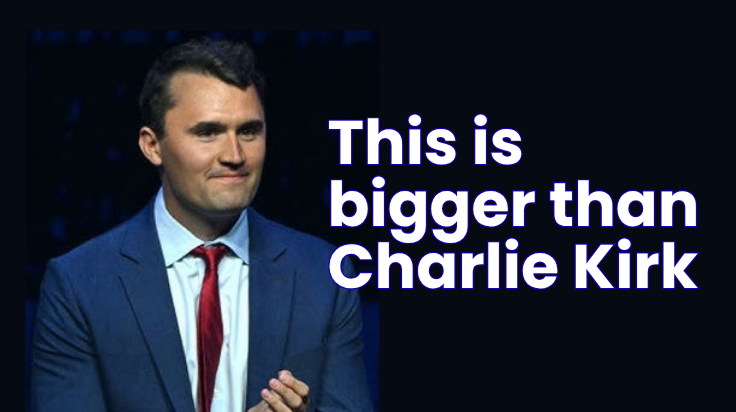
Charlie Kirk’s assassination is a tragedy period. A young man, barely 31 years old, gunned down while doing what he always did: speaking his truth in public. I did not agree with Charlie on everything. I often found his stance on guns too extreme, his nationalism too rigid, his immigration policies too harsh for someone like me, an immigrant who knows the long wait and the sacrifices to build a life here, and much more. But admiration does not require blind loyalty. I followed him because he was sharp, brilliant in debate, and unafraid to say what he believed, even when it made him unpopular. That courage deserves respect.

What devastates me more than the bullet that ended his life is the reaction I see from many who claim the banner of tolerance. Celebrating a man’s death because he was your political opponent is not justice. It is cruelty. It is hypocrisy. To mock his death because he opposed gun control is to treat a tragedy as a punchline. To cheer because you disliked his worldview is to reveal that your so-called tolerance was only a mask, one that falls the moment someone dares to think differently. And this celebration is not harmless noise on the internet; it reflects a deeper sickness in our society, a culture that has lost the ability to separate disagreement from dehumanization.

This is bigger than Charlie Kirk. This is about who we are becoming as a society. We are entering a dangerous age where disagreement equals dehumanization, where debate is replaced by cancellation, and where violence is justified if the target is the “enemy.” But what future can we build on that foundation? If every life is only as valuable as its ideology, then none of us are safe. The same logic that excuses violence against one opponent today can be used to excuse violence against another tomorrow. A society that normalizes selective empathy is a society that prepares its own downfall.

And let us not forget: Charlie Kirk was not only a commentator; he was a husband and the father of two young children. Behind the headlines and the controversies is a family whose life has been irreparably shattered. Two children will now grow up without their father, a wife will bury her partner, and yet some among us see only a political victory. If we cannot pause to recognize the human cost of this tragedy, then our moral compass is broken beyond repair.

I am African, I am Christian, I am an immigrant, and I hold views that put me on neither extreme of the political spectrum. I believe in compassion for the vulnerable and in responsibility for the able. I believe in protecting life while respecting pluralism. I believe in family, faith, democracy, fairness and individual freedom. And precisely because of those values, I cannot stand by silently when hatred masquerades as justice. Democracy itself cannot survive if we only grant empathy to those who agree with us. Freedom means nothing if we use it to cheer the silencing of others.

Charlie Kirk is gone, but the real test remains for the rest of us: will we use moments like this to deepen the spiral of division, or will we step back and remember the humanity of those we oppose? If we cannot mourn the death of someone we disagreed with, then we have lost something far greater than a political battle. We have lost our soul. And if a nation loses its soul, no amount of progress, no accumulation of wealth, and no victories in the culture wars will save it from collapse.

  We are not moving forward. We are marching backward into barbarism.
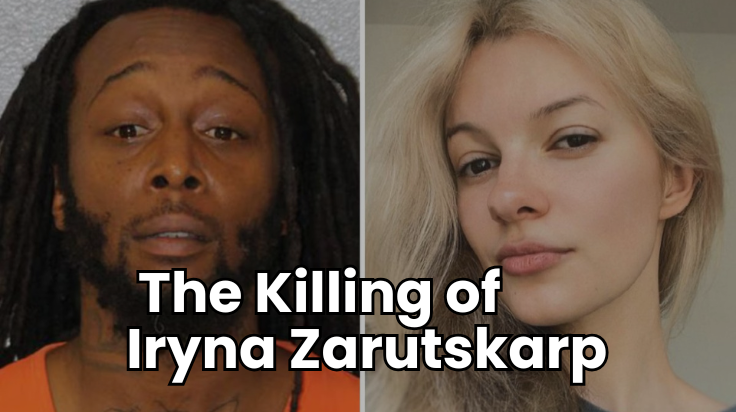
The Killing of Iryna Zarutska

Killing of Iryna Zarutska: violence, racism, and the silence around Us

A death that should haunt us all

I’ve seen too much online to think that a single video could still shake me. But the footage of Iryna Zarutska’s final moments did. She was just minding her business on a train, when her life was suddenly stolen. The way she looked up at her attacker in shock and fear, the way she clutched herself and cried into her hands while people sat around in silence. The scene broke something in me.

She didn’t die instantly. She bled, terrified, as if waiting for someone, anyone, to acknowledge her humanity. But no one did. Men and women sat feet away, eyes glued to their phones, unwilling to lift a finger. Some even stood up and walked past her without so much as a glance. That image of indifference in the face of dying haunts me as much as the attack itself.

And what makes it unbearable is knowing she had fled a war in her homeland, only to be killed in a place where she thought she might find safety. The cruelty of that irony is almost too much to bear.

The tired excuse of “mental illness”

We’ve all heard it before: the attacker was “mentally ill.” I reject that explanation outright. Evil is not a medical condition. When someone has been arrested fourteen times for violent behavior and is still walking the streets, that’s not about health. It’s about a broken justice system.

North Carolina had the chance to keep this man contained, but instead, he was free to take a life. And he’s not the only one. Just months ago, another repeat offender killed three people in New York without provocation. How many times must we read the same headline before we admit that this pattern of leniency is a policy failure? A society that values excuses over accountability is a society that chooses predators over victims.

When racism finds its opportunity

As if her death wasn’t painful enough, the aftermath was poisoned further by the reaction online. Scroll through the comments under censored versions of the video and you’ll find an avalanche of racism:

  • “Survived war but not black America.”

  • “They should introduce white and black sections on public transport again.”

  • “These people were the worst purchase in American history.”

There are hundreds like these. One man commits a crime, and suddenly an entire race is on trial. Racists wait for these moments, lurking in the shadows, ready to seize on tragedy as their green light to spew hatred. They don’t care about Iryna, they don’t care about justice. They wait for moments like this, tragedies that should unite people in grief and outrage, and instead they twist them into weapons to validate their hate, to stigmatize, and feed their ideology.

As a Black woman, I cannot describe the exhaustion of watching this cycle. Racists grab onto the worst behavior of a single Black man and inflate it into a narrative about all Black people.We are not a monolith. We are not represented by the worst among us. And yet, the moment one of “ours” commits a horrific act, it’s suddenly open season. The hate pours out eager to say “See, we told you so.”

Our own responsibility

Still, the death of Iryna Zarutska forces hard questions within the Black community, too.We can’t keep pretending that violent criminals don’t come from our own community, or that every act of brutality can be explained away by “systemic racism.” That excuse is tired, and it hasn’t saved us.

The reality is that too many Black neighborhoods are ruled by fear. People are scared of their own neighbors, the very people we love to excuse. Why do the most successful Black families do is leave the hood? They don’t want to raise their kids around gangs, dysfunction, and violence. And let’s be honest: the danger is real, and denying it only makes it worse.

If we want progress, we’ve got to break the cycle ourselves. Stop glorifying thugs. Stop raising kids where crime is the soundtrack of daily life. Stop living off government scraps and calling it survival. That’s not “cheating the system.” That’s doing exactly what the system designed you to do: stay stuck, stay dependent, stay powerless.

We can’t rewrite slavery, but we sure as hell don’t need to keep reenacting its consequences. At some point, we have to choose a different path. One where our children inherit discipline, opportunity, and pride instead of excuses, poverty, and fear.

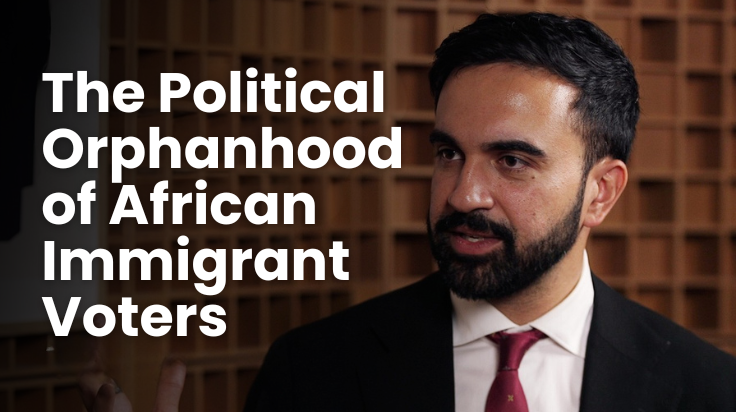
The Political orphanhood of african immigrant voters and Why this NYC race feels different

African immigrants in New York City live a paradox. We are visible in the workforce, in churches, in community associations — yet invisible when political campaigns draw their maps. We are nurses, Uber drivers, small business owners, home health aides, engineers, and teachers. We fill the city’s arteries with our labor. But politically, we remain unclaimed.

Split between two incomplete choices

We do not vote as a bloc. Some of us lean toward the Democratic Party because of its pro-immigration policies. Others quietly agree with Republican rhetoric on personal responsibility, entrepreneurship, and the dignity of hard work. But neither party has fully spoken to us. Democrats too often stop at representation and identity politics. Posing for photos in our cultural clothing, but rarely returning to discuss policy after the campaign is over. Republicans often speak to our values on work and family, but alienate us with rhetoric and policies that seem blind to our immigrant realities.

This is why, even in deep-blue New York, I have met African voters — many of them first-generation immigrants — who were drawn to Donald Trump. Not because they embraced every policy or every word, but because he spoke, loudly and unapologetically, about work, affordability, and the feeling that “everyday people” had been forgotten. In immigrant barber shops in the Bronx, over attiéké in Harlem restaurants, and in Sunday church gatherings, I have heard uncles and aunties say the same thing: “I don’t agree with everything, but he talks about real life.”

Our political orphanhood is compounded by the way our lives straddle two worlds. We send money back home while paying sky-high rent here. We juggle double shifts not only to survive, but to build enough credit to own a home. We dream of starting businesses but spend months navigating city bureaucracy. Many of us are registered to vote, yet don’t see ourselves in campaign messaging, so we quietly abstain.

A different kind of leftist candidate

That is why the candidacy of Assemblymember Zohran Mamdani feels different. He is from the left, yet his campaign is not built on baiting controversial identity battles and baseless fear mongering. Instead, he is talking about the kitchen-table issues that shape the lives of working-class families: fare-free buses so workers keep more of their paycheck; rent-stabilization that actually protects tenants; higher wages that match the real cost of living in New York; universal childcare so parents can work without fear of losing everything to daycare bills.

These are not abstract promises. They touch daily life. For the Ghanaian home health aide in the Bronx who spends $132 a month on a MetroCard. For the Senegalese father in Queens who pays half his salary in rent. For the young Burkinabè graduate in Harlem juggling two part-time jobs because entry-level wages can’t cover student loans.

In my 11 years in the United States, I have seen many politicians pass through our spaces: shaking hands, speaking a few words in our languages, posing for photos, only to vanish after Election Day. I have never felt truly comfortable aligning with one, until now. Not because of party loyalty, but because the conversation is about life, not labels.

This race is not about left versus right, progressive versus moderate. It is about whether New York City can elect a leader who understands that its future depends on those who still believe in its promise enough to keep building here. The African diaspora in NYC is large enough to matter, diverse enough to shape outcomes, and tired of being politically invisible. This election could be the moment we step forward.

Hiroshima, Nagasaki, and the moral duty to remember: 80 years later, the work of peace remains

On August 6, 1945, and again three days later on August 9th, the cities of Hiroshima and Nagasaki became silent witnesses to the darkest potential of human invention, and the world changed forever. Two bombs. Over 200,000 lives lost. And with them, the illusion that humanity could wield absolute power without consequence.

The threat of nuclear conflict is no longer a distant memory

Eighty years have passed since those harrowing days, and the scars are still visible. On landscapes, bodies, and collective memory. But remembrance alone is not enough.

In 2025, the threat of nuclear conflict is no longer a distant memory but a terrifying possibility. Global powers are modernizing their arsenals. Nuclear weapons echo in war rhetoric. Missiles are being tested. Wars in Gaza, Sudan, or Ukraine remind us how quickly violence escalates, how human life becomes collateral. Hiroshima is not ancient history. It is a mirror held up to today.

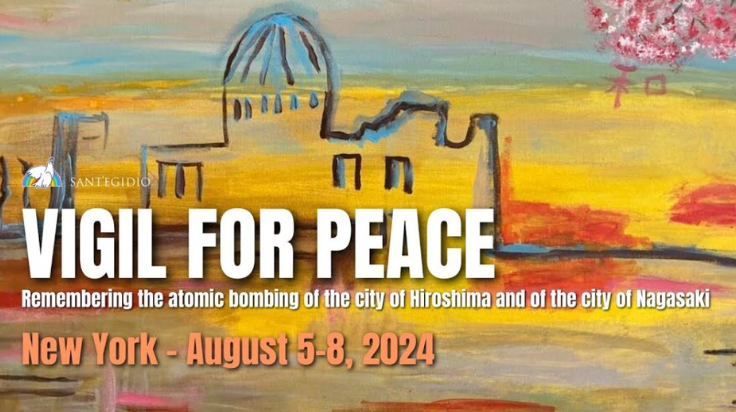
That’s why the Community of Sant’Egidio alongside the Archdiocese of Nagasaki is organizing a  Vigil for Peace from August 5 to 8, 2025. Two symbolic chapels: the Chapel of the Sacred Heart of Jesus and Mary in New York, and the Chapel of Our Lady of Nagasaki in Japan  will remain open day and night, as spiritual beacons of memory and hope.

It is not just a commemorative gesture; it is an act of resistance. For 75 continuous hours, people of different faiths and backgrounds will gather to pray, to reflect, and to recommit to peace. The vigil will stretch across time zones, linking the Basilica of Urakami ground zero of the second atomic bombing to cathedrals and community spaces across the globe.

The work of peace is not naïve. It is disciplined.

The Community of Sant’Egidio is not new to the work of peace. From brokering the 1992 peace accords in Mozambique, to interreligious dialogues in Sudan, Ukraine, and the Democratic Republic of Congo, their legacy proves that peace is not a naïve dream but a courageous discipline. Their presence at the site of unspeakable suffering is a reminder: the work of healing does not belong only to history, it belongs to us.

What began with a prophecy of annihilation must now evolve into a promise of solidarity. Hiroshima and Nagasaki are not just cautionary tales. They are the result of power unchecked, of grief unspoken, of silence turned into complicity. But they are also stories of survival, resilience, and the sacred urgency of saying “never again.”

Let us not forget that the statue of Our Lady of Nagasaki, charred and cracked from the blast, now stands as a symbol of hope and intercession. From her scorched hands to ours, the torch of peace must be carried forward.

On this anniversary, remembrance is not passive. It is a moral stance. A commitment to choose peace where others choose force. To defend life where others gamble with death. To speak truth where silence is more convenient.

80 years later, Hiroshima still asks the same question:
Will we remember enough to ensure it never happens again?

When a man cheats, he’s a Villain. When a woman cheats, she vanishes.

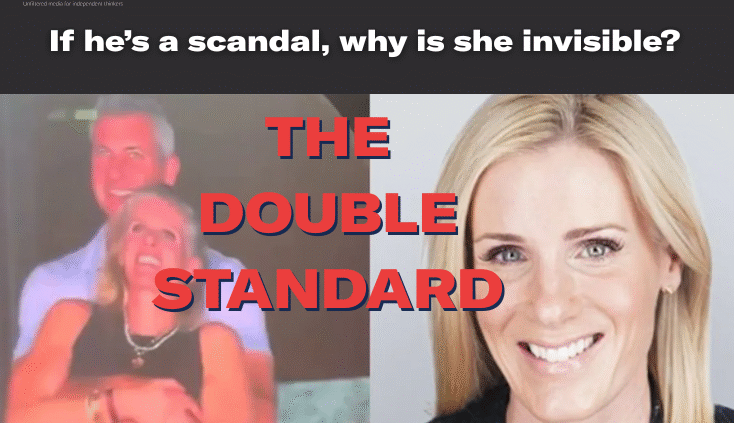
There’s something almost cinematic about it: a CEO and a CPO caught on Kiss cam at a Coldplay concert. The crowd cheers. The camera lingers. And just like that, what looked like a rom-com scene explodes into a corporate scandal.

But let’s be honest: this story isn’t just about two high-level executives breaking their company’s code of conduct. It’s about how we, as a culture, decide who gets held accountable and who gets quietly edited out of the frame.

The names we remember. And the ones we erase.

The CEO of Astronomer, Andy Byron, has become internet cannon fodder. Think pieces, tweets, memes. His name is everywhere, cast as the powerful married man and father who crossed a line. And yes, that’s true. But what about Kristin Cabot, the Chief People Officer caught being cozy with him? Where is her headline?

Early reports carefully mentioned omitted her name. Even more telling: few acknowledged that she, too, is married to Andrew Cabot, CEO of Privateer Rum and has children as well. That fact only surfaced through secondary reporting and was quickly brushed aside. Many days after the scandal broke, even as both executives were placed on leave and Byron ultimately resigned, major outlets still tread carefully around Cabot. One the latest NBC article  stated they had not confirmed her identity — while the public had already flooded her LinkedIn profile days earlier.

The feminist loophole: accountability-free womanhood

We’re constantly told that feminism is about equality. Equal pay. Equal power. Equal opportunity. Great. But what about equal accountability?

Kristin Cabot isn’t a junior employee. She’s the head of people, the executive who literally oversees workplace ethics, behavior, and internal policy. She is, in many ways, the moral gatekeeper of the company. And yet, when she breaks those same standards, the media treats her like a side character in her own scandal.

It’s a dynamic I’ve seen too many times  in politics, in media, in our everyday social discourse: when a man messes up, we drag him. When a woman does, we explain her, protect her, or we forget her entirely.

This is why people are losing faith in the equality conversation

We cannot keep pretending this doesn’t have consequences.

There is a growing number of men, especially young men  who feel alienated by what they perceive as a one-sided moral code. And while I don’t subscribe to the rage of Red Pill culture, I understand its fuel: they’re watching how public narratives are shaped, and they’re not wrong to notice the double standards.

If a man cheats, he’s a monster. If a woman cheats, we’re told it’s complicated.

If a man in power violates ethics, it’s a headline.

If a woman in power does the same, it’s a PR footnote.

That’s not empowerment. That’s inconsistency.

If we want integrity, we need symmetry.

This isn’t about punishing women to make things “fair.” It’s about telling the truth with balance. If we’re serious about building an ethical workplace culture or a culture of trust at all, then women must be as answerable as men. Especially when they hold power.

Kristin Cabot doesn’t need to be destroyed.

She doesn’t need to be vilified.

She just needs to be acknowledged.

Because erasing her role in this scandal isn’t feminist: it’s dishonest. And that dishonesty? It’s why people tune out when we talk about equality. It’s why some are starting to believe it was never about equality in the first place.

If you’re going to hold the CEO accountable,you hold the CPO accountable too. Not because she’s a woman. But because she’s responsible.

At Terminal 5, Mamdani and Ocasio-Cortez frame NYC Primary as a generational turning point

June 14 — New York

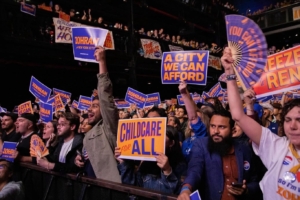
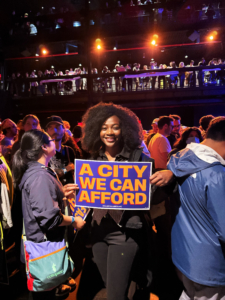
The line stretched down the block long before the doors opened. By early evening, Terminal 5 was packed wall to wall, balconies filled, supporters pressed shoulder to shoulder, and a live band playing from above as chants echoed through the venue. Even outside, the energy was electric.

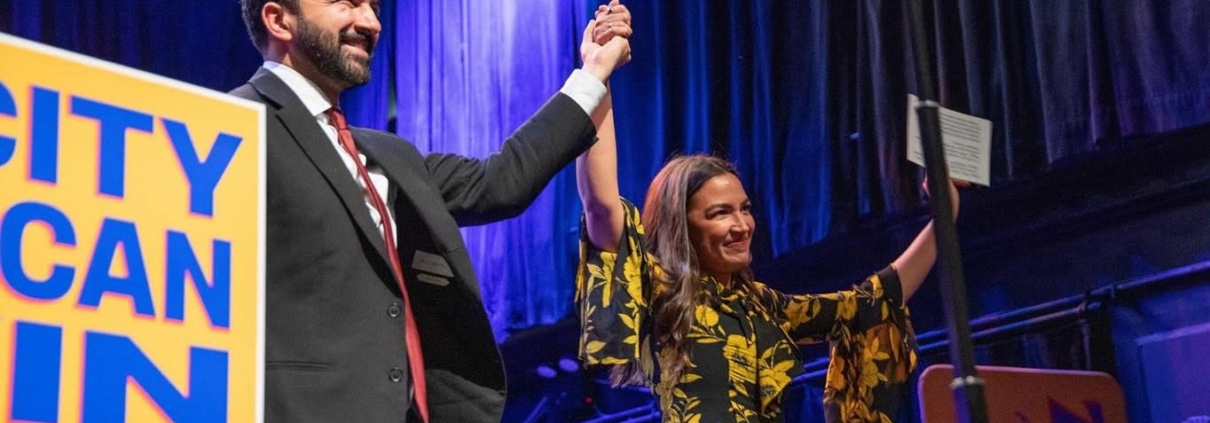
On the first day of early voting in the June 24 Democratic primary, Assemblymember Zohran Mamdani rallied alongside Rep. Alexandria Ocasio-Cortez in what felt less like a routine campaign stop and more like a moment charged with national implications.

More than 2,500 people filled the West Side concert hall. Community leaders, labor organizers, elected officials and grassroots volunteers were present. The crowd skewed young but was diverse in age, race and borough representation. Many described themselves as working-class New Yorkers struggling with rent, childcare, transit costs and healthcare.

Ocasio-Cortez framed the mayoral race as a broader referendum on the direction of the Democratic Party. Without mincing words, she argued that the choice before voters represents a generational shift. She criticized what she called entrenched leadership and urged supporters not to rank former Gov. Andrew Cuomo on their ballots, positioning the contest as an opportunity to “turn the page” politically.

When Mamdani took the stage, the reception was thunderous. His speech was disciplined but emotionally resonant, centered on affordability, housing, labor rights and what he repeatedly called “the everyday New Yorker.” He leaned into his identity as a Muslim immigrant and democratic socialist, presenting it not as a liability but as evidence of a changing city.

“We are building a movement that money cannot buy,” he said, referencing the influx of outside spending and recent endorsements for Cuomo from major business figures, including former Mayor Michael Bloomberg.

Mamdani urged attendees to volunteer and counter negative messaging in the final stretch before primary day. Speakers throughout the night echoed similar themes, including leaders from the Working Families Party and labor unions, who emphasized coalition politics and working-class solidarity.

What stood out in the room was not just applause lines, but conviction. The atmosphere felt organized, not chaotic. Strategic, not symbolic. There was choreography to the messaging and discipline in the turnout.

Whether that energy translates into votes remains to be seen. But on June 14, inside Terminal 5, it was clear that this mayoral primary has become more than a local contest. For many in that room, it felt like a statement about the future of power in New York — and perhaps within the Democratic Party itself.

The soulless ChatGPT posts: have we gone too far?

“As technology advances, it reverses the characteristics of every situation again and again. The age of automation is going to be the age of ‘do it yourself.’” Marshall McLuhan

I’ve been thinking about this quote I studied back in undergrad. And the more I think of ChatGPT, the more it resonates.

It’s amazing how powerful AI has become. It saves time, enhances creativity, and every day I’m learning new things it can do: interior design, generating content and images, coding, building business strategies, designing logos, writing scripts, creating outlines, drafting contracts… and the list keeps growing.

But if anyone can produce work instantly, if anyone can write posts and sound like an expert on any topic, then what becomes of the value of human work? Of human thought? What becomes of the importance of a job, or the depth that comes with lived experience?

Has generative AI created conformity and slowly killed human value?

Well you see, McLuhan’s quote reflects his broader idea: technological change isn’t linear, it’s dialectical. He believed that every medium or technology, when pushed far enough, eventually reverses its effects. This is part of his concept called “the tetrad of media effects,” where every technology:

• Enhances something,
• Obsoletes something,
• Retrieves something from the past,
• And reverses into its opposite when overextended.

So yes AI is a gift. But it won’t and shouldn’t prevent us from using our brains. For those who are already thoughtful, it does the things that consume time so we can focus on what really matters, what we’re best at.

What I call a soulless ChatGPT post is easy to spot:

  • It’s grammatically correct.
  • It flows well.
  • It has good ideas.
  • Polished but robotic.
  • No soul. No real voice. Just… bland.
  • All the titles sound the same. The sentence structure is the same.
  • Sounds like a Wikipedia article with plenty of stock emojis: ✨💼📈🔥🙌📊✅

Don’t get me wrong ChatGPT is a powerful tool. But you have to be smart with it. Joanna Maciejewska said:

“I want AI to do my laundry and dishes so that I can do art and writing, not for AI to do my art and writing so that I can do my laundry and dishes.”

Sounds a bit extreme and unrealistic,  but maybe she has a point. We can think about it differently: all of the things that take more time but aren’t central to the originality of your thought or the uniqueness of your perspective or creativity, have ChatGPT do it. Consider those things “the dishes”and now focus on adding the great stuff that makes you a unique voice.

For the love of God, stop giving one vague sentence to ChatGPT and letting it write your whole post.

We can tell can tell it’s a Chat GPT post. It doesn’t bring any value because not only we see the same posts everywhere but we can literally do the same thing you did. Head over to Chat GPT and tell him to “Write a post about X,Y,Z”

Use better prompts. ChatGPT isn’t magic.
Stop being lazy with your prompts. Stop typing lazy stuff like “Write a post about leadership.” One vague sentence will get you a vague post. You want something good? Give context, tone, structure, even examples. Feed it as you would a collaborator, not a vending machine.

Use AI to expand and facilitate your work.
Use it for research, for outlines, to organize your ideas. Use it for things you already care about deeply, have knowledge and perspective on. That way, ChatGPT becomes an addition to the burning fire inside you. That’s how you go from “meh” to “this actually sounds like me.”

Don’t fake what you don’t know.
If you’re clueless about a topic, don’t use AI to bluff your way through. If you want to speak on a subject you’re not familiar with, do your research. Learn the complexities and nuances of the topic. Gain some experience, read the experts, and reflect on it. It’s fine that ChatGPT helped you write it, but it will make a huge difference when the post has a fresh and singular outlook.
Because nothing screams “I copied this” louder than a confident-sounding post that says… nothing new.

And finally: if it doesn’t sound like you, it’s not good.
Copying and pasting the first draft ChatGPT gives you is like serving a frozen meal at a dinner party. The first draft is rarely the best. If the tone, the examples, the vocabulary don’t reflect how you think or express yourself, that’s your sign it’s not ready. Read it out loud. If it feels stiff, generic, or like anyone could’ve written it, rewrite it. Ask it to rephrase. Change the angle. Push back. Good writing is rewriting, even with AI.

Technology is amazing because it allows us to focus on what really matters. But don’t forget: the soul of your work should still come from you.

And by the way, ChatGPT lies a lot. Make sure to always fact-check and don’t embarrass yourself. 😉 If you’re citing studies, quotes, or numbers, verify them. ChatGPT is smart, but it hallucinates confidently.

You don’t need to know the whole plan to begin

So many people stay stuck waiting for clarity. Waiting for a sign, a map, a guarantee. But purpose rarely arrives fully formed. It unfolds in motion — not in stillness.

You don’t need to see the full staircase to take the first step. You need to trust your inner pull. Begin with what you know, with what you feel, with what’s burning quietly inside you. The rest will reveal itself in the doing.

Every guest on Parcours Atypique started somewhere unsure. They launched projects, made decisions, left comfort zones — not because they were certain, but because they were called.

The secret is not knowing. The secret is starting anyway.

🎧 If you need permission to take that next step, listen to someone who already did. You’ll find them on Parcours Atypique.

What makes a voice worth listening To?

In a world where everyone can talk, post, and share instantly, we’re flooded with noise. But not every voice carries weight. Some voices don’t just speak, they resonate. They shift something in us. They stay.

What makes the difference? It’s not always credentials or visibility. Often, it’s courage. Integrity. A hard-earned perspective. A voice worth listening to comes from someone who has lived, questioned, fallen, and risen. Someone who doesn’t perform but reveals.

At Parcours Atypique, we seek out those voices. The ones shaped by fire, silence, and depth. The ones that don’t scream to be heard, but whisper what matters.

🎧 Discover these rare voices in every episode of Parcours Atypique. They don’t seek attention, they offer reflection.


How to ask better questions — lessons from behind the mic

Hosting a podcast has changed how I speak  and more importantly, how I listen. I’ve learned that a good question isn’t about showing what you know. It’s about opening a space where the other person can reveal what they know or who they are.

So much of today’s conversation is performance. But when someone feels safe, seen, and respected, they go deeper. The real story comes out. And the magic happens in the follow-up: the pause, the curiosity, the willingness to explore the uncomfortable.

Whether you’re a podcast host, a leader, a friend, or simply someone trying to connect, better questions can change your relationships. Ask with intention. Listen without agenda. Follow the thread.

The people I interview on Parcours Atypique often tell me, “I’ve never said this out loud before.” That’s the power of holding space and of learning to ask questions that matter.

🎧 Want to hear what happens when people feel free to speak their truth? Tune into the latest episodes of Parcours Atypique.