
Tag Archive for: Podcast

Alpheva AI and the Transformation of Financial Management: Rethinking Access, Decision-Making, and the Role of Intelligence

The promise of modern financial technology has long been framed around access. More tools, more data, more visibility. Yet, despite this proliferation, financial anxiety remains pervasive, and poor decision-making continues to undermine long-term stability for millions of individuals. This contradiction reveals a fundamental misunderstanding of the problem. Financial difficulty is not primarily a failure of access to information. It is a failure of structured guidance.

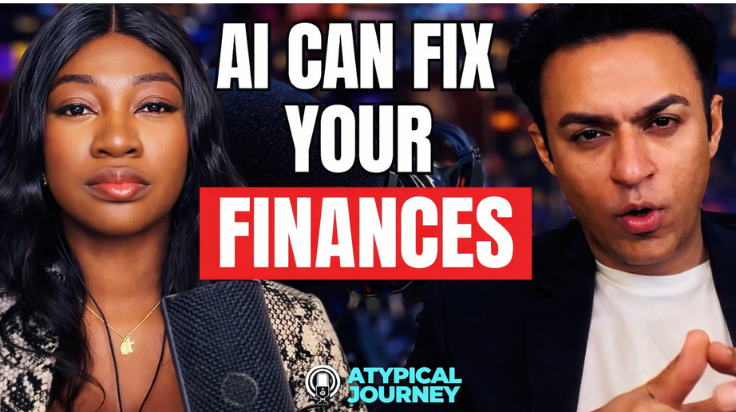
In a recent conversation on Atypical Journey, Lord Munjal, founder and CEO of Alpheva AI, articulates a distinction that is often overlooked. The gap between those who consistently make sound financial decisions and those who struggle is not simply a matter of discipline or effort. It is rooted in the presence or absence of a coherent decision-making framework. Individuals operating within well-advised environments, whether through professional advisors or institutional exposure, are not navigating financial complexity alone. Their decisions are informed, contextualized, and aligned with longer-term strategies.

By contrast, the majority of individuals manage their financial lives through fragmented systems. Budgeting tools, banking applications, credit monitoring platforms, and investment dashboards operate in isolation from one another. Each provides partial visibility, but none offers a unified interpretation of the overall financial situation. The result is a reactive mode of decision-making, where individuals respond to immediate pressures rather than act within a structured plan. Over time, this fragmentation produces not only inefficiency but also uncertainty, reinforcing a persistent sense of financial instability.

It is within this context that Alpheva AI positions itself as a departure from conventional financial applications. Rather than functioning as a passive tool for tracking or reporting, the platform seeks to operate as an active layer of intelligence. By integrating data across multiple financial dimensions and aligning it with individual goals, Alpheva aims to produce continuous, personalized guidance. The objective is not simply to inform users of their current position, but to assist them in determining what actions should follow.

This shift from visibility to interpretation is significant. Financial management, when reduced to dashboards and metrics, remains descriptive rather than prescriptive. It tells individuals what is happening without necessarily clarifying what should be done. Effective financial decision-making, however, requires the ability to evaluate trade-offs, anticipate outcomes, and adjust strategies over time. Historically, this level of insight has been accessible primarily through human advisors, often at a cost that limits widespread access. The introduction of AI into this space attempts to replicate aspects of that advisory function at scale.

However, the integration of artificial intelligence into financial decision-making raises complex questions that extend beyond efficiency. The issue of trust becomes central. Financial decisions carry long-term consequences, and reliance on algorithmic guidance introduces uncertainty regarding accountability. If a recommendation leads to suboptimal outcomes, the distribution of responsibility between user, platform, and system design is not immediately clear. Moreover, the assumption that AI can operate as a neutral and objective advisor must be examined critically. All models are shaped by underlying data, assumptions, and design choices, which inevitably influence the recommendations they produce.

There is also a broader structural consideration. While platforms such as Alpheva aim to democratize access to financial intelligence, their effectiveness depends on how they are adopted and utilized. Technology has the capacity to reduce disparities, but it can also reinforce them if only certain segments of the population fully leverage its capabilities. The question is not simply whether AI can improve financial outcomes, but whether it can do so in a way that meaningfully alters existing patterns of inequality.

Lord Munjal’s own trajectory, spanning leadership roles in major financial institutions and multiple entrepreneurial ventures, reflects an understanding of both the strengths and limitations of traditional financial systems. His experience highlights a recurring tension between structured environments, where decision-making is guided by established frameworks, and entrepreneurial contexts, where uncertainty requires a different form of judgment. This dual perspective informs the design philosophy behind Alpheva, which seeks to bring a level of strategic coherence to individuals who would otherwise operate without it.

Ultimately, the emergence of AI-driven financial management signals a broader transformation in how individuals engage with money. The shift is not merely technological, but conceptual. It challenges the assumption that financial competence is solely an individual responsibility and introduces the possibility that structured, intelligent systems can augment human decision-making in meaningful ways. Whether this potential is fully realized will depend not only on the sophistication of the technology, but also on the extent to which it is trusted, understood, and integrated into everyday financial behavior.

This article captures only a portion of a broader and more nuanced conversation. In the full episode of Atypical Journey, we explore the deeper roots of financial anxiety, the limits of traditional financial literacy, the realities of building and scaling ventures, and the growing role of AI in shaping financial decision-making. Watch the full episode below to explore the conversation in its entirety.


 

Leadership lessons from Emmanuel Debuyck on talent, ambition, trust, and long-term vision

In a world where career paths are often judged by titles, degrees, and linear progression, Emmanuel Debuyck offers a different way of thinking about talent. In this episode of Atypical Journey, the CEO of Adwanted Group shares a leadership philosophy built on energy, trust, instinct, and the courage to bet on people before the rest of the world sees their full potential.

The conversation goes beyond recruitment or corporate success. It opens a deeper reflection on what makes someone valuable inside an organization, how leaders should identify potential, and why ambition should not be feared when it is rooted in discipline, curiosity, and the desire to grow.

What Resumes Do Not Reveal

One of the strongest ideas Emmanuel Debuyck shares is simple but powerful: a degree is almost secondary to energy. In a corporate world that often relies heavily on credentials, polished resumes, and predictable profiles, this statement challenges one of the most persistent assumptions about professional success.

For him, talent is not only measured by what appears on paper. A resume can list schools, titles, and past responsibilities, but it rarely captures hunger, adaptability, courage, instinct, or the ability to move a project forward when there is no perfect roadmap. Those qualities often matter just as much as technical expertise, especially in fast-moving companies where people must learn quickly, take ownership, and grow with the business.

This does not mean that skills or education are irrelevant. It means that the right mindset can transform a profile that may not look perfect on paper into a powerful asset. Emmanuel gives examples of people with unconventional backgrounds who were trusted with major leadership roles, including CEO and COO positions, because they had the energy, attitude, and judgment required to rise to the challenge.

Promoting from Within: A Real Leadership Philosophy

A major theme of the conversation is Emmanuel’s belief in growing talent internally. Rather than seeing people only through the limits of their current job descriptions, he looks for signs of potential: initiative, curiosity, reliability, emotional intelligence, and the capacity to take on more responsibility over time.

One example he shares is the appointment of a team member to the position of CEO USA. On paper, her background was primarily in sales management, and the move may not have seemed obvious to everyone. But Emmanuel saw the human and cultural fit. More importantly, he did not simply promote her and leave her to figure it out alone. He created the conditions for her success by providing tailored support, including external mentorship.

That distinction is essential. A real leader does not only demand performance. A real leader builds the environment where performance becomes possible. Promotion is not just a title change. It requires guidance, trust, structure, and the willingness to invest in someone’s growth before they have fully proven themselves in the new role.

This is one of the most valuable insights from the episode: leadership is not only about identifying talent. It is also about taking responsibility for developing it.

Ambition as a Strength, Not a Problem

The conversation also challenges the way ambition is often perceived in professional spaces. Many people, especially those with unconventional backgrounds, learn to tone themselves down. They are told to be patient, to stay in their lane, to wait for permission, or to avoid appearing “too eager.” But Emmanuel’s perspective suggests that healthy ambition should not be suppressed. It should be recognized, guided, and put to work.

Ambition becomes dangerous only when it is disconnected from humility, learning, and accountability. But when ambition is paired with discipline and curiosity, it becomes one of the strongest indicators of future growth. People who want to learn, contribute, and move beyond the narrow limits of their job description can become major assets if they are placed in the right environment.

This is where leadership makes a decisive difference. Some managers feel threatened by ambition. Others know how to channel it. Emmanuel’s approach shows that when leaders are secure enough to welcome initiative, they create organizations where people do not simply execute tasks. They expand, innovate, and become more valuable with time.

Entrepreneurship and the Discipline of Long-Term Vision

Beyond leadership and recruitment, Emmanuel Debuyck also offers a clear and grounded vision of entrepreneurship. He pushes back against the idea that a project must succeed quickly in order to be legitimate. In an age of instant visibility and short-term validation, this is an important reminder.

Many people abandon their ideas too early, not necessarily because the ideas were bad, but because they listened to the wrong voices. Emmanuel explains that people are often right in the short term. They may correctly point out the obstacles, the risks, the uncertainty, or the lack of immediate results. But what they often fail to understand is the power of long-term persistence.

Entrepreneurship requires the ability to think beyond the first difficulty. It requires calculated risk, patience, and the capacity to imagine where a project could be in two, three, or five years. The early stages of a business rarely provide full proof. Often, what carries the entrepreneur forward is a mix of instinct, strategy, and the discipline to keep building when results are still incomplete.

That is one of the most important lessons of the episode: do not allow people to project their own limitations onto your vision. Advice can be useful, but not all advice is wisdom. Sometimes, what sounds like realism is simply fear wearing the mask of experience.

Trust, Instinct, and the Courage to Bet on People

What emerges from this conversation is a portrait of leadership based on trust. Not blind trust, but thoughtful trust. Emmanuel’s approach shows that leadership is not only about controlling outcomes. It is also about creating space for people to surprise themselves.

Betting on someone is always a risk. Promoting an unconventional profile is a risk. Supporting a project before it is fully validated is a risk. But organizations that never take these risks often become stagnant. They protect themselves from failure, but they also protect themselves from innovation.

The best leaders understand that people do not always arrive fully formed. Sometimes, they become exceptional because someone gave them a chance, challenged them, supported them, and expected more from them than they expected from themselves. That kind of leadership does not simply manage talent. It multiplies it.

What This Conversation Teaches

This episode is valuable for managers, entrepreneurs, young professionals, and anyone trying to build an ambitious career. It reminds us that talent is not always obvious at first glance. It may be hidden behind an unconventional resume, a nonlinear path, or a profile that does not fit the traditional mold.

It also reminds leaders that their role is not only to evaluate people, but to elevate them. A strong organization is not built by hiring perfect people. It is built by recognizing potential, giving responsibility, providing support, and creating a culture where ambition is not punished but refined.

Above all, the conversation with Emmanuel Debuyck offers a powerful lesson for anyone who wants to grow: your value is not limited to what your resume says today. It is also found in your energy, your willingness to learn, your courage to take responsibility, and your ability to keep going long enough for your vision to become visible to others.

The episode is available on YouTube.