St. Joseph of the Holy Family in Harlem Celebrates 10 Years of Its Francophone Catholic Community

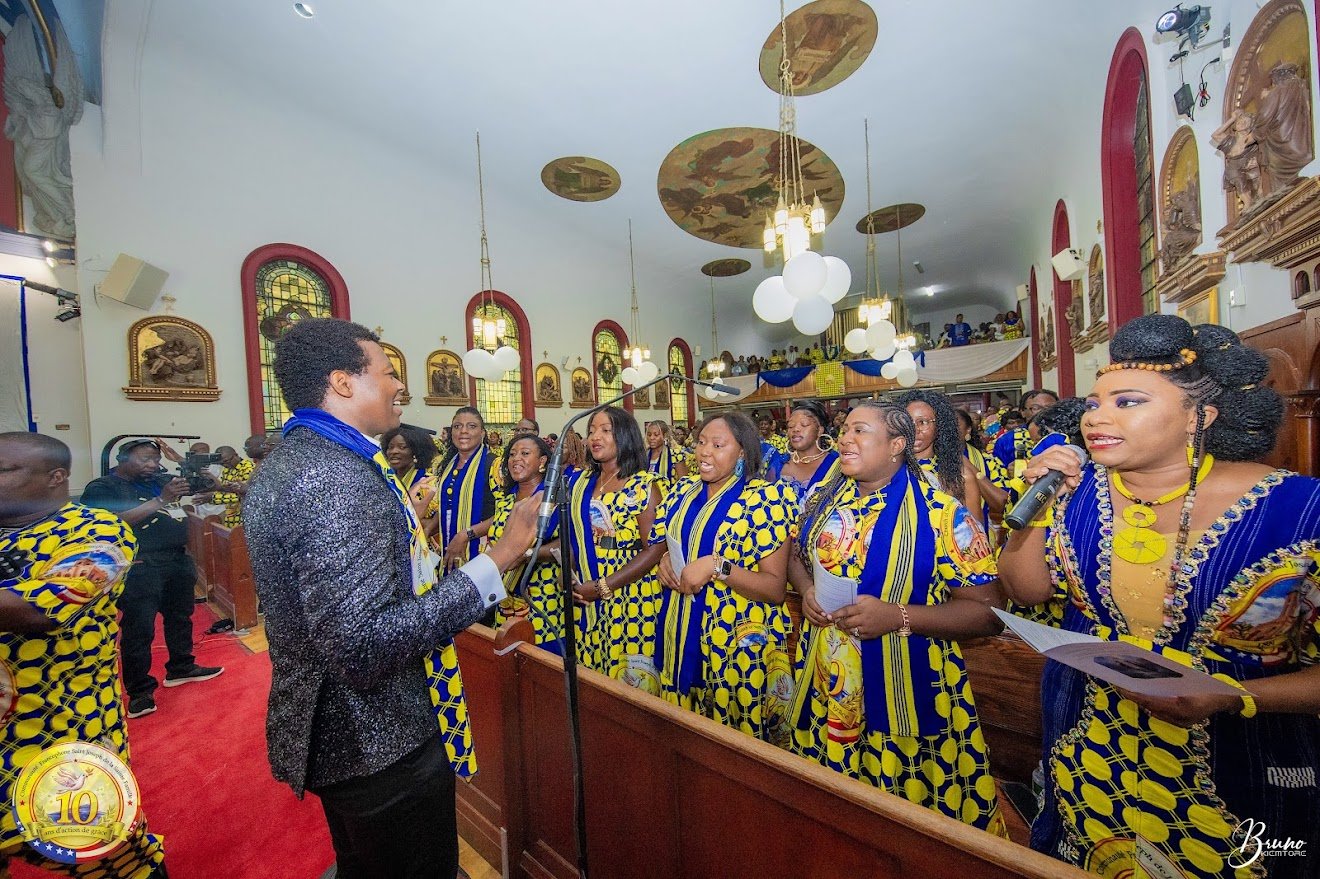
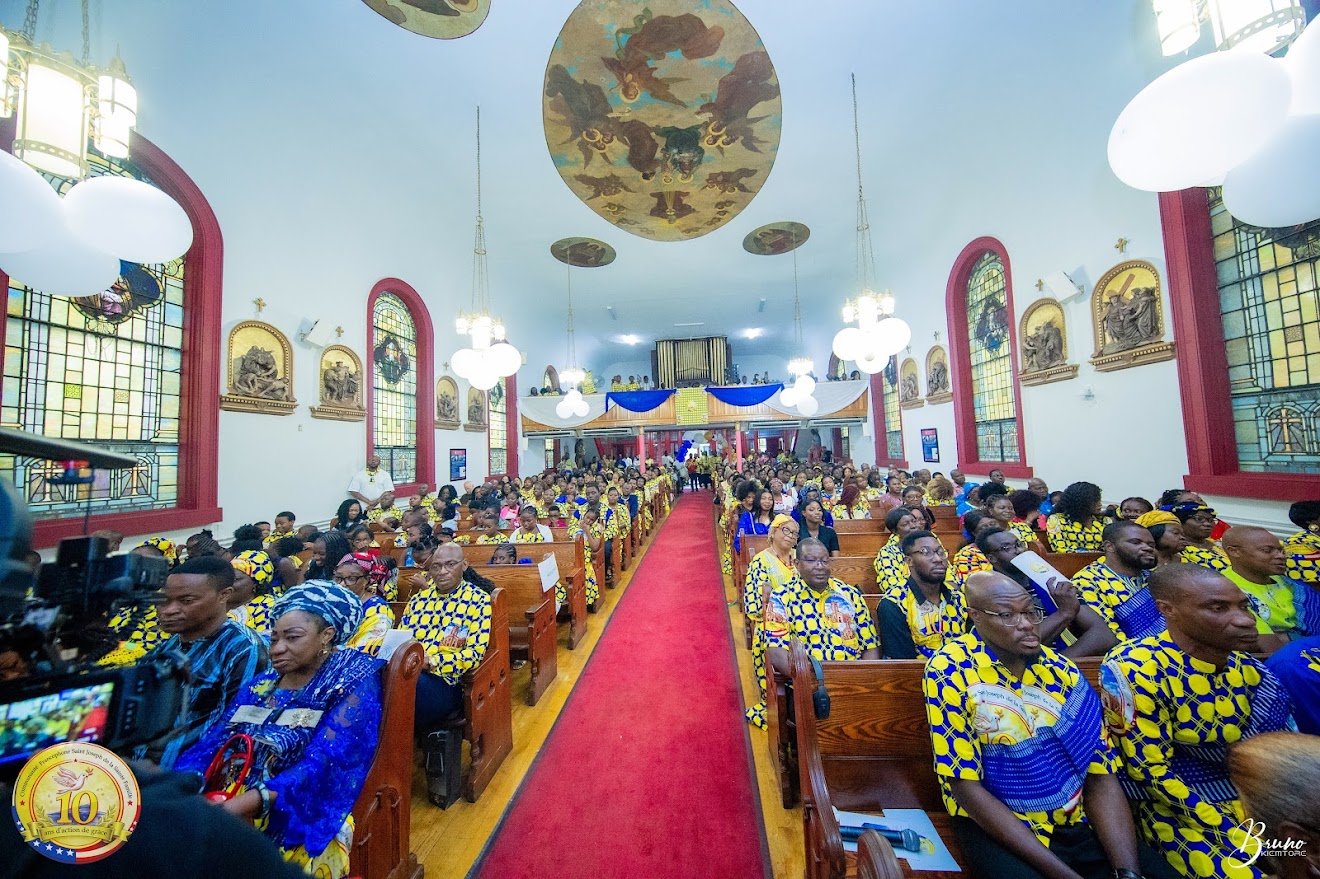
In the heart of Harlem, the Francophone community of St. Joseph of the Holy Family Parish marked ten years of faith, fellowship and cultural connection with a celebration that brought together Catholics from across New York and beyond.

The community has grown over the past decade around the ministry of Father Joseph Kinda, a priest from Burkina Faso who has helped make St. Joseph of the Holy Family a spiritual home for French-speaking Catholics in New York.

Rev. Joseph Kinda, Pastor of St. Joseph of the Holy Family

Today, the parish’s Sunday French Mass draws worshippers from several African countries and different parts of the city, offering them not only a place to practice their faith in French, but also a space where language, culture and a shared sense of community can be preserved far from home.

The anniversary Mass was presided over by the Most Reverend Edmund Whalen, Auxiliary Bishop of New York, a familiar presence to the congregation.

The Most Reverend Edmund Whalen, Auxiliary Bishop of New York

Members of the community affectionately refer to him as “St. Joseph’s bishop,” a reflection of a relationship built through his repeated visits and participation in important moments of the community’s life. He was joined by Father Kinda and several other priests and members of the clergy, including guests who traveled from other U.S. cities and from Burkina Faso for the occasion.


From the opening procession, the celebration reflected the identity the community has developed over the past ten years. Parishioners wore coordinated anniversary attire, while the liturgy combined the solemnity of Catholic tradition with the rhythms and expressions of African worship. Classical works and familiar Catholic hymns, including Handel’s Hallelujah and the Salve Regina, were heard alongside songs in African languages, accompanied at times by movement, dancing and traditional rhythms.

The procession of the gifts was another expression of that cultural blend. During the offertory, members of the congregation approached the altar carrying baskets, fruits and other offerings, while flags representing the various countries within the Francophone community were brought forward. The scene reflected the diversity of a congregation whose members may come from different nations but have built a common spiritual home in Harlem.

That diversity is particularly striking at St. Joseph of the Holy Family, one of Harlem’s historic Catholic parishes. Founded in 1860, the church now serves a multicultural congregation and celebrates Sunday Masses in English, Spanish and French. The Francophone community has become part of that long history, bringing with it traditions rooted largely in African Catholicism while remaining firmly connected to the wider life of the Archdiocese of New York.

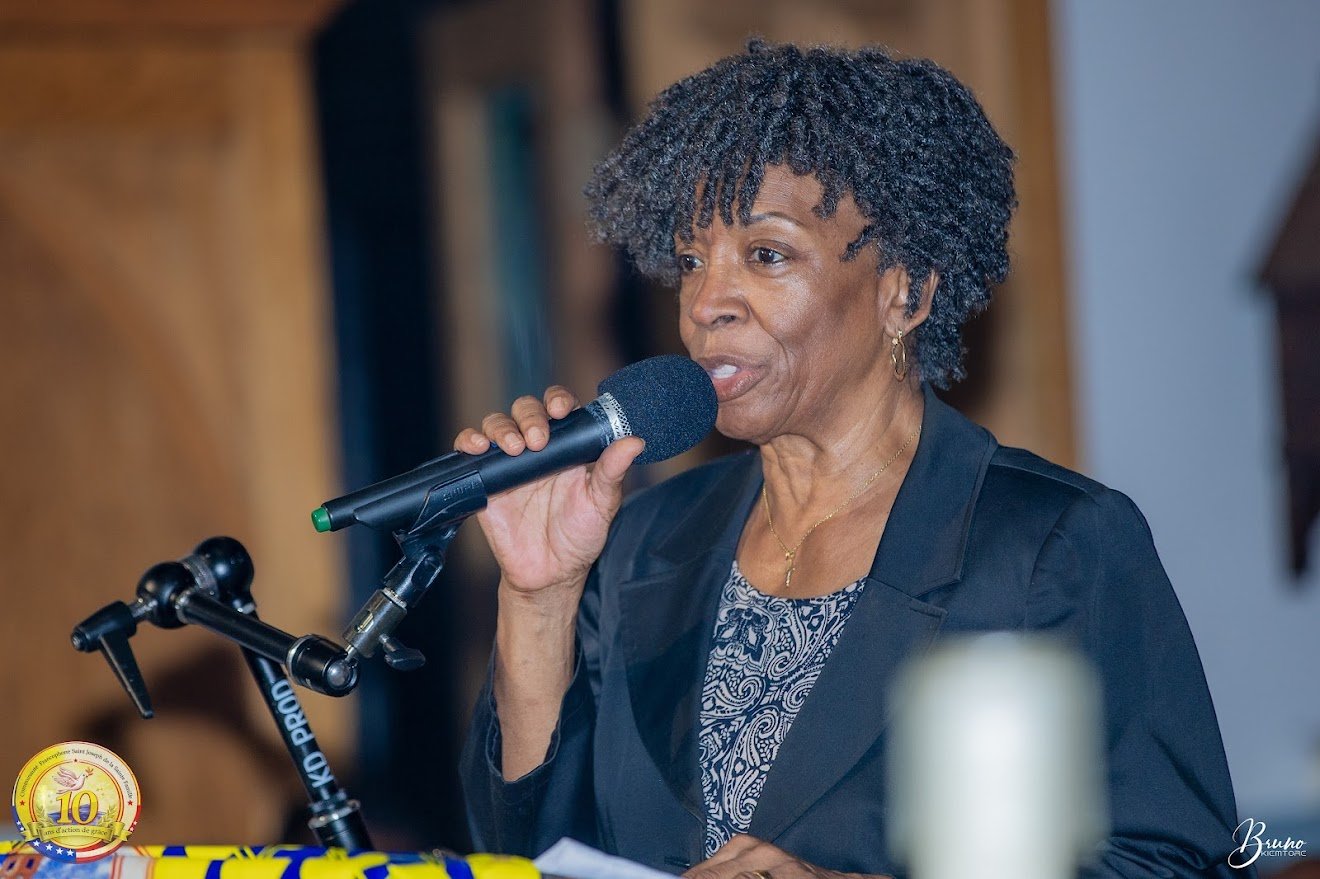
At the conclusion of Mass, representatives of both the Francophone and English-speaking communities addressed the congregation, praising Father Kinda’s leadership and his role in strengthening the parish and helping the Francophone community grow over the past decade.

The celebration continued beyond the walls of the church. Following Mass, worshippers took to the streets of Harlem for a Marian procession, praying and singing as they moved through the neighborhood in a public expression of their devotion to the Virgin Mary. The tradition is already a familiar one at St. Joseph, where Francophone parishioners have previously organized processions around the Feast of the Assumption.


After the procession, the religious celebration gave way to an evening of food, music and fellowship. The parish hall and adjoining outdoor spaces filled with members of the community and invited guests who gathered for dinner and festivities. What had begun at the altar continued around shared tables, with the anniversary becoming as much a celebration of the relationships formed over ten years as of the milestone itself.

For an immigrant community, a parish can occupy a place that extends well beyond Sunday worship. It can become a point of continuity between countries, generations and cultures. At St. Joseph of the Holy Family, French-speaking Catholics from across Africa have created such a space in one of New York’s most historically significant neighborhoods.

Ten years after the Francophone community began taking shape, its anniversary offered a vivid picture of what Catholicism in New York can look and sound like: Handel and African rhythms, Salve Regina and songs in local languages, the American streets of Harlem filled with a Marian procession, and flags from across Africa carried into a Catholic church that has stood on West 125th Street for more than a century and a half.

It was, above all, a celebration of faith lived across cultures — and of the ways immigrant communities continue to add new chapters to New York’s religious and cultural history.


Photos by Bruno Tiemtore

Love Island USA

Love Island’s Slur Purges Aren’t Fighting Racism. They’re Feeding a Performance of Outrage.

At this point, getting removed from Love Island USA for something you said years before entering the villa has practically become another part of the show. There is Casa Amor. There is Movie Night. There is the public vote. And now, apparently, there is the moment when people comb through every podcast, Instagram Story and teenage video a contestant has ever posted, find an offensive word, circulate it without much context and demand that the person disappear.

Four women have now been removed from Love Island USA under remarkably similar circumstances: Yulissa Escobar and Cierra Ortega during Season 7, followed by Vasana Montgomery and Alannah Keyser during Season 8. None was accused of directing racial abuse at another Islander. None was removed because viewers had watched her discriminate against someone on or outside the show. Their offenses were found in recordings and social media posts—some dating back to their teenage years—in contexts that were objectively different from using a racial slur to demean or attack someone.

Let me say the obvious before someone deliberately misunderstands the argument: non-Black people should not use the N-word. Anti-Asian slurs—or any culturally insensitive or offensive language—should not be tolerated. We should discourage that language, explain its history and call people out when its use reveals actual prejudice or malicious intent. But surely there must be some intellectual space between “You should not have said that” and “You must immediately lose this opportunity and be erased from the show,” regardless of whether you have since grown up, educated yourself and come to understand why it was wrong.

Apparently, there is not. Alannah Keyser’s case may be the clearest example of how ridiculous this system has become. A six-year-old video resurfaced showing her singing along to Roddy Ricch’s “The Box” and failing to censor the N-word. She was reportedly around 15 at the time. Peacock removed her from Casa Amor, and the show announced her disappearance with almost no explanation. Keyser later apologized and said that the word was no longer part of her vocabulary.

What, precisely, are we accomplishing by expelling a 21-year-old from a dating show because she sang an offensive lyric at 15? Are we establishing that she is racist? If so, where is the evidence of racial animus? Are we protecting the Black contestants from her? If so, did anyone bother to determine how she had actually treated them? Or are we simply punishing her because a clip exists and because allowing her to remain would have subjected Peacock to several days of angry posts? There is accountability, and then there is sacrifice. This looked much more like the latter.

Vasana Montgomery was similarly removed from the Season 8 cast before the premiere after two videos from her teenage years surfaced. In one, she was rapping along to a song containing the N-word. In another, she reportedly used the word while playing a shooting game at an arcade. She later apologized, said there was no excuse and explained that she had grown considerably since the videos were made. According to the Los Angeles Times, both clips dated to her teen years.

Criticism for missteps is fair, but  is not the same thing as concluding that someone is irredeemably racist. Teenagers absorb language from music, friends, social media and the cultures surrounding them. Sometimes they repeat words whose histories they do not fully understand. That is not an excuse. It is context, and context is what allows us to decide what an action actually tells us about the person who committed it.

Which brings me to Yulissa Escobar. Old podcast clips showed her using the N-word naturally in conversation while discussing relationships. She did not use it as a derogatory term. She was not insulting, expressing contempt for Black people or using the word to establish anyone’s racial inferiority. She spoke as though the word were simply part of her everyday vocabulary.

That does not necessarily reveal racism. It may reveal the cultural environment in which she learned to speak. I lived in the South Bronx for years, and I can tell you from experience that Black and Hispanic kids often grow up in the same neighborhoods, belong to the same friend groups, listen to the same music and use much of the same language. The N-word is frequently part of that shared vocabulary. Hispanic kids use it with their Black friends, and their Black friends use it with them. Within those relationships, it is often understood as familiar language rather than a racial attack. We can believe that non-Black people should not use the word while still acknowledging that this is how some people actually speak in certain communities.

Looking at Yulissa’s clips, her use of the word appeared to come from that kind of familiarity, not racial hostility. Perhaps she grew up in a similar environment and did not understand at the time that a word accepted within her immediate social circle would be judged very differently by the wider public. That does not mean she should never have been corrected. It means her behavior should have been evaluated for what it was, rather than automatically treated as evidence that she was racist.

And this is where Cardi B makes the inconsistency interesting. Cardi B has used the N-word naturally and publicly throughout her career without being erased from the entertainment industry. Yes, she identifies as Afro-Latina. But where, exactly, are we drawing the line? By ancestry? Skin color? Appearance? Neighborhood? Who someone grew up around? Whether the public perceives that person as Black enough?

If you asked many Black Americans how they identify Cardi B, they would probably describe her first as Hispanic or Latina, not as a Black woman. Most Latinos are racially mixed, and many have some degree of African ancestry. That fact alone cannot provide a clear and consistent rule about who is permitted to use the word. Nor am I arguing that every Hispanic person with African ancestry should be allowed to say it.

I am arguing that language exists within a context. Cardi B grew up in the Bronx, where Black and Hispanic cultures have lived beside each other, influenced each other and developed a great deal of shared language. That cultural reality is routinely used to explain why the N-word is part of her vocabulary. Why, then, is it inconceivable that the same reality might explain Yulissa’s? Why is Cardi allowed the complexity of identity, neighborhood and culture, while Yulissa is reduced to one word in a podcast clip?

Then there is Cierra Ortega. Two resurfaced posts, from 2020 and 2023, showed her using a derogatory term associated with Chinese and other East Asian people. In one, she used it while describing the appearance of her eyes after Botox; in the other, she used a variation of it to describe her own smile. She was removed from the villa late in Season 7, after she had become one of the show’s central contestants.

The term is offensive. Asian people who have had their features mocked with that language are completely justified in explaining why it hurts. But Cierra was not insulting an Asian person. She was not arguing that Asian people were inferior. She was describing her own eyes, however ignorantly, using a word she later said she did not know was a slur.

Does ignorance absolve her? No. But it does help us distinguish ignorance from hatred, and that distinction matters if the purpose is to assess whether someone is racist rather than simply prove that she once used prohibited language.

I hesitate to call what Love Island is doing accountability. What we have instead is social-media pressure followed by corporate risk management. It is a corporation protecting its brand while allowing viewers to experience the thrill of a public punishment.

And, of course, the punishment rarely ends with removal. Cierra said people contacted immigration authorities about her family. Her relatives received threats. Strangers attacked people associated with her. This is the part of online accountability that everyone pretends not to see. The network makes a swift, supposedly principled decision, but the decision also confirms to the mob that the contestant has been officially designated a bad person. Once that happens, almost any cruelty toward her becomes acceptable because it is being committed in the name of opposing racism.

Nothing says racial justice quite like trying to have a Latina woman’s family deported.

The people participating in these campaigns will say that intent does not erase impact, which is true. But impact does not erase intent either. The irony is that this kind of fake outrage may ultimately make it harder to confront real racism. If the same moral alarm is activated for a teenager singing a song and for someone deliberately humiliating a Black or Asian person, the alarm eventually loses its meaning. People begin to assume that every racism controversy is exaggerated. They stop listening. Actual discrimination gets folded into the same endless cycle of screenshots, hashtags, apologies and corporate removals.

Meanwhile, the more difficult questions remain untouched. How were contestants of different races treated inside the villa? Were some women consistently considered less desirable because of their skin tone? Did producers reproduce racial stereotypes through their edits? And what about the treatment of KC and Titi, who have since described the villa as hostile and said the narratives created around them contributed to the racist abuse they received outside the show? Love Islandseems very comfortable presenting itself as an authority on racism when removing contestants. It appears much less interested in examining the racial dynamics it may be helping to create.

Those questions are less emotionally satisfying because they may not produce an instant villain. They require us to tolerate ambiguity, and social media hates ambiguity. But racism is too serious to be reduced to a scavenger hunt for offensive words

Hunter Biden

Hunter Biden Stopped Trying to Be Respectable. It May Be the Best Rebrand in Politics Right Now.

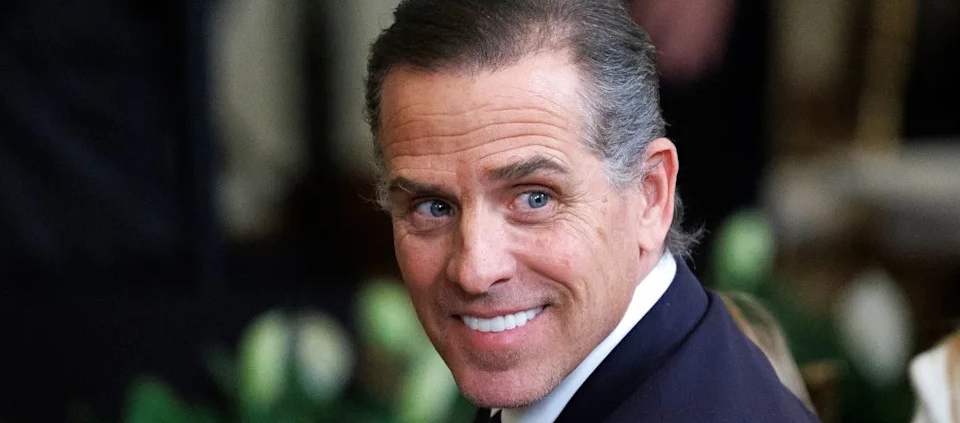
For years, Hunter Biden was not really a person in the public imagination. He was a punchline. Crack. Hookers. Motels. The laptop. Burisma. The pictures nobody ever needed to see. A gun charge. Tax problems. A presidential son who somehow managed to become both a Republican obsession and a Democratic embarrassment. Even people who had no idea what Hunter Biden had actually done could tell you what he represented: trouble. For Joe Biden, he was the son you loved fiercely and probably wished the country would stop talking about. For Republicans, he was evidence of everything rotten about the Biden family. For Democrats, he was often something to be explained away as quickly as possible before returning to the subject of Donald Trump.

And now, somehow, everybody wants to hear Hunter Biden talk. That transformation did not happen because he hired an extraordinary crisis-communications team and successfully rehabilitated his image. It happened because he stopped acting rehabilitated. Hunter Biden has quietly—or maybe not so quietly anymore—pulled off one of the most fascinating personal rebrands in recent political culture, not by convincing America that everything it heard about him was false, not by pretending the crack years were exaggerated, and not by exchanging profanity for presidential diction and showing up with a new haircut, a therapist and a carefully rehearsed redemption story. He did something much harder: he owned the mess.

When Candace Owens reminded him, in effect, that she had spent years calling him a crackhead, Hunter did not recoil from the word. “I was a crackhead.” That is an extraordinary sentence precisely because there is nowhere to go after it. What are you going to do, call him a crackhead? He already did. Owens had spent years publicly mocking him, and then in May, Hunter Biden walked into her world and sat with her for nearly two hours. The conversation which has now accumulated 2.4 millions views on Yotube alone, covered his addiction, his family, the laptop, corruption allegations, politics, Gaza and even some of Owens’ controversial questions surrounding Charlie Kirk’s assassination. At points, the conversation became emotional enough that Hunter cried. Owens herself apologized for some of the way she had spoken about him. That interview mattered precisely because Candace Owens was not a friendly Democratic interviewer offering Hunter Biden a redemption tour. She had been part of the firing squad, and he walked into the room anyway. That, more than any polished image makeover could have done, is where his new brand starts.

When everybody knows your worst story, secrecy loses its power

There is a strange kind of freedom that comes from already having been publicly humiliated. Hunter Biden’s addiction was not revealed through a tasteful memoir excerpt accompanied by a black-and-white portrait. America saw him at his worst. We saw the photographs. We heard the allegations. We watched his private life become political entertainment. His addiction became a meme before many people ever stopped to consider what addiction actually looks like. So when Hunter talks now, he has remarkably little incentive to pretend, and that is magnetic—not because addiction is cool, because it obviously isn’t, but because shame normally makes people perform.

We hide. We edit. We give the acceptable version. We say, “I was going through a difficult period,” when what we really mean is: I was destroying myself and terrifying everyone who loved me. Hunter does not seem particularly interested in giving us the tasteful version anymore. On Armchair Expert with Dax Shepard, he talked about addiction narrowing your entire existence around a single need, about self-destruction, public humiliation and the people who continued loving him when he could not love himself. Before that came his appearance on the Shawn Ryan Show—an astonishing five-plus-hour conversation on a show whose audience is hardly the natural constituency for a Biden. The full interview passed 1.17 million views on YouTube.

Think about that for a minute. A man who was once treated as the thing Joe Biden’s campaign desperately needed everyone to stop asking about can now sit behind a microphone for more than five hours and more than a million people will watch. That is not merely reputation management. Something else has happened: Hunter Biden has humanized himself, and in doing so he has humanized millions of people whose families have lived some version of his story without the Secret Service, congressional hearings or tabloid photographs.

Anyone who has loved an addict knows there is a particular kind of despair involved. You watch someone you know disappear while their body is still standing in front of you. You reason with them, you threaten them, you pray, you get angry, you rescue them, you swear you will never rescue them again, and then the phone rings at 2 a.m. and you rescue them again. You start mourning somebody who is not dead. Hunter’s story gives language to that, and his survival gives something else: hope. Not the cheap inspirational kind, but the uncomfortable kind—the kind that says a human being can become nearly unrecognizable, destroy things, hurt people, humiliate himself on a scale most of us thankfully will never experience, and still not be finished. That is powerful.

The profanity is part of the brand—but not for the reason you think

Yes, Hunter Biden swears. A lot. And somehow it works. But the lesson is not that swearing makes you authentic. Plenty of people swear and remain completely full of shit. The reason Hunter’s profanity works is that it reinforces the broader impression that there is very little distance between what he thinks and what comes out of his mouth.

Modern political communication has become so sterilized that you can practically hear the consultant standing behind the candidate. Every sentence has been focus-grouped, every controversial word replaced, every opinion sanded down until it can technically survive on CNN without offending donors, activists, suburban voters, party leadership, three demographic groups and whichever person is trending angrily on X that afternoon. Then Hunter Biden arrives and says people are getting “fucking screwed,” and you believe, at minimum, that Hunter Biden actually believes what Hunter Biden just said. There is value in that.

After New York’s June Democratic primaries, Hunter posted his own lessons from the results. He argued that authenticity is measurable, that Democratic-establishment endorsements are increasingly liabilities, that “conviction beats caution,” that “the middle is not a strategy,” and that Democrats should stop being terrified of their own base. About Zohran Mamdani, his conclusion was simple: he did not ask permission. He took the field. Whether you agree with Hunter’s political analysis is almost beside the point. He sounds like somebody who has an opinion, and that bar has apparently become revolutionary.

On Gavin Newsom’s podcast, he similarly defended Maine Senate candidate Graham Platner amid controversy over leaked private material. Hunter’s argument was basically: hand over your phone. Give us your iCloud. Let us dig through every drunken selfie, off-color text and private embarrassment you have ever accumulated, and then let us see how many people are still eligible for public office. He then shifted to what he thought actually mattered about Platner: healthcare, changing the political system and his message that working Americans are getting “fucking screwed.” Again, agree or disagree. You know what he thinks.

Talk to everybody

Maybe the most interesting part of Hunter Biden’s new media strategy is that there barely seems to be a media strategy. The rule appears to be: talk to everybody. Candace Owens, Shawn Ryan, Dax Shepard, Gavin Newsom, Andrew Callaghan and, in one of the stranger political-media crossovers of the year, Nick Fuentes. The Channel 5 conversation with Fuentes was not some polite exercise in manufactured bipartisan harmony either. They talked about Trump, censorship and deplatforming, race, Israel, antisemitism, political alienation and the collapse of trust, and there were moments when Hunter pushed him hard. When Fuentes tried to contextualize some of his past rhetoric as trolling or humor, Hunter was blunt: he did not find some of it funny then and did not find it funny now. He even brought up things Fuentes had said about him personally. But the disagreement did not become a reason to end the conversation. That was the point. Hunter could tell him, essentially, I think some of what you say is bullshit, I don’t appreciate the joke, and I am still willing to sit here and hear you out.

Hunter seems increasingly uninterested in the political fear of contamination by association. That is also what made his conversation with Candace Owens so interesting. When the discussion turned to Charlie Kirk’s assassination and the questions Owens has continued raising around it, Hunter did not do what most people with his political background would have done: distance himself from her immediately, or make sure everyone knew he belonged to the “respectable side of the conversation”. He sided with Candace on some of those questions. Whatever you think of her theories—and I happen to think some of the questions she is asking deserve to be asked—that was a courageous position for Hunter Biden to take, precisely because he knew what it would look like coming from him.

That is becoming one of the most compelling things about this version of Hunter. He seems increasingly willing to follow an argument where it takes him instead of first calculating whether the conclusion is acceptable to Democrats, Republicans, the mainstream press or whichever political tribe is supposed to claim him. It is the same instinct that allows him to sit with Candace Owens after years of being mocked by her, talk to Gavin Newsom, enter a conversation with Nick Fuentes, criticize his own party and speak about foreign policy without constantly signaling which camp he belongs to. You can disagree with him, sometimes strongly, but you are not left wondering whether the opinion survived six advisers before reaching the microphone.

Authenticity is not the same thing as telling us everything

There are also obvious zones d’ombre in Hunter Biden’s new radical-candor era. His daughter is one. His treatment of his father’s legacy is another. Hunter has shown considerable courage criticizing Democrats, Democratic consultants and the political establishment. He has gone after the people he believes abandoned his father. He has been willing to criticize American foreign policy and speak aggressively about war. But his candor becomes noticeably more complicated when the subject is Joe Biden himself.

That was visible in his exchange with Owens over Gaza. Hunter attacked Trump’s vision for Gaza and defended his father against the idea that Joe Biden belonged to the same corrupt political class he despises. Even in an interview built around candor, Hunter’s instinct to protect his father remained very much alive.

That does not invalidate his authenticity. In some ways, it makes it more human. Most of us have places where our principles suddenly encounter somebody we love. The interesting question is not whether Hunter Biden has become perfectly transparent. Nobody is. The question is whether an imperfect, selective honesty can still create a more authentic public identity than carefully constructed perfection. I think the answer is obviously yes.

He stopped allowing other people to define him

Personal branding is often discussed as though it means logos, colors, headshots, taglines and making sure your LinkedIn profile says the same thing as your website. That is not a brand, at least not the important part. A personal brand is the collection of associations people immediately attach to your name, and for years Hunter Biden surrendered that completely. Other people told his story. Republicans defined him. Tabloids defined him. The laptop defined him. His addiction defined him. His father defined him. His last name defined him.

Now he is talking enough that the public has to reconcile the caricature with the person, and that is the achievement. He has not erased the crack addict; he integrated him. He has not said, That wasn’t me. He has said, That was me. Now listen to what I have to say. And strangely, people are listening.

His social-media presence exploded again this summer as he began posting hundreds of times, fighting with critics, defending his father, joking about himself and openly revisiting his addiction. The surprise at his resurgence is now its own internet phenomenon. Under clips of Hunter discussing politics, people regularly ask some variation of: Where the hell did this Hunter Biden come from? The political speculation has become inevitable precisely because the person once considered a devastating electoral liability has become culturally interesting.

I do not know that Hunter Biden should run for anything, and that is not really what interests me here. What interests me is how quickly the emotional meaning of his name has changed. A national joke became interesting. A liability developed a voice. A man millions of people thought they already knew finally started introducing himself, and he did it without becoming cleaner, safer or easier to explain. If anything, he became more Hunter.

There is a branding lesson there that goes far beyond politics. We spend an extraordinary amount of energy trying to control what people might discover about us. We polish away the weird parts, soften opinions and copy whatever already seems successful. We create professional versions of ourselves so generic that nobody could possibly hate them, and then we wonder why nobody remembers us.

Hunter Biden’s resurgence suggests the opposite possibility: maybe the parts of your story that make you hardest to package are sometimes the exact things that make you impossible to replace. That does not mean confess everything. It does not mean controversy is a strategy, and it certainly does not mean every flaw should be repackaged as a superpower. It means people connect to humanity before they connect to perfection.

Hunter Biden did not rebuild his personal brand by persuading America that the motel rooms, the drugs, the prostitutes, the humiliations and the disasters never happened. He rebuilt it by standing in front of all of it and continuing the sentence. After years of watching politicians speak without ever really saying anything, perhaps that is why so many people suddenly cannot stop listening.


The democratization of marketing and the erosion of expertise

There is something happening to marketing and communications that I think people inside the industry feel very deeply, even if they struggle to articulate it clearly. The democratization of digital tools, social media, accessible design platforms like Canva, automated ad systems, and now AI-generated content has created the impression that marketing is something almost anyone can do professionally with little to no real formation behind it. Today, someone can open ChatGPT and ask for a marketing strategy, a communication plan, email campaigns, captions, ad copy, audience personas, and content calendars within seconds. Someone else can open Canva and create visuals that look polished enough to pass as professional work. On the surface, it feels empowering, efficient, and modern. In many ways, it genuinely is.

That is why I both agree and disagree when people say that you do not need school for marketing, communications, or PR. I agree because knowledge itself has become more accessible than ever before. Most of the theories taught in communications and marketing programs are not secret. They already exist in books, archives, case studies, academic research, documentaries, and now countless online resources. A disciplined and intellectually curious person can absolutely self-educate. The theories of persuasion, audience behavior, media ecosystems, crisis communication, semiotics, framing, branding, public opinion, social psychology, and consumer behavior are all available to anyone willing to seriously study them.

What I disagree with is the growing belief that because tools became accessible, the foundations no longer matter. That is where I think the profession started losing something important. Most marketers I encounter, including at executive and C-suite levels, did not originally study marketing or communications. Many studied completely different fields and later pivoted into branding, communications, content, or marketing roles because their careers naturally evolved in that direction. Others started in small companies where people wore multiple hats, touched many departments, experimented, learned on the job, and gradually grew into leadership positions. There is absolutely nothing wrong with that. In fact, the ability to pivot is one of the strengths of modern professional life. Knowledge is not fixed. Human beings evolve, adapt, and reinvent themselves constantly.

But what I often notice is that when people never return to study the deeper foundations of strategic communication, it eventually translates into the way they approach the work. They become excellent at execution, excellent at producing deliverables, excellent at creating things that look attractive, trendy, engaging, or visually impressive. But the work itself often remains surface-level because the intellectual architecture behind communication was never fully built.

Today, photographers suddenly present themselves as social media marketers because they know how to produce aesthetically pleasing visuals. Web designers become branding experts because they can create visually modern websites and graphics. People who know how to use scheduling tools, templates, and AI prompts increasingly position themselves as strategists. The lines between technical production and actual communication strategy have become completely blurred.

What makes this especially interesting is that these distinctions existed for a reason. Traditional communications and marketing disciplines evolved separately because they required different forms of expertise and different modes of thinking. The graphic designer was not the web developer. The web developer was not the communications strategist. The social media manager was not the PR specialist. The marketing strategist was not simply the person making graphics or writing captions. These roles complemented each other because each required depth in a specific discipline.

Organizations themselves have also contributed to this shift. In pursuit of efficiency, many companies have consolidated roles that were once distinct disciplines. Today, employers increasingly expect one person to handle branding, strategy, social media, graphic design, video editing, copywriting, analytics, PR, SEO, advertising, community management, photography, email campaigns, customer insights, and web design all at once. While this approach may reduce costs and increase agility, it also encourages a view of marketing as a collection of tasks rather than a discipline grounded in research, analysis, and human understanding. As a result, every discipline becomes compressed into quick execution, constant production, and endless content output. The consequence is that depth quietly disappears.

And I think one of the biggest misconceptions created by AI is the idea that marketing is essentially the same thing as content production. People see AI generating social media posts and immediately conclude that entire marketing departments are becoming obsolete. But social media content is only a small fraction of what serious marketing work actually involves.

Marketing is not simply posting. Who is doing the market analysis to identify shifts in behavior, emerging opportunities, competitive gaps, and cultural trends? Who is actually speaking to customers to understand their frustrations, aspirations, emotional triggers, purchasing hesitations, and decision-making processes? Who is studying positioning, pricing, audience segmentation, consumer perception, and long-term brand equity? Who is determining whether a company’s messaging aligns with the reality of the product experience itself? Who is shaping the larger narrative architecture behind the business?

These are not small details. They are the core of the discipline. A company can automate captions all day long and still completely misunderstand its audience. It can produce endless AI-generated content and still fail to understand why people trust one brand over another, why some campaigns create emotional resonance while others disappear instantly, or why certain brands become cultural symbols while others remain interchangeable commodities.

At the same time, it would be inaccurate to suggest that artificial intelligence is limited to content creation alone. Today’s AI systems can generate positioning statements, audience segments, competitive analyses, messaging frameworks, and even complete go-to-market strategies. In many cases, they can do so remarkably well. The question, however, is not whether AI can generate strategic recommendations. The question is who is evaluating those recommendations, validating them against reality, and making the judgment calls that strategy ultimately requires. A strategy document is not strategy. Strategy is the process of making choices, accepting trade-offs, and operating under conditions of uncertainty.

That is because communications, PR, and marketing were never fundamentally about tools. They were always about understanding people. At its core, communications is deeply tied to human psychology and social psychology. It is about understanding attention, perception, aspiration, emotion, trust, fear, symbolism, identity, belonging, and behavior. It is about understanding what moves people emotionally, culturally, politically, and socially before you even begin producing content.

The most valuable marketing insights rarely come from software. They come from observing people. They emerge from conversations with customers, from understanding cultural shifts, from recognizing unmet needs, and from identifying the emotional factors that influence decision-making. Technology can help process information and uncover patterns, but it cannot replace the curiosity required to understand why people behave the way they do.

That dimension of the work increasingly feels undervalued in environments obsessed with speed, trends, visibility, and output. Of course anyone can now create a decent-looking visual in Canva. Of course anyone can ask AI to draft an email sequence or generate social media captions. Of course anyone can imitate the external aesthetics of marketing. But there is a difference between producing content and understanding communication.

And I think that is the part many professionals feel is disappearing from the industry. Something about the profession has become flattened. The marketer used to be seen as someone who deeply understood positioning, audience psychology, narrative construction, public perception, and cultural context. Increasingly, the role is being reduced to content production and platform management. The work is becoming faster, cheaper, more automated, more accessible, and in many ways more superficial.

Ironically, I think AI will eventually make the importance of real strategic thinking even more obvious. Once everyone has access to decent execution, execution itself stops being the differentiator. If everyone can generate acceptable captions, acceptable visuals, acceptable emails, and acceptable campaigns within seconds, then the true value shifts back to the quality of thought behind the work. The real differentiator becomes the ability to understand people deeply enough to know what should be said, why it should be said, how it should be framed, who it is speaking to, what emotional reaction it is trying to trigger, and what long-term perception it is trying to build.

Technology has made communication easier than at any point in history. What it has not done is make human beings easier to understand. And as long as organizations depend on human attention, trust, emotion, and decision-making, that understanding will remain the foundation upon which effective marketing is built.

Youth Orchestra of St. Luke’s Spring Recital Brings Together Young Musicians and Families in Hell’s Kitchen

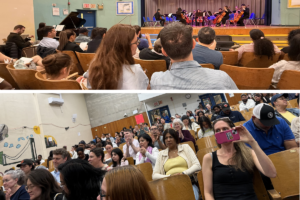
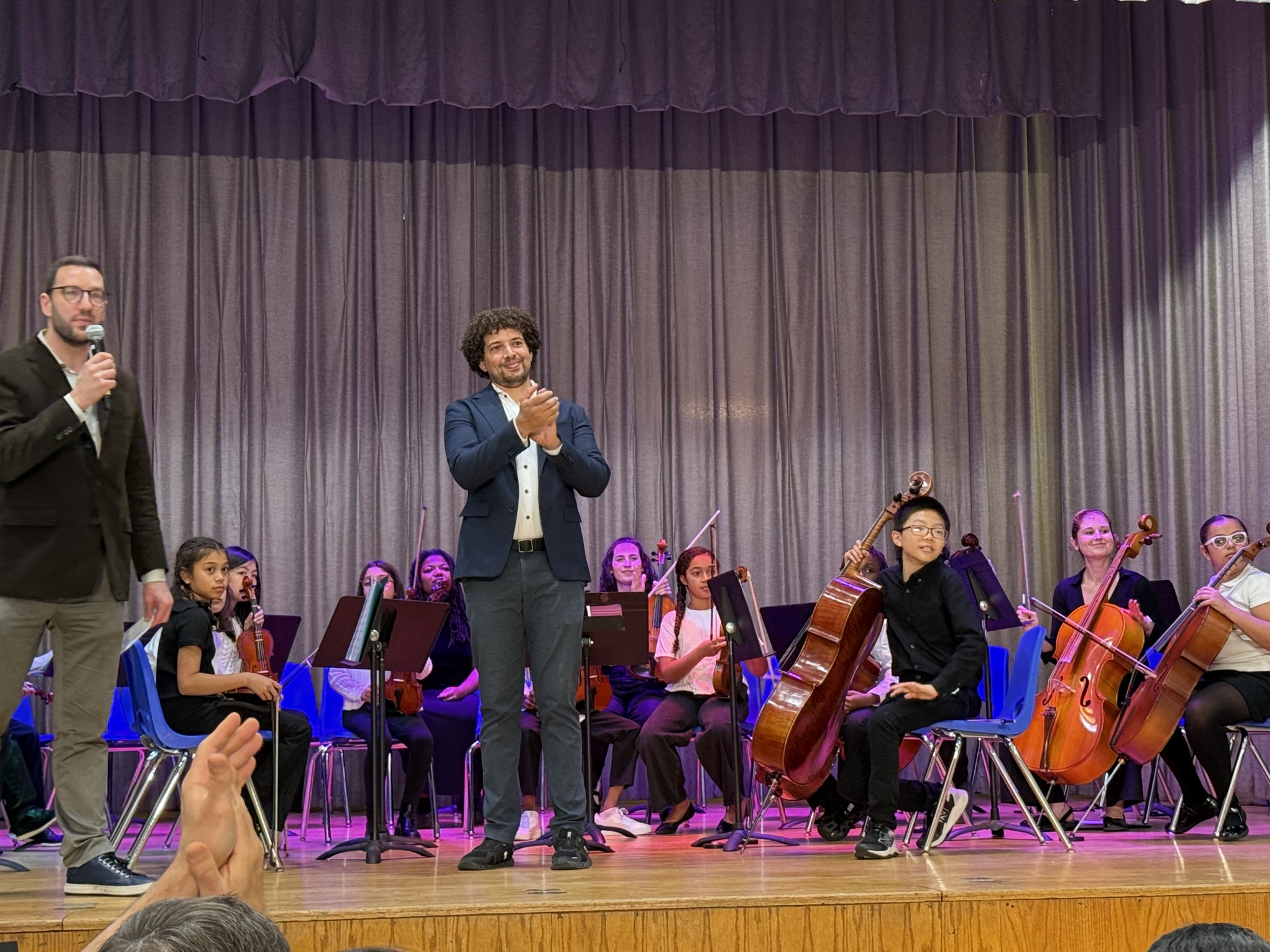
On Saturday, May 30, families, friends, educators, and community members filled the auditorium of P.S. 111 Adolph S. Ochs School in Hell’s Kitchen for the Youth Orchestra of St. Luke’s Spring Recital, an annual celebration showcasing the work of young musicians who have spent the school year learning, practicing, and growing through music.

The auditorium was packed. Parents held up phones to capture every moment, younger siblings watched attentively from their seats, and proud family members erupted into applause after each performance. The atmosphere was both festive and emotional, reflecting the significance of a milestone that represented months of dedication from students, instructors, and families alike.



The recital brought together students from several of the program’s partner schools, including P.S. 111, P.S. 51, and P.S. 212. Children at different stages of their musical journey took the stage throughout the afternoon, from beginners completing their first year of instruction to more experienced performers who have continued developing their skills through advanced ensemble training.

The musical selections reflected both the diversity of the students and the broad vision of the program. Audiences were treated to performances ranging from Beethoven’s Ode to Joy and Pachelbel’s Canon in D to Joe Hisaishi’s beloved Merry-Go-Round of Life, Frank Sinatra’s Time After Time, and Kendrick Lamar’s All the Stars. The repertoire moved comfortably between classical standards and contemporary favorites, allowing students to explore different musical traditions while keeping the experience engaging and accessible.

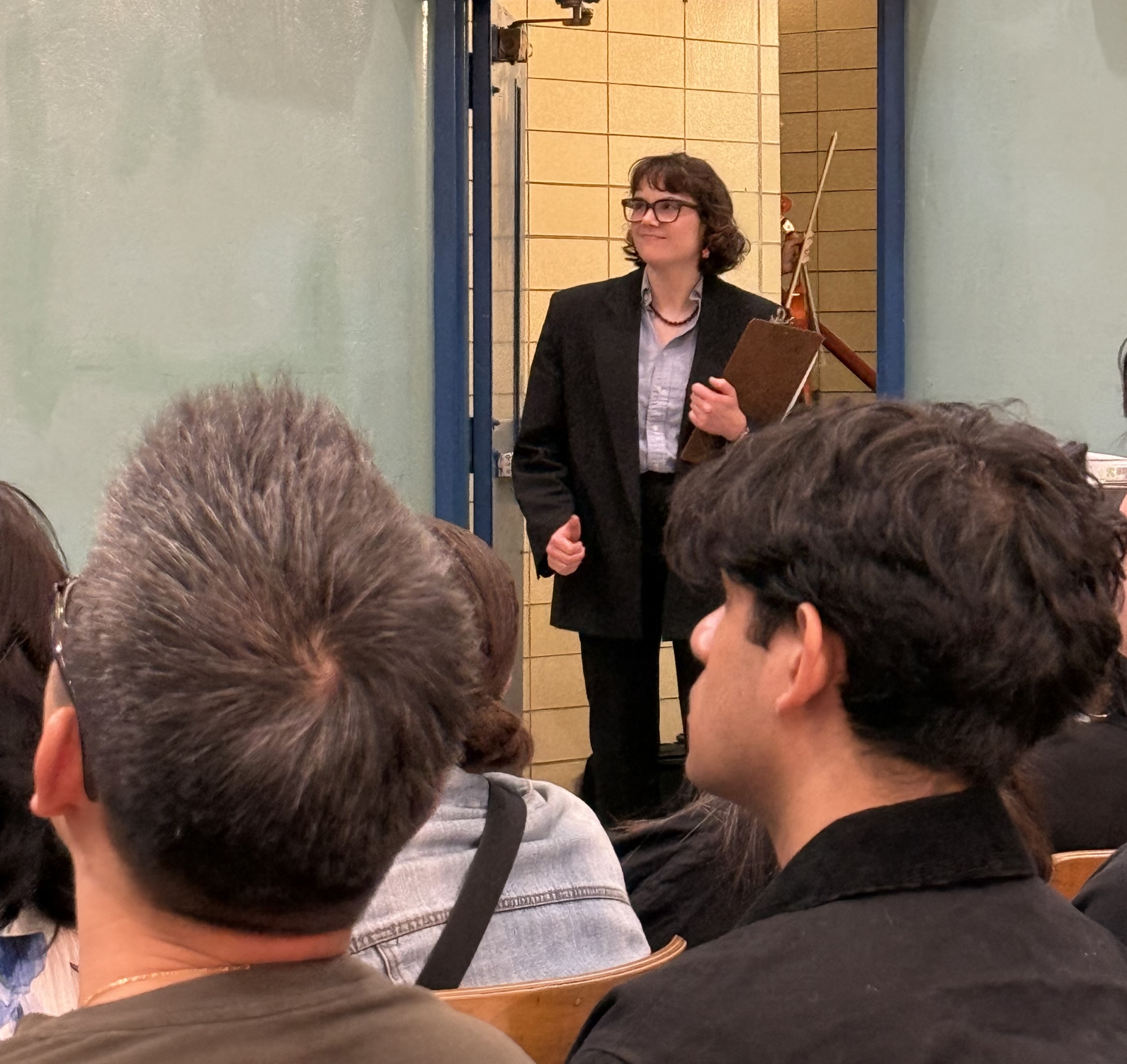
Opening the event, Andrew Roitstein, Director of Education and Community Engagement for Orchestra of St. Luke’s, welcomed families and highlighted the mission behind the Youth Orchestra of St. Luke’s. For nearly fifteen years, the organization has partnered with schools in Hell’s Kitchen to provide free instrumental music education to children who might not otherwise have access to such opportunities.

The program introduces students to violin, viola, and cello while emphasizing collaboration, performance, creativity, and personal growth. Beyond weekly lessons, participating families are also offered opportunities to attend Orchestra of St. Luke’s performances, including concerts at Carnegie Hall, free of charge, helping connect young musicians and their families to New York City’s vibrant cultural life.

Following the recital, Roitstein reflected on what makes these performances particularly meaningful. Unlike many areas of school life that are measured through grades, tests, and benchmarks, music allows children to progress at their own pace. The recital, he explained, is a moment when families and instructors can see the results of the effort, discipline, and confidence students have developed throughout the year.That growth was evident throughout the afternoon.

Among those helping guide students along that journey is Elisa Mingo, viola faculty member with the program. She spoke proudly of her students and the work they have put in over the course of the year. Teaching young musicians requires patience, consistency, and encouragement, but seeing students develop both musically and personally makes the experience deeply rewarding.


One of the most remarkable aspects of Youth Orchestra of St. Luke’s is the pathway it creates for continued musical growth. While students begin by receiving instruction at their individual schools, those who wish to expand their experience after their first year can join ensemble opportunities at the DiMenna Center for Classical Music.

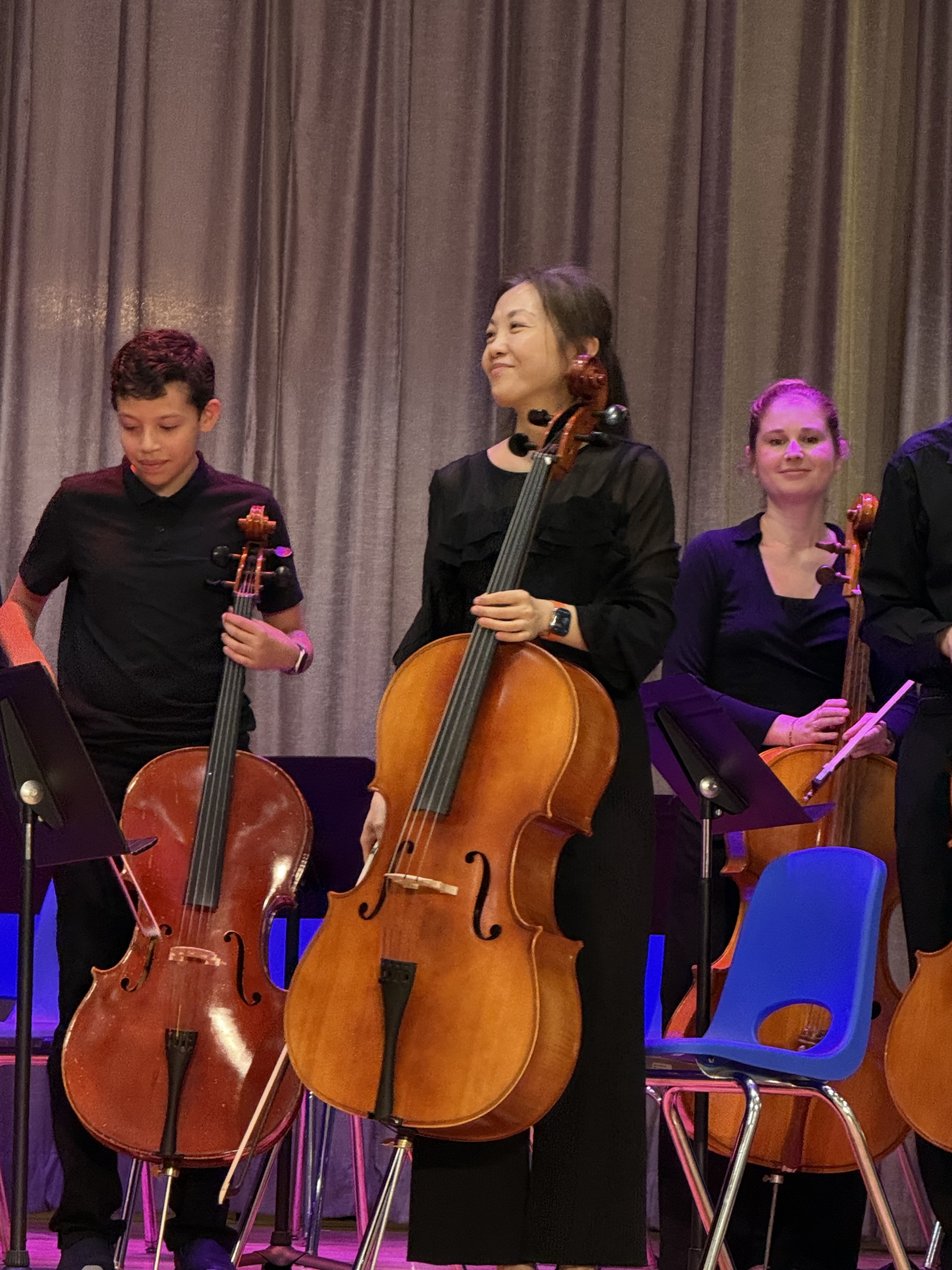
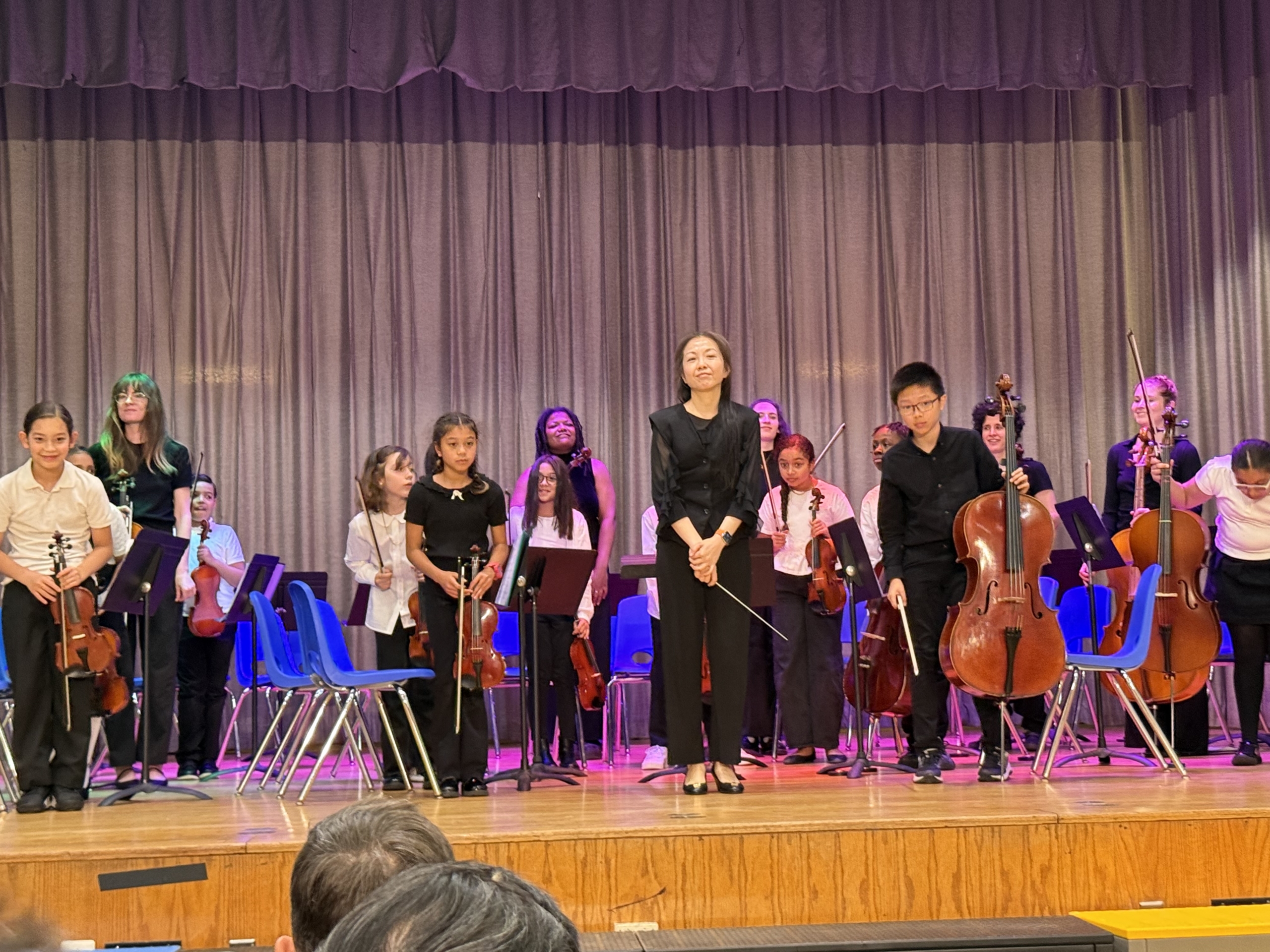
Several of those students also performed during Saturday’s recital as members of the Tutti Ensemble, one of the program’s orchestral groups. Under the direction of Dr. Yuting Wu, conductor of the Tutti Ensemble and cello faculty member, students learn the art of performing as part of a larger ensemble, developing listening skills, musical collaboration, and greater artistic confidence. The ensemble serves as an important bridge between school-based instruction and more advanced orchestral experiences.

Beyond Tutti, students may continue advancing through additional ensemble opportunities, including the De La Bruyère Youth Symphony, creating a musical pathway that extends well beyond elementary school and allows young musicians to remain connected to the Orchestra of St. Luke’s community as they grow.

Parents interviewed after the concert repeatedly expressed gratitude for the program and the opportunities it provides. Several noted that access to high-quality music instruction can often be expensive and out of reach for many families. The fact that students can receive professional instruction, participate in performances, attend cultural events, and gain exposure to world-class musicians at no cost makes the program particularly valuable.

Yet perhaps the most powerful measure of the program’s success was visible on stage. There were nervous smiles, concentrated faces, careful bow movements, and moments of unmistakable pride as students performed before a full audience. Some were playing in public for the first time. Others had been part of the program for years. Together, they demonstrated not only musical ability but also confidence, discipline, teamwork, and perseverance.

As the final applause echoed through the auditorium, the Spring Recital served as a reminder that arts education is about far more than learning notes and rhythms. It is about creating opportunities, building community, and helping young people discover what they are capable of achieving.

For one afternoon in Hell’s Kitchen, that achievement was on full display.

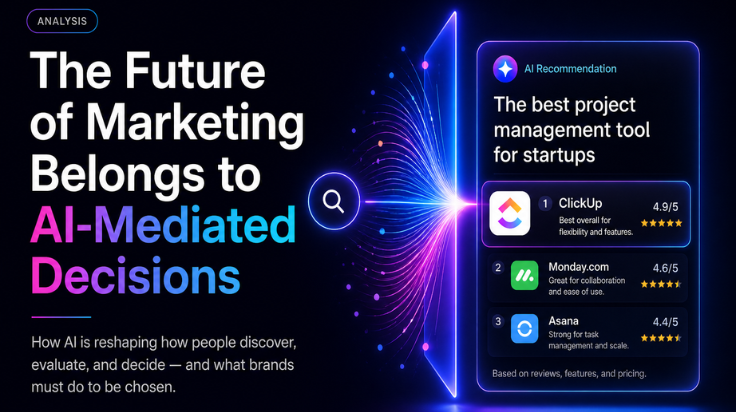
The end of search: Why the future of marketing belongs to AI-mediated decisions

Here is the uncomfortable truth most marketers are only beginning to grasp: what is changing is not simply the channel, but the cognitive process through which consumers make decisions. For more than two decades, the dominant model was search. Individuals would go to Google, formulate a query, scan a hierarchy of links, compare options across multiple tabs, and gradually construct their own judgment. Entire industries were designed around that behavior. Search engine optimization, paid acquisition, review management, and affiliate content all converged toward a single objective, which was to capture attention at the moment of inquiry and convert it into a click.

What is emerging now is not merely a new platform competing for that attention, but a structural shift in how decisions are delegated. Increasingly, users are no longer interested in conducting the comparative labor themselves. Instead of searching, they ask. Instead of navigating a landscape of competing sources, they receive a synthesized answer. Instead of evaluating ten options, they are presented with a short list, often pre-filtered and implicitly ranked. AI, in this sense, is not just an additional layer in the marketing stack. It is a compression mechanism that sits between information and judgment, reducing complexity into a single, authoritative narrative.

This pattern is not unprecedented. If one looks historically, every major media transition has produced a similar redistribution of advantage. When newspapers dominated, those who understood how to shape narratives within editorial structures gained disproportionate influence, while others remained invisible. The rise of television rewarded those who could translate their value into visual storytelling at scale. The emergence of social media shifted power toward those who understood how to build direct, continuous relationships with audiences. In each case, there was a period during which the majority of actors continued to optimize for the previous paradigm, even as the center of gravity had already moved. The same inertia is observable today, as many organizations continue to invest heavily in traditional search visibility while underestimating the implications of AI-mediated discovery.

The critical distinction between these two paradigms can be understood by contrasting ranking with selection. In a search-driven environment, visibility is achieved through position within a list, and the user remains the ultimate arbiter, navigating among alternatives and exercising judgment. In an AI-driven environment, visibility is contingent upon inclusion within a synthesized response. The system itself performs the initial filtering, effectively collapsing a wide field of possibilities into a narrow set of recommendations. This compression of choice is not a marginal change; it fundamentally alters the distribution of attention. When an AI system responds to a query such as “the best sushi in Hell’s Kitchen,” it does not present an exhaustive catalog. It produces a curated subset, and in many cases, that subset becomes the entirety of the user’s consideration set.

This dynamic can be observed in everyday interactions. A user asks a question and receives a synthesized answer rather than a list of links. The next step is no longer exploration, but validation. The user evaluates whether the recommendation can be trusted. This shift is decisive because it moves the competitive battleground from simple exposure to the quality and credibility of representation. It is no longer sufficient to appear; a business must be described in a way that withstands scrutiny within a compressed decision space.

To understand how this representation is constructed, it is necessary to examine the informational substrate on which AI systems rely. These systems do not experience products or services directly; they interpret patterns across a distributed network of data. That network includes structured business information, large-scale review platforms such as Yelp, and editorial coverage from outlets like Eater or The Infatuation. It also incorporates brand-owned content, interviews, and any textual material that consistently describes what a business is and how it should be understood. AI does not invent narratives in isolation; it aggregates and resolves them. The crucial point is that this aggregation process favors coherence. When signals align, the resulting summary is strong and specific. When signals conflict, the summary becomes diluted and generic.

This requirement for coherence introduces a constraint that did not exist, or at least was less consequential, in the search era. In a fragmented environment, inconsistency could be tolerated because the user performed the work of reconciliation. A business might be described as affordable in one context and premium in another, and the user would interpret those differences in light of their own expectations. AI systems, by contrast, do not negotiate ambiguity in the same way. They resolve it. If the descriptors attached to a business are inconsistent, the system tends to converge toward a neutral, non-committal characterization. The consequence is a loss of distinctiveness. A restaurant that might, in reality, occupy a clearly defined position in the market is reduced to a generic category because its representation across sources lacks alignment.

This shift also forces a reconsideration of what has traditionally been described as the “hidden gem.” In previous digital environments, it was entirely possible for a business to thrive with limited visibility, relying on word-of-mouth, local reputation, or a loyal customer base. Discovery was often nonlinear and, at times, serendipitous. Consumers would stumble upon exceptional experiences through exploration, recommendations, or proximity.

In an AI-mediated discovery environment, that dynamic changes significantly. AI systems do not discover in the human sense; they do not wander, explore, or take chances on the unknown. They identify patterns. They elevate entities that are consistently described, frequently referenced, and coherently positioned across accessible sources of information.

The implication is not that hidden gems cease to exist, but that their invisibility becomes a structural disadvantage. Excellence that is not translated into consistent, machine-readable signals struggles to surface. A restaurant may offer extraordinary quality, but if it is not represented across the data ecosystem in a way that reinforces its identity, it is unlikely to be selected in a synthesized response.

This introduces a subtle but important shift in competitive dynamics. In a search-driven world, discovery could still reward the curious user willing to explore beyond the first few results. In an AI-driven world, the system performs that filtering on behalf of the user, narrowing the field before the individual even becomes aware of the alternatives. As a result, businesses are no longer competing solely on quality or even visibility, but on their ability to be legibly and consistently represented within the information structures that AI systems rely upon.

Recognizing this gap, a new category of companies is beginning to emerge, focused specifically on how brands are perceived by AI systems. Firms such as Profound operate at the intersection of data, content, and narrative consistency. Their role is not limited to traditional public relations or search optimization. Instead, they monitor how different AI systems describe a brand, identify discrepancies or weaknesses in that description, and engineer interventions that bring the underlying signals into alignment. This may involve securing higher-quality editorial mentions, restructuring brand-owned content, or encouraging more descriptive user-generated feedback. The objective is not simply to increase visibility, but to shape the synthesized narrative that AI systems will reproduce.

What is particularly revealing is that this shift is not only reflected in the products these companies build, but also in how they define talent. Profound, for instance, frames the emergence of the “marketing engineer” as a direct response to a structural imbalance in modern marketing: exponential growth in required output paired with linear growth in team capacity. The answer is not more campaigns or more headcount, but a new type of operator capable of building systems that automate, monitor, and continuously refine how a brand is represented across AI environments. In this model, marketing is no longer limited to communication; it becomes a form of applied systems design, where the objective is to influence not just what is said about a brand, but how that information is structured, distributed, and ultimately selected.

From a strategic standpoint, this evolution has several implications. The first is a shift from traffic generation to inclusion within decision outputs. It is no longer sufficient to rank highly; one must be selected as part of the answer. The second is a reweighting of signal quality. A large volume of shallow mentions is less valuable than a smaller number of authoritative, detailed sources that can anchor the narrative. The third is a move from keyword-centric optimization to narrative engineering. What matters is not the presence of specific terms, but the clarity and consistency of the story that emerges when all signals are combined.

For companies seeking to adapt, the practical steps are relatively straightforward, although their execution requires discipline. A business must first define a clear and differentiated positioning, articulated in precise language that can be repeated across all touchpoints. That positioning should then be reinforced consistently, whether in website copy, business listings, or external coverage. Efforts should be made to secure mentions in credible, high-trust publications, as these carry disproportionate weight in shaping AI-generated summaries. Customer reviews should be encouraged to move beyond generic praise toward more detailed descriptions of the experience, as specificity enhances the richness of the signal. Finally, organizations must begin to actively monitor how they are described by AI systems, treating those outputs not as curiosities but as indicators of how effectively their narrative has been encoded.

The deeper transformation, however, is conceptual. Marketing has long been oriented around capturing attention within an environment of abundance, under the assumption that consumers would engage in the cognitive labor necessary to evaluate options. AI reduces that labor by inserting an intermediary that performs initial judgment on behalf of the user. In doing so, it changes the locus of influence. The audience is no longer only the individual making the final decision, but also the system that frames the available choices. Brands that recognize this dual audience and learn to communicate effectively within it will gain a structural advantage. Those that do not may continue to exist, but increasingly outside the narrow set of options that AI systems deem worth presenting.

In that sense, the future of marketing is not defined by louder messaging or greater frequency, but by legibility. The brands that will prevail are those that can be clearly understood, consistently described, and confidently recommended by systems that operate on synthesis rather than search.

NYC Doormen Authorize Strike as Contract Fight Raises Pressure on Building Owners

Thousands of New York City doormen, superintendents, porters, and other residential building workers have voted to authorize a strike, setting up what could become the city’s first walkout of these workers in 35 years if a contract agreement is not reached by midnight Monday.

The workers are represented by 32BJ SEIU, which says roughly 34,000 employees are covered under the expiring contract. If negotiations fail, the strike could disrupt daily life for an estimated 1.5 million renters, condo owners, and co-op residents across the city. In many buildings, residents would suddenly have to manage tasks normally handled by staff, from packages and trash to hallway upkeep and front-door coverage.

At the center of the dispute are familiar but increasingly explosive issues in New York: wages, pensions, and health care. The union says building owners want workers to start contributing to health insurance premiums and are also seeking to create a lower-paid classification for new hires. Union leaders argue that these proposals would erode standards for a workforce that already struggles to keep up with the cost of living in the New York metro area.

According to the union, doorpersons earn about $62,000 a year on average, though pay varies by role. Union President Manny Pastreich accused building owners of trying to reduce labor costs at the expense of workers who help keep residential buildings functioning every day. The union is also pushing for higher wages and stronger pension protections, though it has not yet publicly detailed a precise wage proposal.

Building owners, represented by the Realty Advisory Board on Labor Relations, argue that they too are under growing financial pressure. The group says rising costs are squeezing the industry, particularly as city politics shift and as Mayor Zohran Mamdani pushes for a rent freeze on the city’s roughly 1 million rent-stabilized apartments. The board maintains that controlling costs is necessary for the long-term sustainability of both the buildings and the workforce they employ.

The potential strike has already drawn political attention. Mamdani and other elected Democrats joined the workers’ demonstration in Manhattan, signaling the broader symbolic weight of this labor battle. This is not just a contract dispute over one sector. It sits at the intersection of labor rights, housing costs, rent politics, and the question of who is expected to absorb financial pressure in an increasingly unaffordable city.


That is what makes this standoff especially significant. Doormen and building staff are often invisible until they are gone, yet they play an essential role in the daily functioning of city life, especially in large residential buildings. Their work goes far beyond opening doors. They manage deliveries, assist residents, help maintain safety and cleanliness, and in some cases handle physically demanding maintenance tasks that keep older buildings running.

The last strike by these workers took place in 1991 and lasted 12 days. Since then, the union has authorized strikes at times without ultimately walking out. Whether this latest showdown ends in a deal or an actual strike, it has already exposed deeper tensions in New York over labor, affordability, and the future of urban living.

Alpheva AI and the Transformation of Financial Management: Rethinking Access, Decision-Making, and the Role of Intelligence

The promise of modern financial technology has long been framed around access. More tools, more data, more visibility. Yet, despite this proliferation, financial anxiety remains pervasive, and poor decision-making continues to undermine long-term stability for millions of individuals. This contradiction reveals a fundamental misunderstanding of the problem. Financial difficulty is not primarily a failure of access to information. It is a failure of structured guidance.

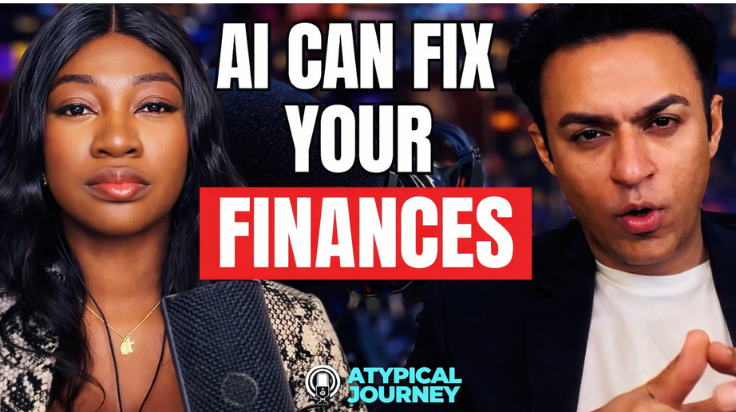
In a recent conversation on Atypical Journey, Lord Munjal, founder and CEO of Alpheva AI, articulates a distinction that is often overlooked. The gap between those who consistently make sound financial decisions and those who struggle is not simply a matter of discipline or effort. It is rooted in the presence or absence of a coherent decision-making framework. Individuals operating within well-advised environments, whether through professional advisors or institutional exposure, are not navigating financial complexity alone. Their decisions are informed, contextualized, and aligned with longer-term strategies.

By contrast, the majority of individuals manage their financial lives through fragmented systems. Budgeting tools, banking applications, credit monitoring platforms, and investment dashboards operate in isolation from one another. Each provides partial visibility, but none offers a unified interpretation of the overall financial situation. The result is a reactive mode of decision-making, where individuals respond to immediate pressures rather than act within a structured plan. Over time, this fragmentation produces not only inefficiency but also uncertainty, reinforcing a persistent sense of financial instability.

It is within this context that Alpheva AI positions itself as a departure from conventional financial applications. Rather than functioning as a passive tool for tracking or reporting, the platform seeks to operate as an active layer of intelligence. By integrating data across multiple financial dimensions and aligning it with individual goals, Alpheva aims to produce continuous, personalized guidance. The objective is not simply to inform users of their current position, but to assist them in determining what actions should follow.

This shift from visibility to interpretation is significant. Financial management, when reduced to dashboards and metrics, remains descriptive rather than prescriptive. It tells individuals what is happening without necessarily clarifying what should be done. Effective financial decision-making, however, requires the ability to evaluate trade-offs, anticipate outcomes, and adjust strategies over time. Historically, this level of insight has been accessible primarily through human advisors, often at a cost that limits widespread access. The introduction of AI into this space attempts to replicate aspects of that advisory function at scale.

However, the integration of artificial intelligence into financial decision-making raises complex questions that extend beyond efficiency. The issue of trust becomes central. Financial decisions carry long-term consequences, and reliance on algorithmic guidance introduces uncertainty regarding accountability. If a recommendation leads to suboptimal outcomes, the distribution of responsibility between user, platform, and system design is not immediately clear. Moreover, the assumption that AI can operate as a neutral and objective advisor must be examined critically. All models are shaped by underlying data, assumptions, and design choices, which inevitably influence the recommendations they produce.

There is also a broader structural consideration. While platforms such as Alpheva aim to democratize access to financial intelligence, their effectiveness depends on how they are adopted and utilized. Technology has the capacity to reduce disparities, but it can also reinforce them if only certain segments of the population fully leverage its capabilities. The question is not simply whether AI can improve financial outcomes, but whether it can do so in a way that meaningfully alters existing patterns of inequality.

Lord Munjal’s own trajectory, spanning leadership roles in major financial institutions and multiple entrepreneurial ventures, reflects an understanding of both the strengths and limitations of traditional financial systems. His experience highlights a recurring tension between structured environments, where decision-making is guided by established frameworks, and entrepreneurial contexts, where uncertainty requires a different form of judgment. This dual perspective informs the design philosophy behind Alpheva, which seeks to bring a level of strategic coherence to individuals who would otherwise operate without it.

Ultimately, the emergence of AI-driven financial management signals a broader transformation in how individuals engage with money. The shift is not merely technological, but conceptual. It challenges the assumption that financial competence is solely an individual responsibility and introduces the possibility that structured, intelligent systems can augment human decision-making in meaningful ways. Whether this potential is fully realized will depend not only on the sophistication of the technology, but also on the extent to which it is trusted, understood, and integrated into everyday financial behavior.

This article captures only a portion of a broader and more nuanced conversation. In the full episode of Atypical Journey, we explore the deeper roots of financial anxiety, the limits of traditional financial literacy, the realities of building and scaling ventures, and the growing role of AI in shaping financial decision-making. Watch the full episode below to explore the conversation in its entirety.


Mamdani, Hochul Announce New York’s First Pied-à-Terre Tax on Luxury Secondary Homes

Mayor Zohran Mamdani and Governor Kathy Hochul announced a proposal to create New York State’s first pied-à-terre tax, a measure aimed at raising revenue by taxing high-value secondary properties owned by people whose primary residence is outside New York City.

According to the announcement, the tax would apply to one- to three-family homes, condominiums, and co-ops valued above $5 million when the owner’s main home is located outside the city. City and state leaders say the measure is designed to target ultrawealthy individuals who keep luxury New York properties as secondary residences or investment assets rather than as full-time homes.

The administration says the new tax could generate about $500 million a year, money that would help address New York City’s budget gap while protecting public services. Officials also noted that similar proposals had been discussed for years under previous administrations, but this would be the first time such a tax is actually enacted in New York State.

In a video posted on X, Mamdani tied the announcement directly to one of the core promises of his campaign. “When I ran for mayor, I said I was going to tax the rich. Well, today, we’re taxing the rich,” he said. He described the measure as targeting the “richest of the rich,” specifically people who “store their wealth in New York City real estate but who don’t actually live here.”

Mamdani also said the revenue would help fund initiatives such as free childcare, cleaner streets, and safer neighborhoods. Framing the issue as one of fairness, he said everyone has a role to play in contributing to the city, “and some a little bit more than others.” He also called the current structure “a fundamentally unfair system that hurts working New Yorkers” and said, “Now, it’s coming to an end.”

In a statement, Mamdani said the measure would help balance the budget in a fairer way by requiring wealthy property owners to contribute more, rather than placing the burden on working New Yorkers. Hochul also defended the proposal, saying that owners of multimillion-dollar second homes should contribute more to the city they benefit from.

The announcement is politically notable because it reflects themes Mamdani emphasized during his rise in city politics. Running as a democratic socialist, he has consistently argued that New York should ask more of the wealthy in order to fund public services and ease pressure on ordinary residents facing the city’s high cost of living.

If approved, the pied-à-terre tax would mark a significant shift in how New York taxes luxury real estate tied to out-of-city and global wealth.

World Bank Group Launches Water Forward Initiative to Improve Water Security for 1 Billion People by 2030

The World Bank Group announced on April 15 the launch of Water Forward, a new global initiative designed to improve water security for 1 billion people by 2030. The platform brings together multilateral development banks, development finance institutions, governments, philanthropies, and private sector partners in an effort to better align policy reforms, financing, and partnerships around one of the most urgent development challenges facing the world.

The initiative is intended to help countries expand reliable water services while also strengthening their systems against droughts and floods. Beyond its importance for daily life, water is a central driver of economic stability and growth. It supports public health, food production, energy systems, and employment on a massive scale. The World Bank estimates that 1.7 billion jobs worldwide depend on water, yet 4 billion people still experience water scarcity.

According to the World Bank Group, many developing countries have struggled to make progress because of weak regulations, unclear policy environments, and water utilities that are not financially sustainable. These conditions have often limited service delivery and discouraged investment in the sector. Water Forward aims to respond to those barriers by helping governments strengthen institutions, improve financial performance, and prepare projects that are ready to attract investment.

A key part of the initiative is the creation of country-led water compacts, through which governments define their own reform priorities and establish a roadmap for investment in the water sector. So far, 14 countries have announced national water compacts under the initiative, while additional countries are expected to join in the coming months.

World Bank Group President Ajay Banga framed the issue as both a development and economic priority. He said reliable water systems are essential for farmers to produce, for businesses to operate, and for cities to attract investment. In that sense, improving water access is not only a matter of basic services, but also a condition for job creation and long-term productivity.

The World Bank Group says it is committed to helping deliver water security to 400 million people by 2030. With the participation of its partners, the broader Water Forward platform is expected to reach more than 1 billion people over the same period. The initiative comes at a time when developing countries are also preparing for major demographic pressures, with more than 1.2 billion young people expected to enter the workforce over the next 10 to 15 years.

Several major international financial institutions have already pledged support for the effort. They include the Asian Development Bank, Asian Infrastructure Investment Bank, Council of Europe Development Bank, European Bank for Reconstruction and Development, European Investment Bank, Inter-American Development Bank, Islamic Development Bank, New Development Bank, OPEC Fund for International Development, and the International Fund for Agricultural Development.

With Water Forward, the World Bank Group and its partners are seeking to accelerate reforms and investment in a sector that is increasingly seen as foundational to resilience, private sector growth, and economic opportunity. As water stress intensifies across many parts of the world, the initiative reflects a growing recognition that water security is not a peripheral issue, but a central pillar of development.