
Tag Archive for: Politics

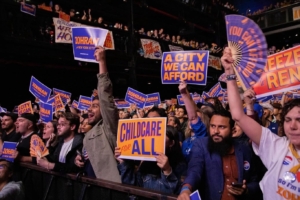
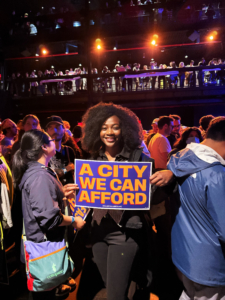
Free childcare was the promise. Today’s announcement is the beginning. And the Test.

Today, New York took a significant step toward reshaping how families experience work, parenthood, and economic survival.

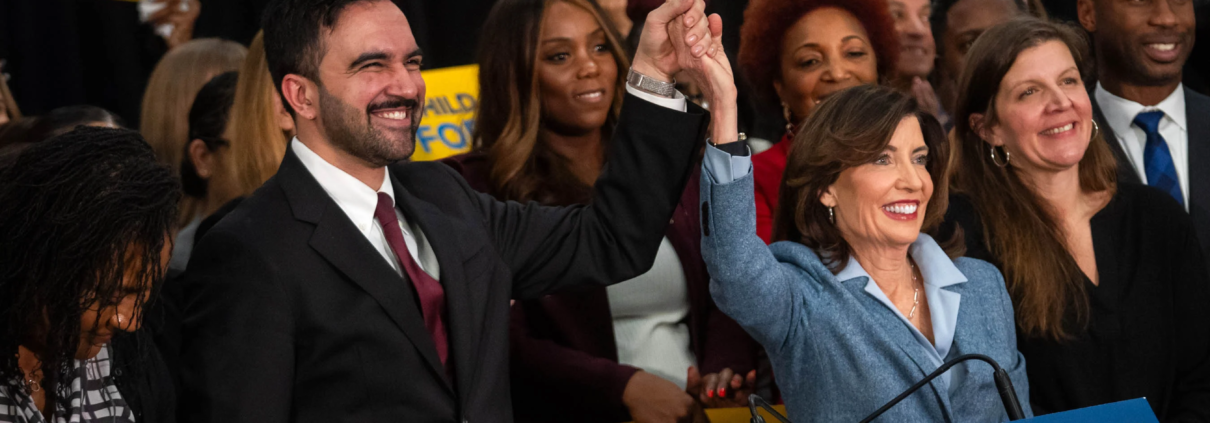
Governor Kathy Hochul and Mayor Zohran Mamdani announced a plan that would give New York City parents access to free childcare for 2-year-olds, marking a major expansion of the city’s early childhood education system and building on the existing universal Pre-K model. Governor Hochul has committed to fully funding the first two years of the program. The rollout will be phased, beginning in “high-need areas” before expanding citywide by the program’s fourth year. Hochul has also pledged to pursue a broader statewide free childcare initiative in the future.

For Mayor Mamdani, the announcement carries particular political weight. Making childcare free was one of his most visible and consistent campaign promises, and this plan represents the first concrete step toward delivering on that vision just days after taking office. In his words, the initiative is meant to demonstrate how government can “serve working families” more effectively and make New York a more affordable place to live.

The motivation behind the policy is hard to dispute. As Hochul put it, “the cost of childcare is simply too high.” Anyone who lives in New York already knows this. I know parents who want to work more hours, accept promotions, or return to school but cannot make the math work. I know single mothers who structure their entire lives around childcare availability. For many families, childcare is not just another bill, it is the gatekeeper to economic participation.

From that perspective, free childcare is a powerful and necessary idea and that is why why many New Yorkers responded positively to Mamdani’s promise. But ambition alone does not guarantee success. Implementation does.

The economic reality behind free child care New York

Free childcare for families does not mean free childcare to provide. Behind every childcare slot is a provider, often a woman, often an immigrant, frequently operating a home-based daycare with strict child-to-staff ratios, long hours, and real liability. Under this new system, many of these providers will effectively become contractors for the city, subject to fixed reimbursement rates, increased oversight, and higher expectations.

The risk is not theoretical. If reimbursement rates do not reflect the real cost of care in New York City: rent, food, insurance, labor, inflation; then the system will survive only by relying on underpaid or unpaid labor. That is how well-intentioned social policy quietly shifts its costs onto the very people delivering it.

A childcare system that depends on sacrifice rather than sustainability will eventually burn out its workforce, reduce quality, and shrink supply. That helps no one. If this program is to last, providers must be able to pay themselves, hire help when required, and operate without living on the edge of collapse. Otherwise, “free childcare” risks becoming free only because someone else is quietly absorbing the cost.

Free child care and the risk of excluding working families

There is another concern that deserves equal attention, and it requires nuance, not caricature. When officials say the rollout will begin in “high-need areas,” this often translates into strict income-based eligibility. In practice, this can mean that families with little or no declared income are prioritized. In many cases, this is entirely appropriate. People lose jobs. Families go through crises. Some parents are in transition, rebuilding, retraining, or genuinely struggling despite effort. Those situations deserve support, and no serious discussion about fairness should dismiss that reality.

At the same time, we cannot ignore how this system functions in practice over the long term.

In New York City, individuals with very low or no declared income often already have access to multiple forms of assistance — food stamps, cash assistance, subsidized or free housing, healthcare coverage, and other support programs. Meanwhile, parents with moderate earning, working full time, paying rent at market rates, receiving no housing assistance, no food assistance, and limited tax relief are frequently deemed “too rich” to qualify for help.

A parent making $40,000 – $70,000 in New York City is not wealthy. Those families are not comfortable. They are not secure. They are often one emergency away from collapse. And yet they are heavily taxed to fund the very systems from which they are excluded. This is where fairness becomes complicated and nuanced.

Support during hardship is one thing. But when someone has remained officially “poor” for many years or decades, fully embedded in multiple assistance programs, while others work continuously with no safety net, it is reasonable to ask difficult questions. At what point does a system designed to help people get back on their feet risk locking them in place? And at what point does that become unfair to those who are doing everything society asks of them?

This is not about blaming individuals. It is about designing policy that does not unintentionally reward permanent disengagement from work while penalizing effort and honesty.A childcare program meant to strengthen the economy should support work, not quietly undermine it. It should help people move forward, not trap them in static categories that benefit some while exhausting others.

A strong idea that demands careful execution

For this initiative to succeed — economically, politically, and morally — several principles must guide its implementation:

  • Reimbursement must be cost-based, not politically convenient, and indexed to real living costs.
  • Providers must have income stability, with predictable payments and protection from enrollment volatility.
  • Eligibility should avoid hard income cliffs, so families are not punished for earning more or accepting raises.
  • Oversight should prevent abuse without criminalizing honesty or survival, both for families and providers.
  • Support must accompany regulation, especially for home-based providers asked to meet public-system standards.

None of this contradicts the spirit of free childcare. In fact, it is what gives that spirit a chance to endure. I supported Zohran Mamdani’s vision because it spoke to a reality that cuts across ideology: affordability. Today’s announcement is a meaningful step toward that vision.

But bold promises require equally honest design. Free childcare can transform lives if it does not rest on invisible labor, exclude working families, or create cycles of dependency instead of mobility. Getting this right means refusing to romanticize sacrifice and insisting that fairness applies to everyone involved: parents, providers, and taxpayers alike.

Today was the beginning. What follows will determine whether this promise becomes a durable public good  or another well-intentioned idea strained by reality.


A Landmark exhibition closes ECOWAS golden jubilee celebration at the UN

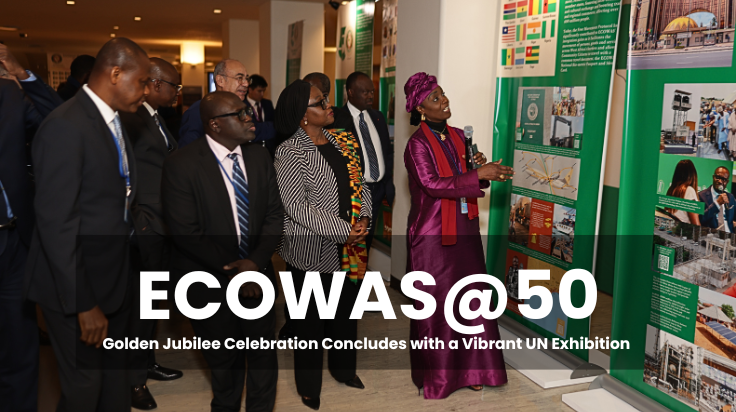
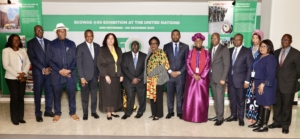
New York, November 25, 2025. The ECOWAS Permanent Observer Mission to the United Nations hosted the closing ceremony of the ECOWAS Golden Jubilee Commemoration with an exhibition at UN Headquarters, marking fifty years of regional integration, cooperation, and collective resilience across West Africa. Held under the theme “ECOWAS at 50: Stronger together for a brighter future — celebrating strength, resilience and progress,” the event brought together ambassadors, UN officials, partners, and members of the West African community for an evening of reflection, celebration, and renewed commitment to the region’s future.

Ambassador Kinza Jawara-Njai: Recalling the vision of the founders

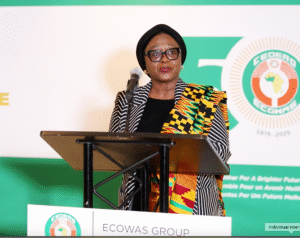
In her opening remarks, H.E. Amb. Kinza Jawara-Njai, ECOWAS Permanent Observer to the UN, reminded guests that ECOWAS was founded by visionary leaders who sought to unite a multilingual region of Portuguese-, French-, and English-speaking countries. She noted that “the goal of these leaders was simple: to promote cooperation, integration, and to unite a diverse citizenry.” Their collective ambition, she said, was to build a community rooted in self-sufficiency and economic prosperity.

Ambassador Jawara-Njai described the exhibition as a visual collage of ECOWAS’ interventions over 50 years, highlighting what has been achieved, the challenges faced, and the organization’s ongoing efforts to uphold peace, security, good governance, and sustainable development. She personally guided the audience through the exhibition, walking them through the institution’s history and impact across the region.

Ambassador Michal Imran Kanu: A call for renewed determination

H.E. Amb. Michal Imran Kanu, Permanent Representative of Sierra Leone and Chair of the ECOWAS Group at the UN, emphasized ECOWAS’ role as a cornerstone of multilateralism in Africa. He underscored the organization’s work in removing barriers to free movement, promoting trade and infrastructure, strengthening democratic governance, and leading early peacekeeping and mediation efforts in conflicts across Sierra Leone, Liberia, Nigeria, and beyond. He reminded attendees that the region continues to confront significant challenges, including unconstitutional changes of government, violent extremism, climate fragility, organized crime, and a fast-growing youth population seeking opportunities. Yet, he added, the ECOWAS story remains one of resilience, consultation, and determination, carried by institutions and communities that refuse to give up.

Calling the exhibition a powerful reminder of the region’s progress, he urged the international community to deepen cooperation with ECOWAS in pursuit of the UN 2030 Agenda, the African Union’s Agenda 2063, and ECOWAS Vision 2050. “This 50th anniversary is not just a moment to look back,” he said, “but a call to look forward with renewed determination.”

ASG Martha Ama Akyaa Pobee: A journey of strength, lessons, and hope

Delivering remarks on behalf of the United Nations, Ms. Martha Ama Akyaa Pobee, UN Assistant Secretary-General for Africa (DPPA-DPO), praised the partnership between the UN and ECOWAS and reaffirmed the UN’s commitment to supporting the region’s security, governance, and development priorities. She described the exhibition’s theme as one that captures the essence of West Africa’s journey, a story marked by unity, cultural diversity, and the determination to overcome challenges. She emphasized that, like any long journey, ECOWAS’ path has included highs and lows, yet continues to offer powerful lessons on resilience and transformation.

ASG Pobee noted that the exhibition is both a tribute to the founding fathers of ECOWAS and an inspiration for future action. She highlighted the strong collaboration between ECOWAS, the African Union, and the United Nations  particularly through the UN Office for West Africa and the Sahel (UNOWAS)  and encouraged continued joint efforts to address security threats, development challenges, and governance concerns.

“A united, integrated, prosperous, and peaceful West Africa remains possible,” she said, urging all partners to keep the vision alive.

A Celebration Shared by Leaders and the Public Alike

Throughout the evening, diplomats, guests, and members of the West African diaspora expressed deep pride and hope. Many reflected on how ECOWAS’ journey mirrors their own aspirations for unity and progress across the continent.

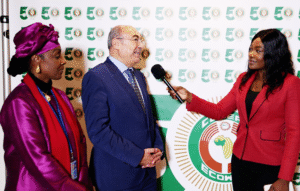
Among them was H.E. Ambassador Mohamed Edress, Permanent Representative of the African Union to the UN, who warmly congratulated ECOWAS and Ambassador Jawara-Njai on the Golden Jubilee. He noted that the “fifty years has been full of developments and events that have shaped our continent,” describing ECOWAS as “a positive example of the Africa we aspire to.”

He emphasized that as the OAU transformed into the African Union, the shared vision has remained the same: “a more integrated, more prosperous, more peaceful Africa.” The exhibition, he added, offers “inspiring landmarks of the ECOWAS project,” and he expressed hope that the progress showcased will “set the path for other regions of our beloved continent.”When asked for a message to Africans and friends of Africa, he responded:“Africa is on the rise. Africa is the future. And Africa is empowered by its youth and women.”

Guests echoed this sentiment throughout the night, hopeful that the next 50 years will bring deeper unity, stronger institutions, and greater opportunities for all West Africans. The evening concluded with a vibrant West African cocktail reception featuring live African music, symbolizing the creativity, spirit, and cultural richness of the region. As guests mingled, reflected, and celebrated, the atmosphere captured the essence of the exhibition: a community honoring its past while stepping confidently into its future.

As ECOWAS enters its next half-century, the exhibition stands as a powerful testament to what regional cooperation has made possible and what remains within reach. A peaceful, integrated, prosperous West Africa is not only possible, it is within our grasp.


Daring peace: Sant’egidio’s method of dialogue in a world at war

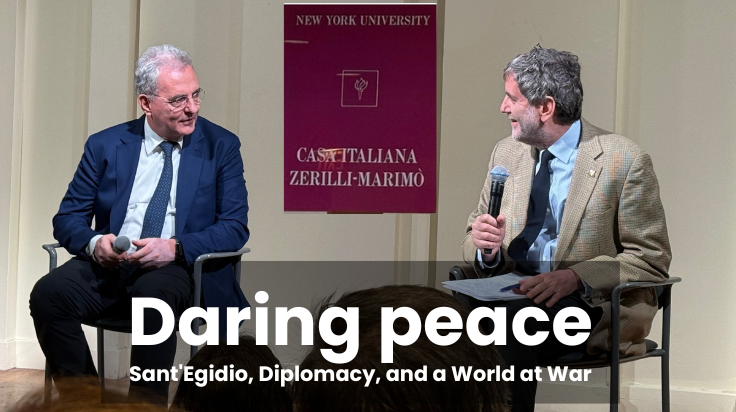
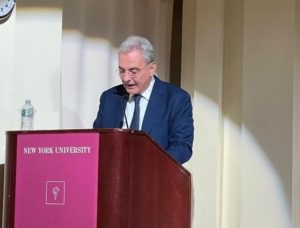
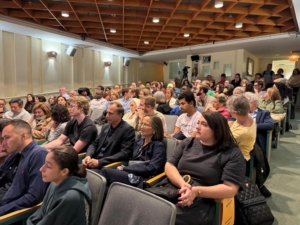
At a time when more than fifty armed conflicts rage across the globe, the urgency of peace could not be clearer. This was the message brought to New York University’s Casa Italiana Zerilli-Marimò, where Marco Impagliazzo, President of the Community of Sant’Egidio, delivered a powerful lecture entitled Daring Peace. The event, which also featured remarks from Andrea Bartoli, president of the Sant’Egidio Foundation for Peace and Dialogue and a Columbia University scholar, offered both a historical perspective and a call to action for peace building in today’s fractured world.

Sant’egidio’s legacy

Founded in Rome in 1968, Sant’Egidio is a lay Catholic movement rooted in prayer, service to the poor, and the pursuit of peace. Today, it is active in over 70 countries, working with marginalized communities while also mediating conflicts on the international stage. Its best-known achievement remains the Mozambique peace agreement of 1992, a landmark example of how patient dialogue can end years of bloodshed. Since then, Sant’Egidio has been involved in numerous other efforts, including initiatives in Algeria in the 1990s, and more recently in South Sudan.

The human cost of war

Professor Impagliazzo underscored why the theme of peace is so pressing today. In every war, he reminded the audience, “the first victims are the defenseless: children, women, the elderly, the disabled, and the poor.” War, he said, “continues to kill long after it has ended,” leaving deep wounds in societies where almost all casualties are civilians. Whether in Syria, Yemen, Libya, or South Sudan, the devastation has counted in the hundreds of thousands, if not millions, of lives lost or displaced.

Quoting Pope Pius XII’s famous words “everything is lost in war, nothing is lost in peace”, he invited listeners to reflect on the futility of violence and the enduring hope that dialogue offers.

The path of peace

From Mozambique’s experience, Impagliazzo emphasized that “peace is not achieved with a magic wand. It is built little by little.” Far from being naïve, peace requires realism, sacrifice, and perseverance. War may feel more instinctive, more logical, especially when fueled by the mentality of victimhood, but as he reminded the audience, “war begins long before weapons are used. Hate and propaganda begin in the mind.”

Building peace, therefore, means confronting the culture of the enemy and daring to see the other not as a stranger but as a brother. He stressed: “peacemaking is not synonymous with surrender. Politics can achieve what war cannot. History teaches us that war does not resolve crises; it multiplies them through revenge and more wars.”

Friendship as resistance

What can ordinary people do in such a bleak context? Impagliazzo urged resistance to hatred and nationalism. He insisted on the underestimated power of friendship, sympathy, and human connection: “We need the force of sympathy. We need to stop people from being infected with hatred. True resistance is taking the time to understand each other, exploring other ways, and giving peace a chance.”

Peace, he concluded, is inseparable from hope. “There is no peace without hope, but peace itself gives hope”. He adds that those who believe in peace are not the idealists. They are the realists. The true idealists are those who think you can magically solve problems through war.

A call to action

One distinctive aspect of Sant’Egidio’s method is confidentiality: creating discreet spaces where adversaries can meet, listen, and begin to articulate a shared vision for peace. Much of its work takes place away from the headlines, but its quiet impact has transformed nations.

In our current environment where the temptation to resort to arms remains strong, Sant’Egidio’s example is a reminder that the courage to dialogue is perhaps the most daring and the most necessary form of resistance.


Women leaders gather in New York for high-level forum on political leadership

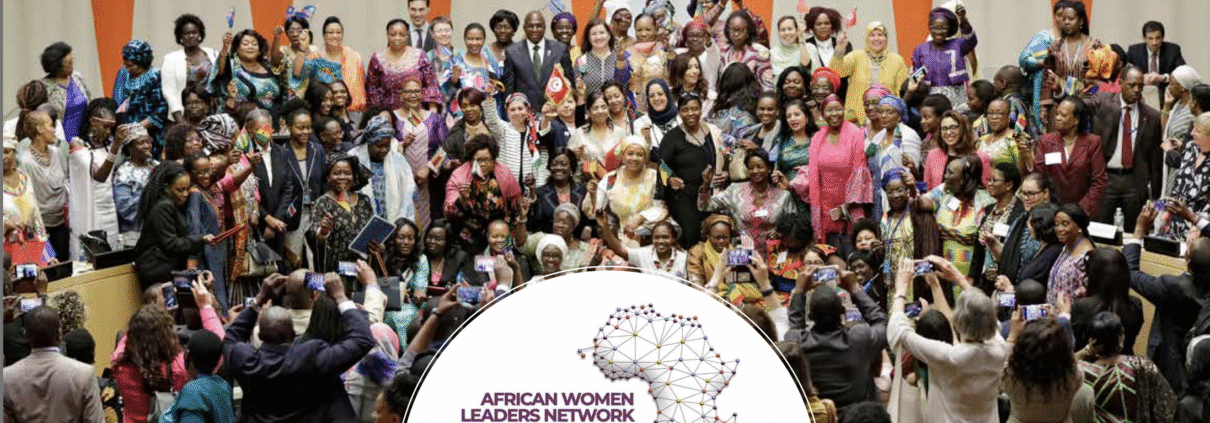
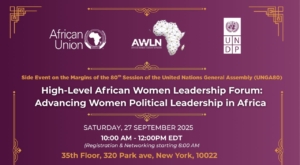
New York, September 27, 2025 — The Africa Women Leaders Network (AWLN) is set to host a landmark high-level forum on women’s political leadership in New York, on the margins of the 80th Session of  United Nations General Assembly(UNGA80). This event will bring together government delegates, parliamentarians, civil society actors, and youth leaders to chart a bold path forward for women’s leadership across Africa and the world under the theme, “High-Level Africa Women’s Leadership Forum: Advancing Women’s Political Leadership in Africa.”

Background

The timing of the forum is both symbolic and urgent. It comes as the international community reflects on the 30th anniversary of the Beijing Declaration, a milestone agreement that set the global agenda for gender equality. While progress has been made since 1995, across Africa, women are increasingly taking up leadership roles in governance, business, civil society, academia, and community development. Despite progress, barriers such as gender inequality, limited access to resources, and underrepresentation in decision-making spaces persist. The High-Level Africa Women Leadership Forum seeks to provide a platform for dialogue, networking, and strategic action to amplify women’s voices and leadership across sectors.

This gathering will therefore focus on accelerating change, not only by celebrating trailblazers but also by building alliances, mobilizing resources, and equipping women to step into political leadership.

The Africa Facility for Women in Political Leadership

Central to this effort is the Africa Facility for Women in Political Leadership, a flagship initiative in partnership with the United Nations Development Programme (UNDP) and the African Union (AU) under AWLN’s Governance and Political Participation pillar. The initiative aims to create a robust support system for women in politics through:

  • Leveraging leadership training to strengthen campaign management,
  • Conducting research and policy analysis to dismantle structural barriers
  • Establishing safe spaces to protect women against gender-based political violence

Distinguished leaders and trailblazers

The Forum will feature the voices of prominent leaders who have shaped the course of women’s leadership in Africa and globally, including:

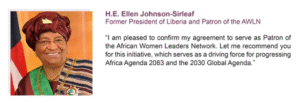
  • H.E. Ellen Johnson Sirleaf, Former President of the Republic of Liberia & AWLN Patron
  • H.E. Sahle-Work Zewde, Former President of the Republic of Ethiopia & AWLN Elder
  • H.E. Amina Mohammed, Deputy Secretary-General of the United Nations
  • Ms. Ahunna Eziakonwa, Assistant Administrator, Assistant Secretary General, and Director of the UNDP Regional Bureau for Africa

A platform for change

Beyond the policy discussions and institutional frameworks, this Forum is above all a gathering of women who carry stories, resilience, and vision. From presidents to young leaders, their presence in New York is a reminder that every step forward is hard-won, and every voice matters.

As the world reflects on 30 years since Beijing, this moment is not only about commitments: it is about courage, solidarity, and the belief that when women lead, the entire societies rise.

Charlie Kirk’s death and the hypocrisy of tolerance

Charlie Kirk’s assassination is a tragedy period. A young man, barely 31 years old, gunned down while doing what he always did: speaking his truth in public. I did not agree with Charlie on everything. I often found his stance on guns too extreme, his nationalism too rigid, his immigration policies too harsh for someone like me, an immigrant who knows the long wait and the sacrifices to build a life here, and much more. But admiration does not require blind loyalty. I followed him because he was sharp, brilliant in debate, and unafraid to say what he believed, even when it made him unpopular. That courage deserves respect.

What devastates me more than the bullet that ended his life is the reaction I see from many who claim the banner of tolerance. Celebrating a man’s death because he was your political opponent is not justice. It is cruelty. It is hypocrisy. To mock his death because he opposed gun control is to treat a tragedy as a punchline. To cheer because you disliked his worldview is to reveal that your so-called tolerance was only a mask, one that falls the moment someone dares to think differently. And this celebration is not harmless noise on the internet; it reflects a deeper sickness in our society, a culture that has lost the ability to separate disagreement from dehumanization.

This is bigger than Charlie Kirk. This is about who we are becoming as a society. We are entering a dangerous age where disagreement equals dehumanization, where debate is replaced by cancellation, and where violence is justified if the target is the “enemy.” But what future can we build on that foundation? If every life is only as valuable as its ideology, then none of us are safe. The same logic that excuses violence against one opponent today can be used to excuse violence against another tomorrow. A society that normalizes selective empathy is a society that prepares its own downfall.

And let us not forget: Charlie Kirk was not only a commentator; he was a husband and the father of two young children. Behind the headlines and the controversies is a family whose life has been irreparably shattered. Two children will now grow up without their father, a wife will bury her partner, and yet some among us see only a political victory. If we cannot pause to recognize the human cost of this tragedy, then our moral compass is broken beyond repair.

I am African, I am Christian, I am an immigrant, and I hold views that put me on neither extreme of the political spectrum. I believe in compassion for the vulnerable and in responsibility for the able. I believe in protecting life while respecting pluralism. I believe in family, faith, democracy, fairness and individual freedom. And precisely because of those values, I cannot stand by silently when hatred masquerades as justice. Democracy itself cannot survive if we only grant empathy to those who agree with us. Freedom means nothing if we use it to cheer the silencing of others.

Charlie Kirk is gone, but the real test remains for the rest of us: will we use moments like this to deepen the spiral of division, or will we step back and remember the humanity of those we oppose? If we cannot mourn the death of someone we disagreed with, then we have lost something far greater than a political battle. We have lost our soul. And if a nation loses its soul, no amount of progress, no accumulation of wealth, and no victories in the culture wars will save it from collapse.

  We are not moving forward. We are marching backward into barbarism.

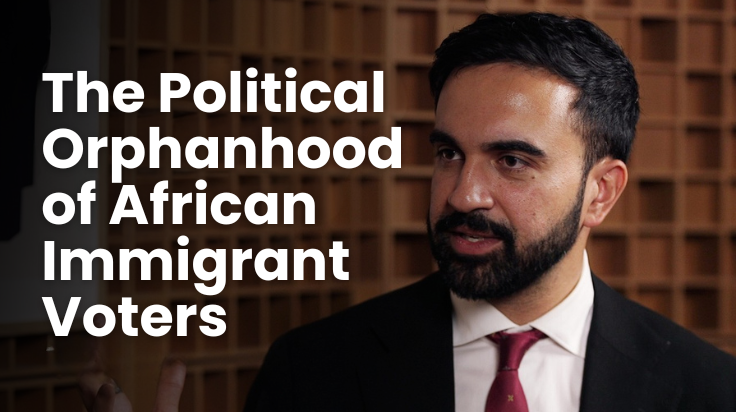
The Political orphanhood of african immigrant voters and Why this NYC race feels different

African immigrants in New York City live a paradox. We are visible in the workforce, in churches, in community associations — yet invisible when political campaigns draw their maps. We are nurses, Uber drivers, small business owners, home health aides, engineers, and teachers. We fill the city’s arteries with our labor. But politically, we remain unclaimed.

Split between two incomplete choices

We do not vote as a bloc. Some of us lean toward the Democratic Party because of its pro-immigration policies. Others quietly agree with Republican rhetoric on personal responsibility, entrepreneurship, and the dignity of hard work. But neither party has fully spoken to us. Democrats too often stop at representation and identity politics. Posing for photos in our cultural clothing, but rarely returning to discuss policy after the campaign is over. Republicans often speak to our values on work and family, but alienate us with rhetoric and policies that seem blind to our immigrant realities.

This is why, even in deep-blue New York, I have met African voters — many of them first-generation immigrants — who were drawn to Donald Trump. Not because they embraced every policy or every word, but because he spoke, loudly and unapologetically, about work, affordability, and the feeling that “everyday people” had been forgotten. In immigrant barber shops in the Bronx, over attiéké in Harlem restaurants, and in Sunday church gatherings, I have heard uncles and aunties say the same thing: “I don’t agree with everything, but he talks about real life.”

Our political orphanhood is compounded by the way our lives straddle two worlds. We send money back home while paying sky-high rent here. We juggle double shifts not only to survive, but to build enough credit to own a home. We dream of starting businesses but spend months navigating city bureaucracy. Many of us are registered to vote, yet don’t see ourselves in campaign messaging, so we quietly abstain.

A different kind of leftist candidate

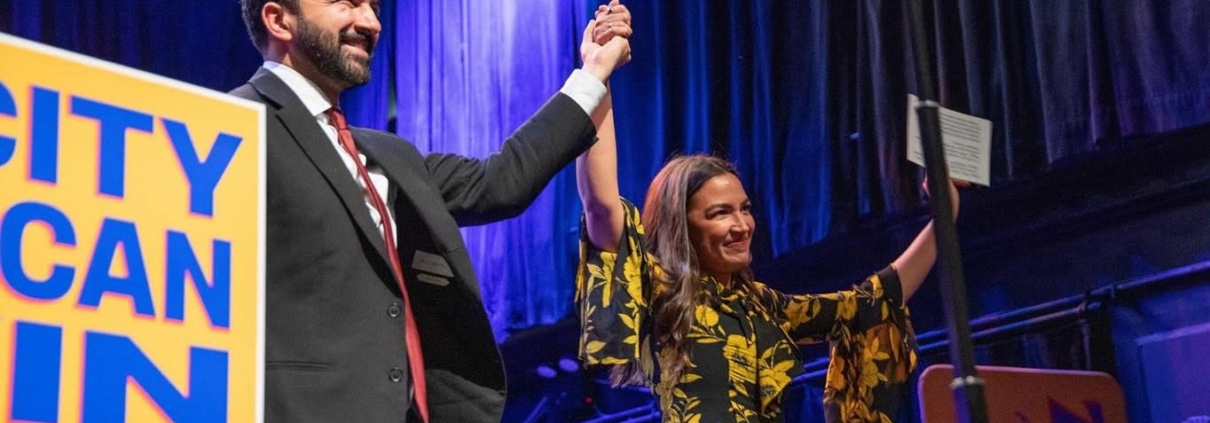
That is why the candidacy of Assemblymember Zohran Mamdani feels different. He is from the left, yet his campaign is not built on baiting controversial identity battles and baseless fear mongering. Instead, he is talking about the kitchen-table issues that shape the lives of working-class families: fare-free buses so workers keep more of their paycheck; rent-stabilization that actually protects tenants; higher wages that match the real cost of living in New York; universal childcare so parents can work without fear of losing everything to daycare bills.

These are not abstract promises. They touch daily life. For the Ghanaian home health aide in the Bronx who spends $132 a month on a MetroCard. For the Senegalese father in Queens who pays half his salary in rent. For the young Burkinabè graduate in Harlem juggling two part-time jobs because entry-level wages can’t cover student loans.

In my 11 years in the United States, I have seen many politicians pass through our spaces: shaking hands, speaking a few words in our languages, posing for photos, only to vanish after Election Day. I have never felt truly comfortable aligning with one, until now. Not because of party loyalty, but because the conversation is about life, not labels.

This race is not about left versus right, progressive versus moderate. It is about whether New York City can elect a leader who understands that its future depends on those who still believe in its promise enough to keep building here. The African diaspora in NYC is large enough to matter, diverse enough to shape outcomes, and tired of being politically invisible. This election could be the moment we step forward.

Sortir du lot. Savoir saisir l’instant

Transformer une scène maladroite en levier d’influence


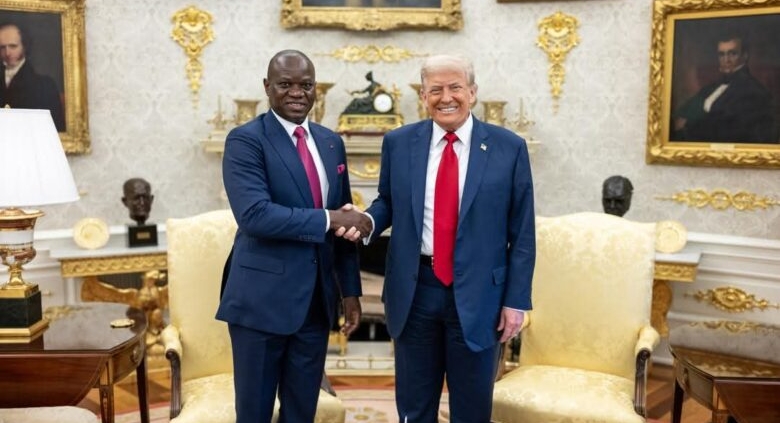
La récente rencontre entre Donald Trump et plusieurs chefs d’État africains fait couler beaucoup d’encre. Oui, il y a eu des maladresses diplomatiques. Mais non, le problème n’est pas cette polémique stérile autour de la photo.

Des chefs d’État invités à se présenter eux-mêmes. Trump qui complimente le président du Liberia , un pays anglophone pour sa maîtrise de la langue anglaise. Des discours truffés de flatteries, jusqu’à cette discussion gênante sur le Nobel de la paix.

Et pourtant… dans ce théâtre maladroit, un homme a appliqué une règle fondamentale du pouvoir :

“Ne jamais apparaître comme celui qui demande. Offrez, proposez, mais ne vous soumettez jamais.” — Robert Greene

Brice Clotaire Oligui Nguema, président du Gabon, n’est pas venu chercher des faveurs. Il est venu vendre une vision, dans un langage que Trump comprend : pouvoir, business, pragmatisme.

  • Il n’a pas dénoncé le déséquilibre : il l’a retourné.
  • Il n’a pas supplié : il a repositionné.
  • Il a compris que, dans certaines arènes, la dignité se défend par la posture, pas par la protestation.

L’art du miroir : parler à l’autre dans sa propre langue

Nguema s’est présenté à Trump en miroir, reflétant ses obsessions :emploi, souveraineté, compétitivité  pour y insérer les priorités du Gabon. Et surtout, il a transmis un message clair : “Nous ne courons pas après l’Amérique. Mais nous savons jouer avec les règles de l’Amérique.”

Trump aime le pragmatisme ? Il lui répond : « Je suis un général, moi aussi j’aime le pragmatisme. »Trump veut relocaliser la production industrielle ? Le Gabon veut aussi transformer ses matières premières localement, créer de l’emploi pour ses jeunes, et ainsi réduire les drames de l’immigration.

Dans un clin d’œil subtil à la politique migratoire américaine, il rappelle que les jeunes Africains ne choisissent pas de mourir en mer : ils fuient l’absence de perspectives. Créer de la valeur sur place, c’est aussi servir, en amont, les intérêts de l’Occident.

Mais le coup de maître, c’est cette phrase, lancée sans agressivité mais avec autorité :

« Notre marché est ouvert. Si vous ne venez pas, d’autres viendront. »

Une phrase simple, mais redoutablement stratégique. Car elle inverse le rapport. Ce n’est plus l’Afrique qui court après les investisseurs : c’est le monde qui doit saisir l’opportunité ou la laisser passer. Et dans un monde multipolaire, c’est une vérité. Ce que Brice a réussi, c’est ce que peu osent faire : exister stratégiquement dans un cadre déséquilibré, sans soumission ni arrogance.

Robert Greene l’écrit dans Les Lois de la Nature Humaine : « Le pouvoir ne se gagne pas dans l’émotion, mais dans la maîtrise des dynamiques sociales. »

Ce jour-là, le président a sans doute gagné le respect d’un homme qui ne comprend que les rapports de force. Et ça, c’est une victoire silencieuse mais déterminante.