Tag Archive for: Report

Youth Orchestra of St. Luke’s Spring Recital Brings Together Young Musicians and Families in Hell’s Kitchen

On Saturday, May 30, families, friends, educators, and community members filled the auditorium of P.S. 111 Adolph S. Ochs School in Hell’s Kitchen for the Youth Orchestra of St. Luke’s Spring Recital, an annual celebration showcasing the work of young musicians who have spent the school year learning, practicing, and growing through music.
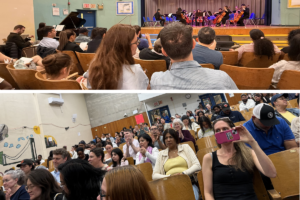
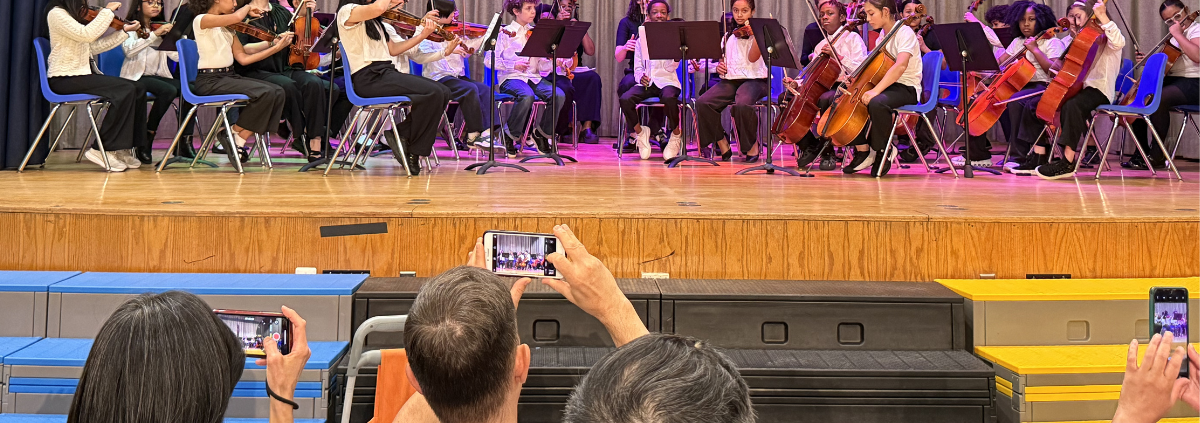
The auditorium was packed. Parents held up phones to capture every moment, younger siblings watched attentively from their seats, and proud family members erupted into applause after each performance. The atmosphere was both festive and emotional, reflecting the significance of a milestone that represented months of dedication from students, instructors, and families alike.

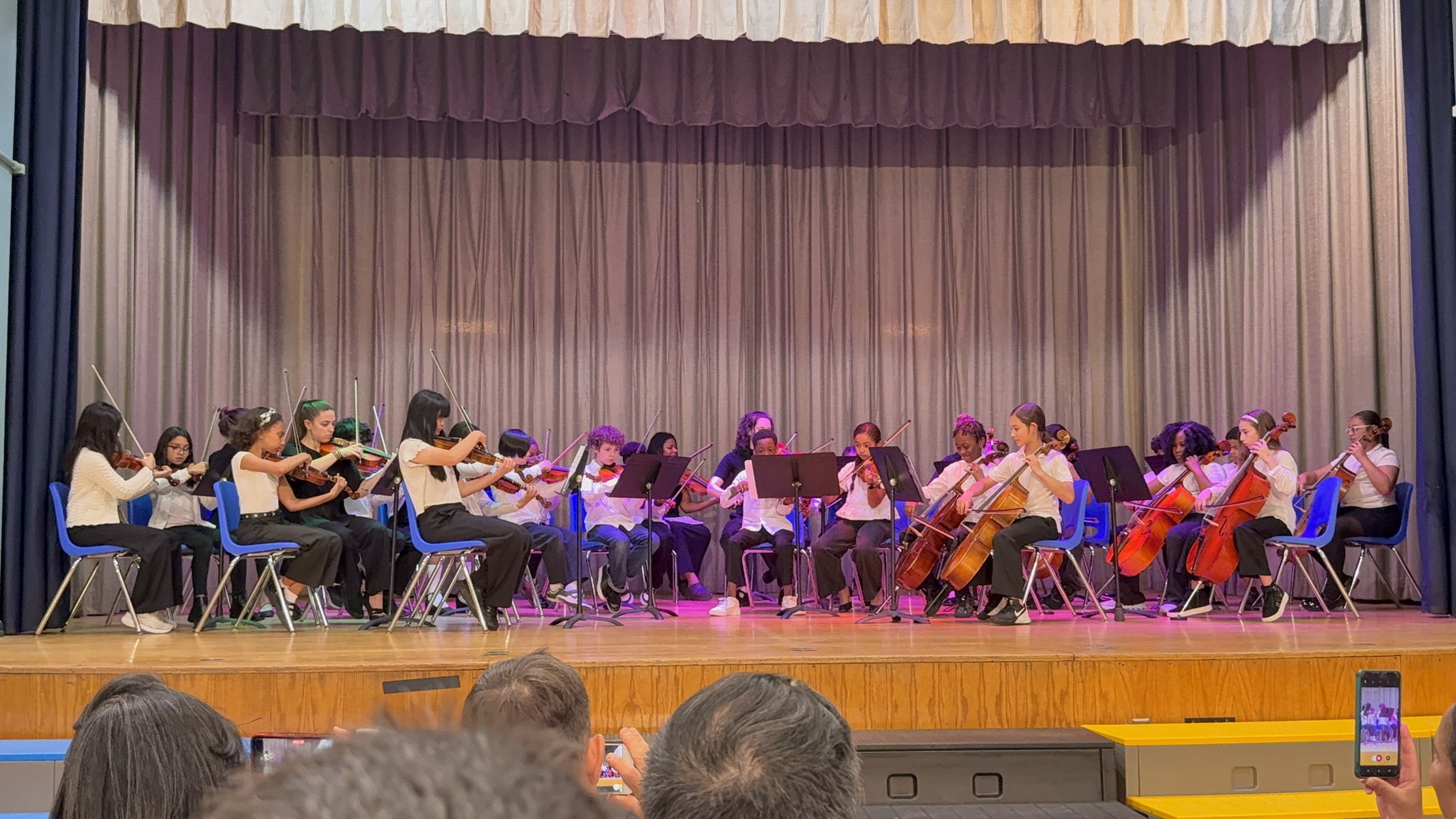
The recital brought together students from several of the program’s partner schools, including P.S. 111, P.S. 51, and P.S. 212. Children at different stages of their musical journey took the stage throughout the afternoon, from beginners completing their first year of instruction to more experienced performers who have continued developing their skills through advanced ensemble training.
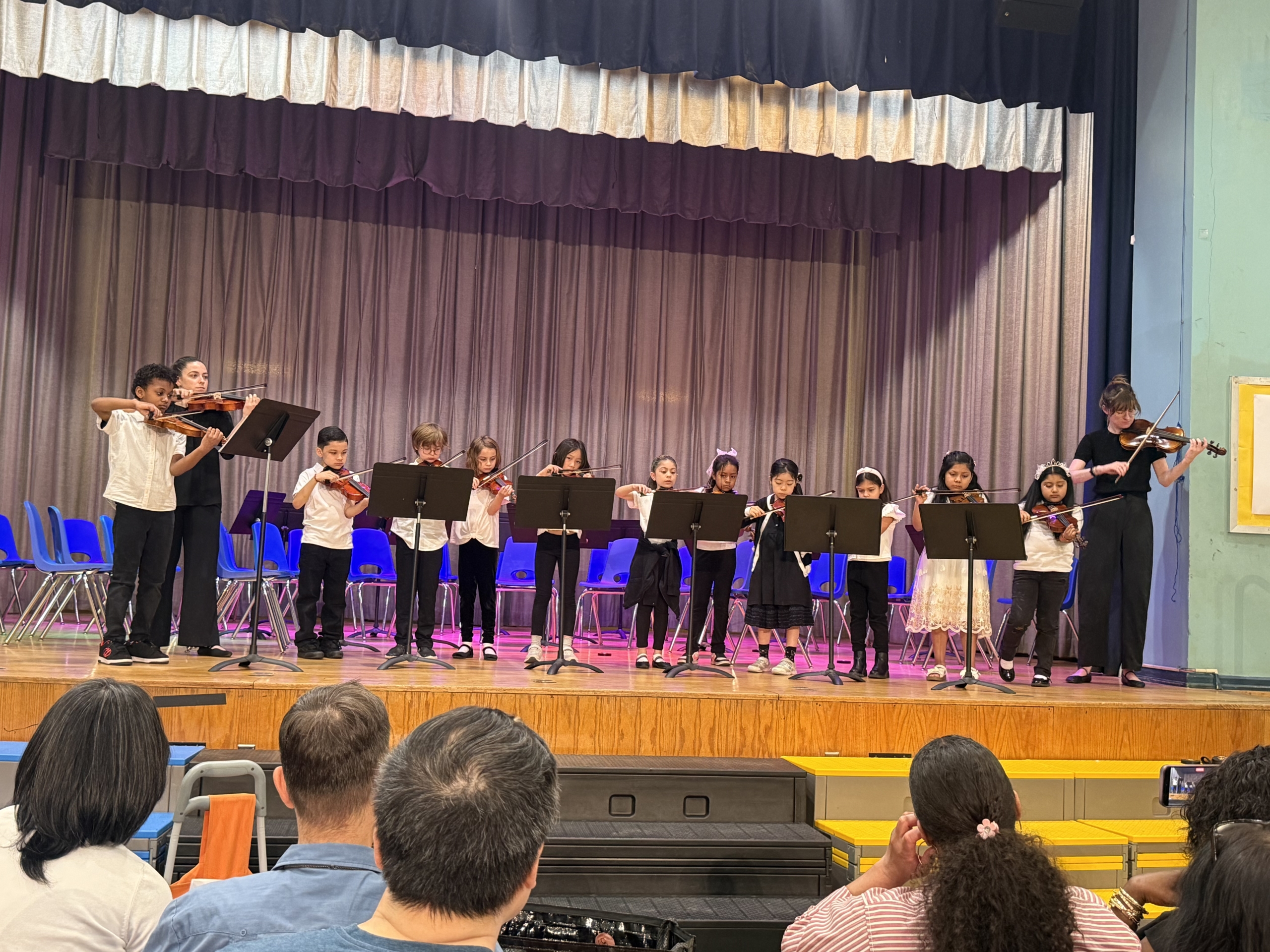
The musical selections reflected both the diversity of the students and the broad vision of the program. Audiences were treated to performances ranging from Beethoven’s Ode to Joy and Pachelbel’s Canon in D to Joe Hisaishi’s beloved Merry-Go-Round of Life, Frank Sinatra’s Time After Time, and Kendrick Lamar’s All the Stars. The repertoire moved comfortably between classical standards and contemporary favorites, allowing students to explore different musical traditions while keeping the experience engaging and accessible.
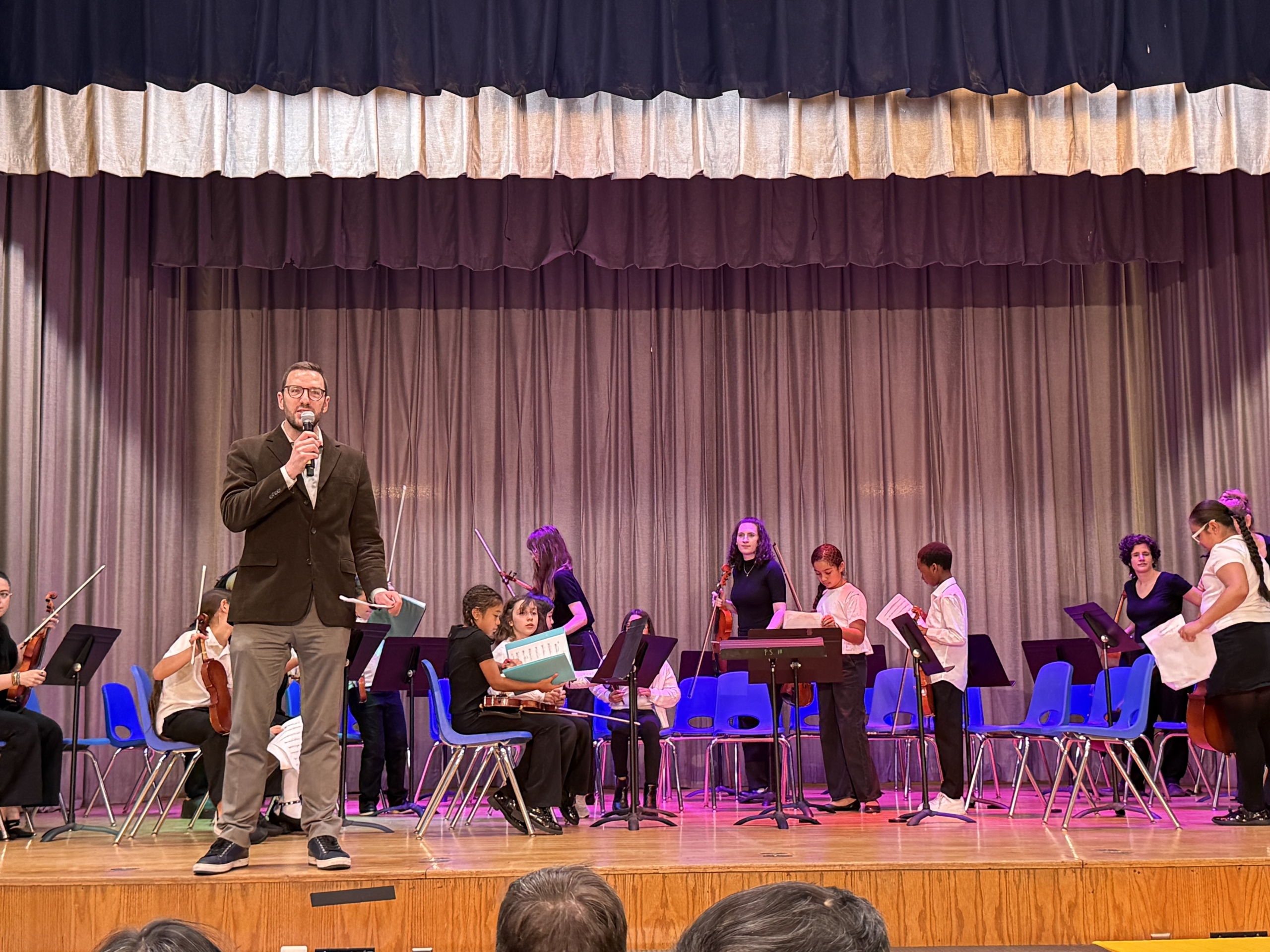
Opening the event, Andrew Roitstein, Director of Education and Community Engagement for Orchestra of St. Luke’s, welcomed families and highlighted the mission behind the Youth Orchestra of St. Luke’s. For nearly fifteen years, the organization has partnered with schools in Hell’s Kitchen to provide free instrumental music education to children who might not otherwise have access to such opportunities.
The program introduces students to violin, viola, and cello while emphasizing collaboration, performance, creativity, and personal growth. Beyond weekly lessons, participating families are also offered opportunities to attend Orchestra of St. Luke’s performances, including concerts at Carnegie Hall, free of charge, helping connect young musicians and their families to New York City’s vibrant cultural life.

Following the recital, Roitstein reflected on what makes these performances particularly meaningful. Unlike many areas of school life that are measured through grades, tests, and benchmarks, music allows children to progress at their own pace. The recital, he explained, is a moment when families and instructors can see the results of the effort, discipline, and confidence students have developed throughout the year.That growth was evident throughout the afternoon.
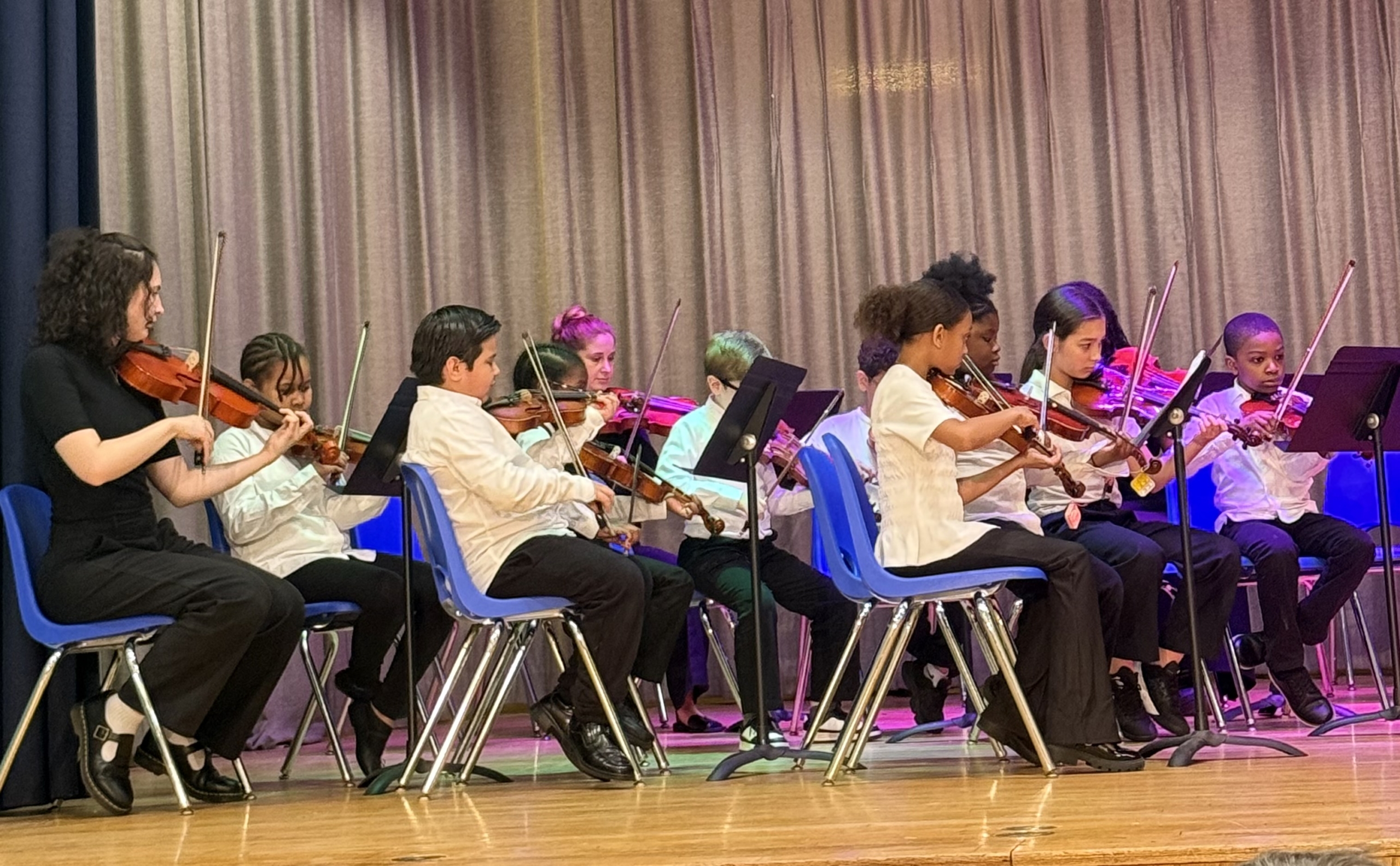
Among those helping guide students along that journey is Elisa Mingo, viola faculty member with the program. She spoke proudly of her students and the work they have put in over the course of the year. Teaching young musicians requires patience, consistency, and encouragement, but seeing students develop both musically and personally makes the experience deeply rewarding.

One of the most remarkable aspects of Youth Orchestra of St. Luke’s is the pathway it creates for continued musical growth. While students begin by receiving instruction at their individual schools, those who wish to expand their experience after their first year can join ensemble opportunities at the DiMenna Center for Classical Music.
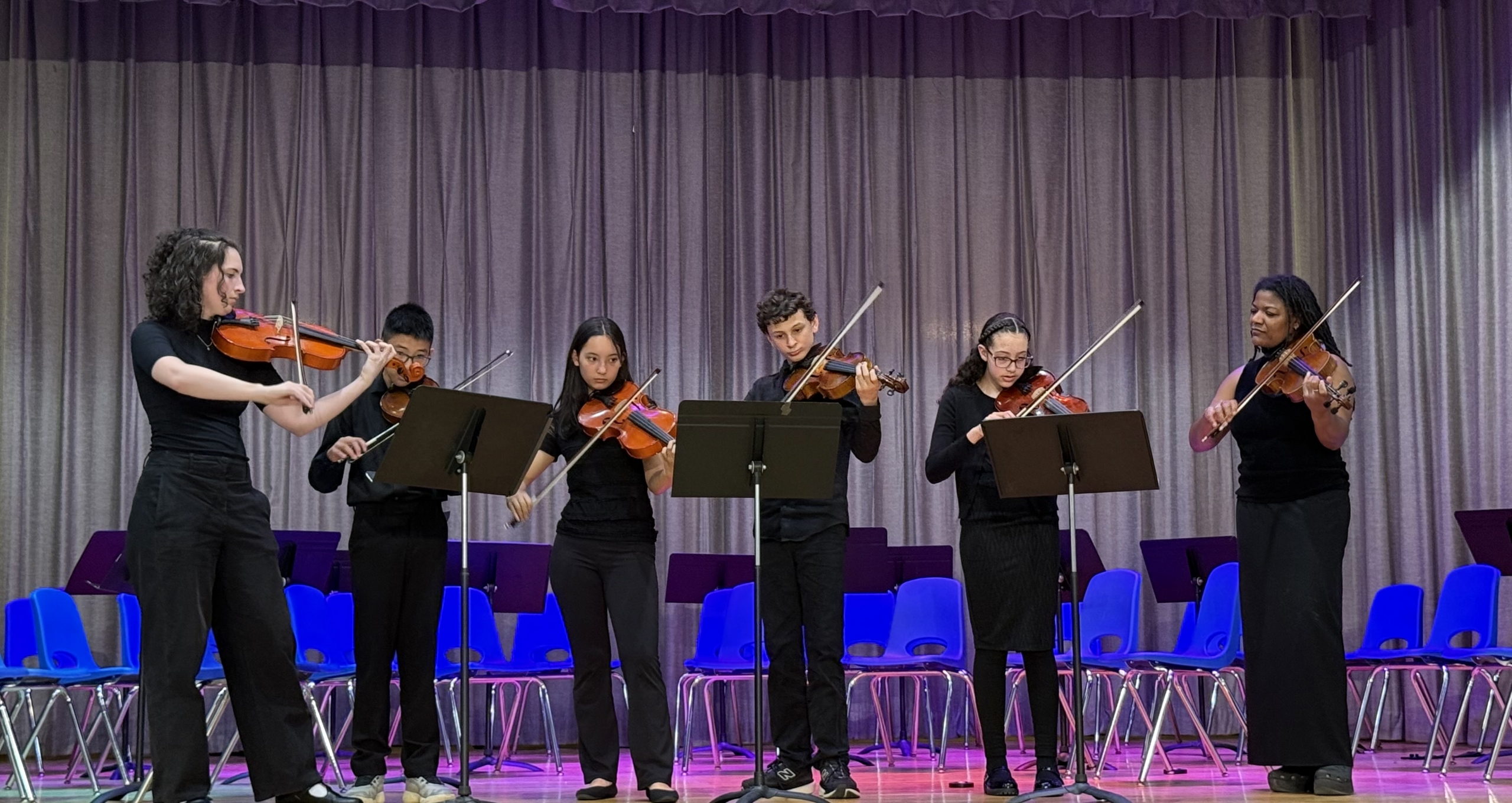
Several of those students also performed during Saturday’s recital as members of the Tutti Ensemble, one of the program’s orchestral groups. Under the direction of Dr. Yuting Wu, conductor of the Tutti Ensemble and cello faculty member, students learn the art of performing as part of a larger ensemble, developing listening skills, musical collaboration, and greater artistic confidence. The ensemble serves as an important bridge between school-based instruction and more advanced orchestral experiences.
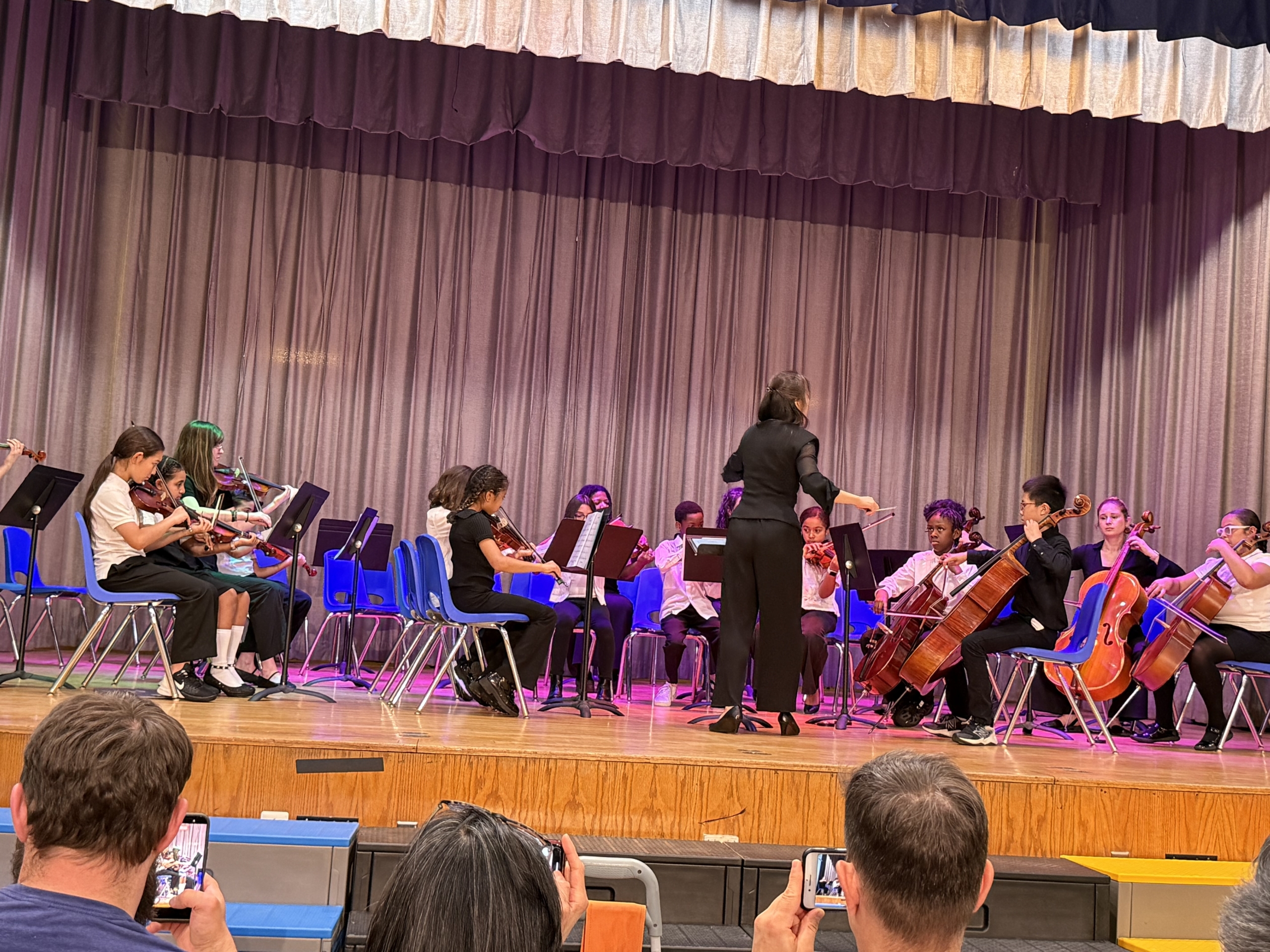
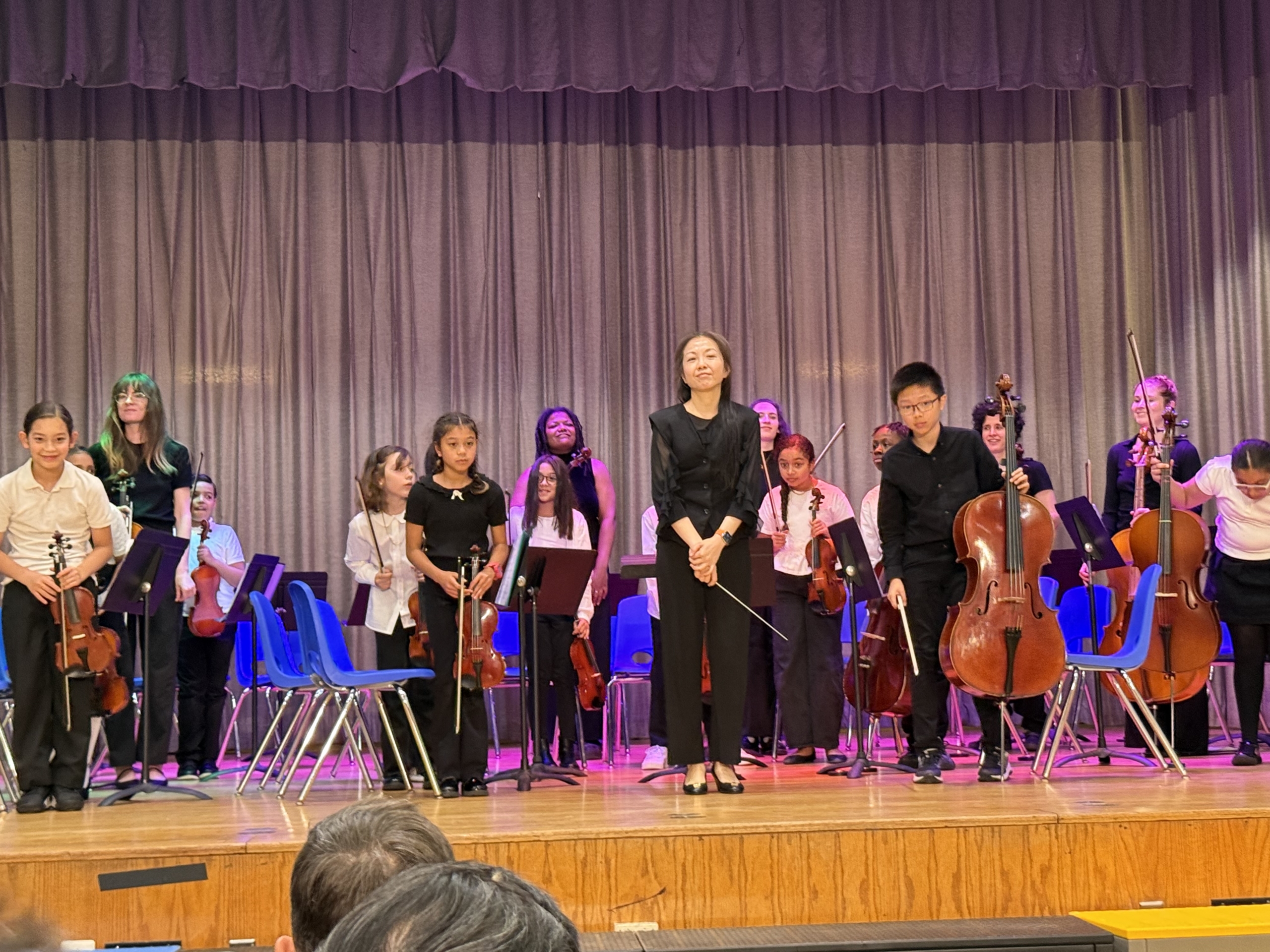
Beyond Tutti, students may continue advancing through additional ensemble opportunities, including the De La Bruyère Youth Symphony, creating a musical pathway that extends well beyond elementary school and allows young musicians to remain connected to the Orchestra of St. Luke’s community as they grow.
Parents interviewed after the concert repeatedly expressed gratitude for the program and the opportunities it provides. Several noted that access to high-quality music instruction can often be expensive and out of reach for many families. The fact that students can receive professional instruction, participate in performances, attend cultural events, and gain exposure to world-class musicians at no cost makes the program particularly valuable.
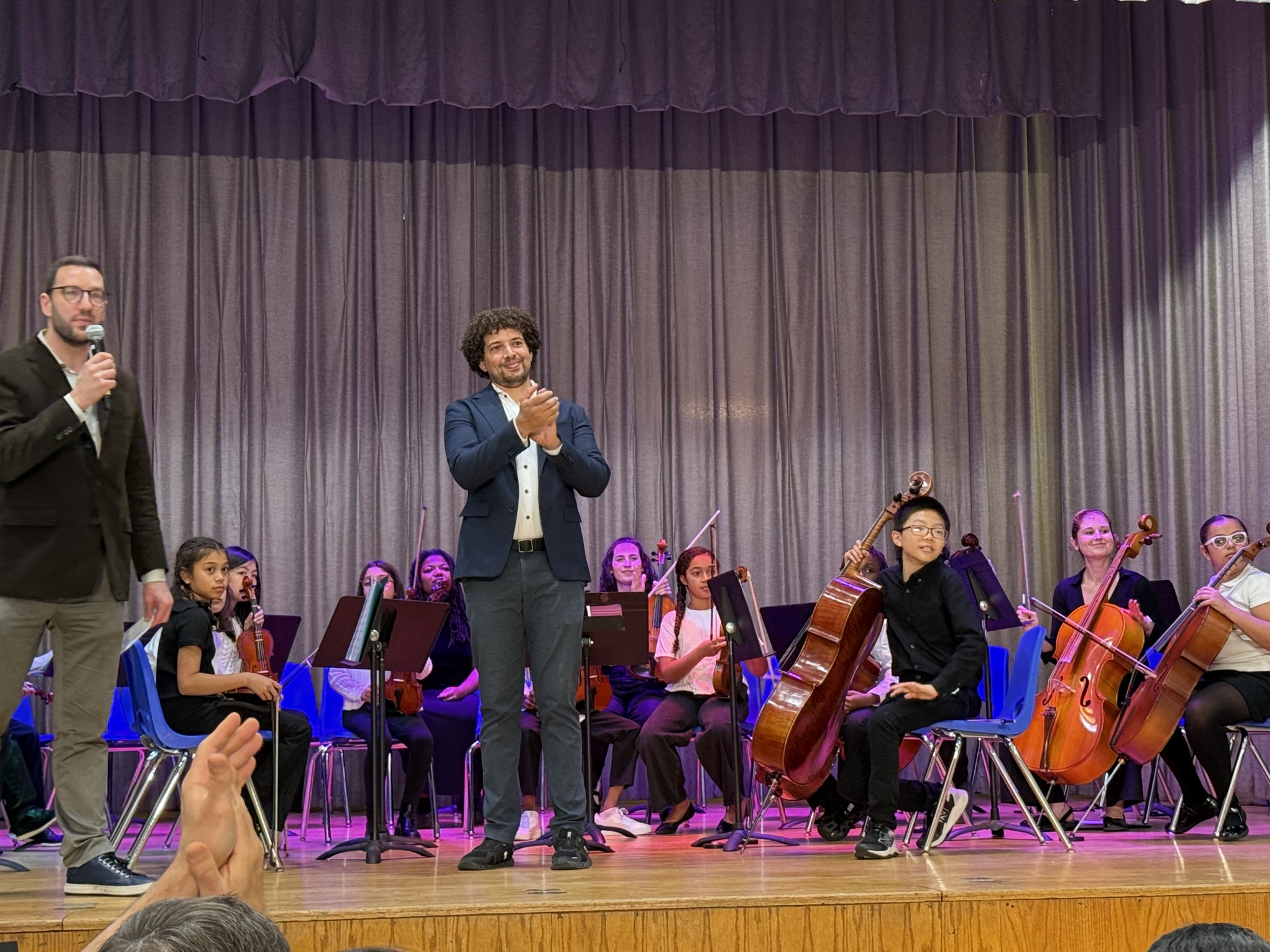
Yet perhaps the most powerful measure of the program’s success was visible on stage. There were nervous smiles, concentrated faces, careful bow movements, and moments of unmistakable pride as students performed before a full audience. Some were playing in public for the first time. Others had been part of the program for years. Together, they demonstrated not only musical ability but also confidence, discipline, teamwork, and perseverance.
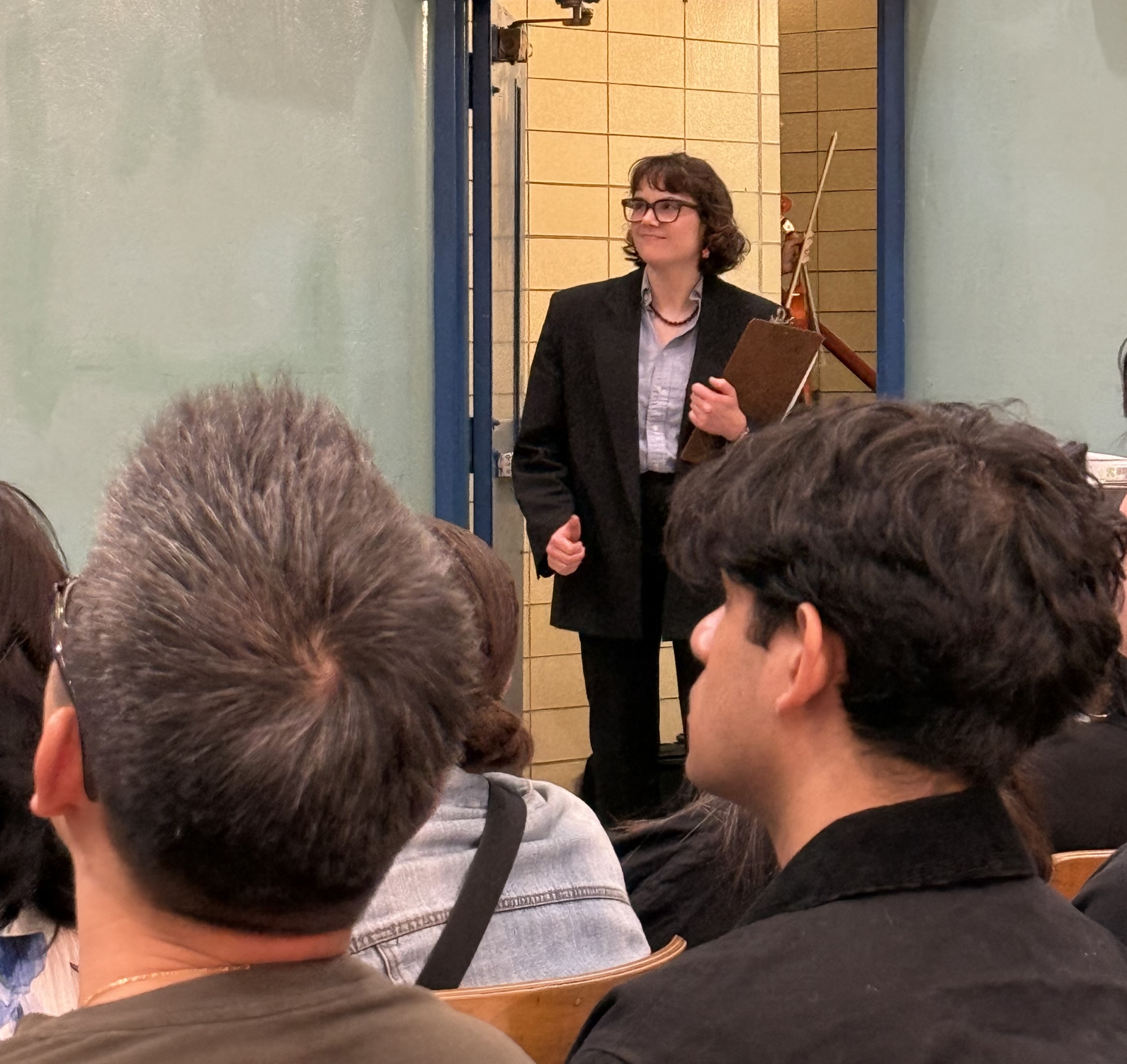
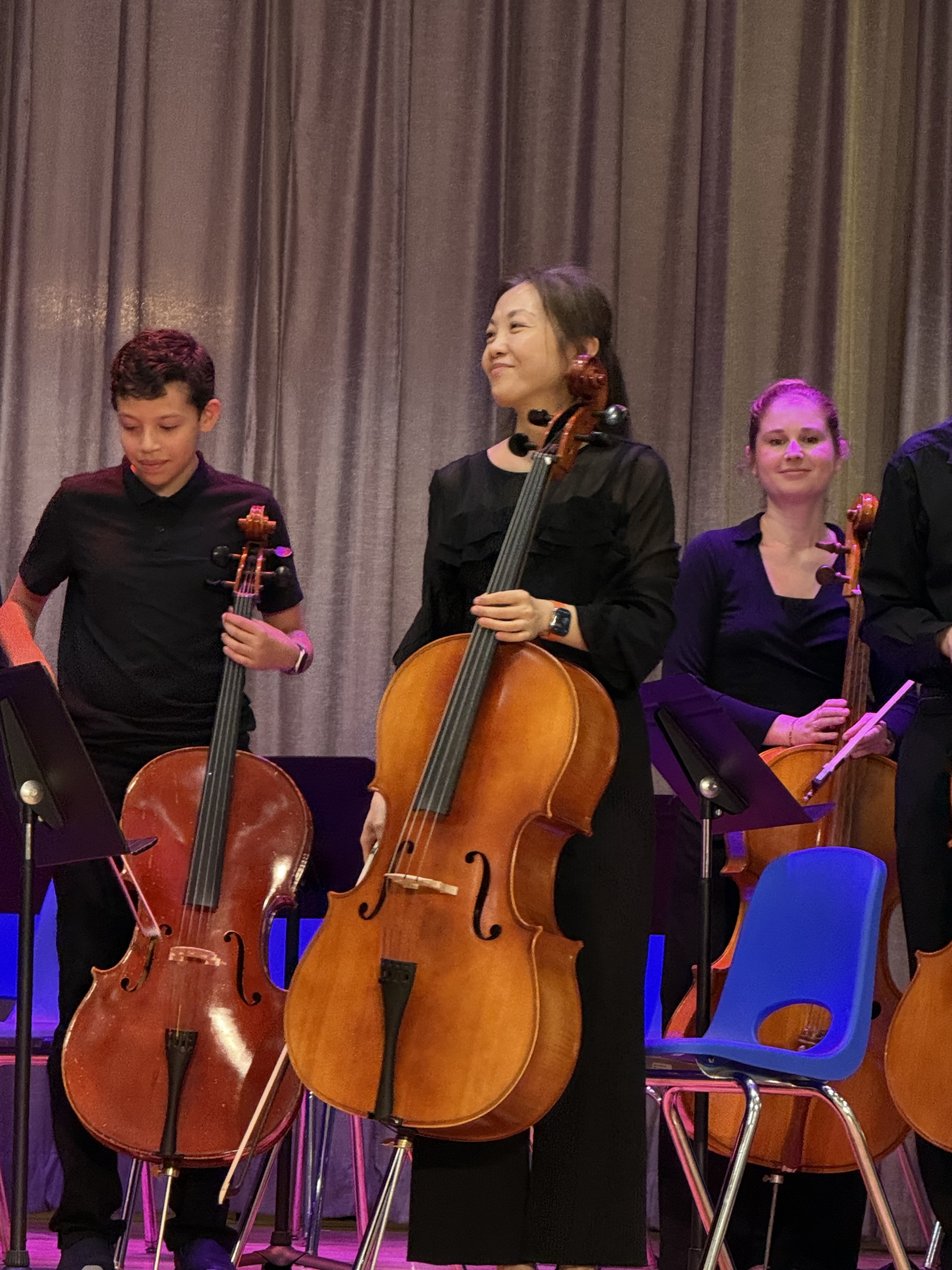
As the final applause echoed through the auditorium, the Spring Recital served as a reminder that arts education is about far more than learning notes and rhythms. It is about creating opportunities, building community, and helping young people discover what they are capable of achieving.

For one afternoon in Hell’s Kitchen, that achievement was on full display.

Alpheva AI and the Transformation of Financial Management: Rethinking Access, Decision-Making, and the Role of Intelligence

The promise of modern financial technology has long been framed around access. More tools, more data, more visibility. Yet, despite this proliferation, financial anxiety remains pervasive, and poor decision-making continues to undermine long-term stability for millions of individuals. This contradiction reveals a fundamental misunderstanding of the problem. Financial difficulty is not primarily a failure of access to information. It is a failure of structured guidance.

In a recent conversation on Atypical Journey, Lord Munjal, founder and CEO of Alpheva AI, articulates a distinction that is often overlooked. The gap between those who consistently make sound financial decisions and those who struggle is not simply a matter of discipline or effort. It is rooted in the presence or absence of a coherent decision-making framework. Individuals operating within well-advised environments, whether through professional advisors or institutional exposure, are not navigating financial complexity alone. Their decisions are informed, contextualized, and aligned with longer-term strategies.

By contrast, the majority of individuals manage their financial lives through fragmented systems. Budgeting tools, banking applications, credit monitoring platforms, and investment dashboards operate in isolation from one another. Each provides partial visibility, but none offers a unified interpretation of the overall financial situation. The result is a reactive mode of decision-making, where individuals respond to immediate pressures rather than act within a structured plan. Over time, this fragmentation produces not only inefficiency but also uncertainty, reinforcing a persistent sense of financial instability.

It is within this context that Alpheva AI positions itself as a departure from conventional financial applications. Rather than functioning as a passive tool for tracking or reporting, the platform seeks to operate as an active layer of intelligence. By integrating data across multiple financial dimensions and aligning it with individual goals, Alpheva aims to produce continuous, personalized guidance. The objective is not simply to inform users of their current position, but to assist them in determining what actions should follow.

This shift from visibility to interpretation is significant. Financial management, when reduced to dashboards and metrics, remains descriptive rather than prescriptive. It tells individuals what is happening without necessarily clarifying what should be done. Effective financial decision-making, however, requires the ability to evaluate trade-offs, anticipate outcomes, and adjust strategies over time. Historically, this level of insight has been accessible primarily through human advisors, often at a cost that limits widespread access. The introduction of AI into this space attempts to replicate aspects of that advisory function at scale.

However, the integration of artificial intelligence into financial decision-making raises complex questions that extend beyond efficiency. The issue of trust becomes central. Financial decisions carry long-term consequences, and reliance on algorithmic guidance introduces uncertainty regarding accountability. If a recommendation leads to suboptimal outcomes, the distribution of responsibility between user, platform, and system design is not immediately clear. Moreover, the assumption that AI can operate as a neutral and objective advisor must be examined critically. All models are shaped by underlying data, assumptions, and design choices, which inevitably influence the recommendations they produce.

There is also a broader structural consideration. While platforms such as Alpheva aim to democratize access to financial intelligence, their effectiveness depends on how they are adopted and utilized. Technology has the capacity to reduce disparities, but it can also reinforce them if only certain segments of the population fully leverage its capabilities. The question is not simply whether AI can improve financial outcomes, but whether it can do so in a way that meaningfully alters existing patterns of inequality.

Lord Munjal’s own trajectory, spanning leadership roles in major financial institutions and multiple entrepreneurial ventures, reflects an understanding of both the strengths and limitations of traditional financial systems. His experience highlights a recurring tension between structured environments, where decision-making is guided by established frameworks, and entrepreneurial contexts, where uncertainty requires a different form of judgment. This dual perspective informs the design philosophy behind Alpheva, which seeks to bring a level of strategic coherence to individuals who would otherwise operate without it.

Ultimately, the emergence of AI-driven financial management signals a broader transformation in how individuals engage with money. The shift is not merely technological, but conceptual. It challenges the assumption that financial competence is solely an individual responsibility and introduces the possibility that structured, intelligent systems can augment human decision-making in meaningful ways. Whether this potential is fully realized will depend not only on the sophistication of the technology, but also on the extent to which it is trusted, understood, and integrated into everyday financial behavior.

This article captures only a portion of a broader and more nuanced conversation. In the full episode of Atypical Journey, we explore the deeper roots of financial anxiety, the limits of traditional financial literacy, the realities of building and scaling ventures, and the growing role of AI in shaping financial decision-making. Watch the full episode below to explore the conversation in its entirety.


Daring peace: Sant’egidio’s method of dialogue in a world at war

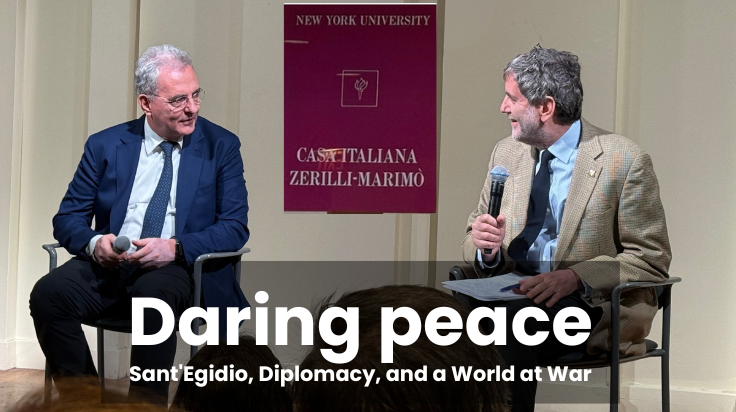
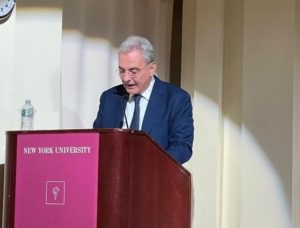
At a time when more than fifty armed conflicts rage across the globe, the urgency of peace could not be clearer. This was the message brought to New York University’s Casa Italiana Zerilli-Marimò, where Marco Impagliazzo, President of the Community of Sant’Egidio, delivered a powerful lecture entitled Daring Peace. The event, which also featured remarks from Andrea Bartoli, president of the Sant’Egidio Foundation for Peace and Dialogue and a Columbia University scholar, offered both a historical perspective and a call to action for peace building in today’s fractured world.

Sant’egidio’s legacy

Founded in Rome in 1968, Sant’Egidio is a lay Catholic movement rooted in prayer, service to the poor, and the pursuit of peace. Today, it is active in over 70 countries, working with marginalized communities while also mediating conflicts on the international stage. Its best-known achievement remains the Mozambique peace agreement of 1992, a landmark example of how patient dialogue can end years of bloodshed. Since then, Sant’Egidio has been involved in numerous other efforts, including initiatives in Algeria in the 1990s, and more recently in South Sudan.

The human cost of war

Professor Impagliazzo underscored why the theme of peace is so pressing today. In every war, he reminded the audience, “the first victims are the defenseless: children, women, the elderly, the disabled, and the poor.” War, he said, “continues to kill long after it has ended,” leaving deep wounds in societies where almost all casualties are civilians. Whether in Syria, Yemen, Libya, or South Sudan, the devastation has counted in the hundreds of thousands, if not millions, of lives lost or displaced.

Quoting Pope Pius XII’s famous words “everything is lost in war, nothing is lost in peace”, he invited listeners to reflect on the futility of violence and the enduring hope that dialogue offers.

The path of peace

From Mozambique’s experience, Impagliazzo emphasized that “peace is not achieved with a magic wand. It is built little by little.” Far from being naïve, peace requires realism, sacrifice, and perseverance. War may feel more instinctive, more logical, especially when fueled by the mentality of victimhood, but as he reminded the audience, “war begins long before weapons are used. Hate and propaganda begin in the mind.”

Building peace, therefore, means confronting the culture of the enemy and daring to see the other not as a stranger but as a brother. He stressed: “peacemaking is not synonymous with surrender. Politics can achieve what war cannot. History teaches us that war does not resolve crises; it multiplies them through revenge and more wars.”

Friendship as resistance

What can ordinary people do in such a bleak context? Impagliazzo urged resistance to hatred and nationalism. He insisted on the underestimated power of friendship, sympathy, and human connection: “We need the force of sympathy. We need to stop people from being infected with hatred. True resistance is taking the time to understand each other, exploring other ways, and giving peace a chance.”

Peace, he concluded, is inseparable from hope. “There is no peace without hope, but peace itself gives hope”. He adds that those who believe in peace are not the idealists. They are the realists. The true idealists are those who think you can magically solve problems through war.

A call to action

One distinctive aspect of Sant’Egidio’s method is confidentiality: creating discreet spaces where adversaries can meet, listen, and begin to articulate a shared vision for peace. Much of its work takes place away from the headlines, but its quiet impact has transformed nations.

In our current environment where the temptation to resort to arms remains strong, Sant’Egidio’s example is a reminder that the courage to dialogue is perhaps the most daring and the most necessary form of resistance.


Amzy ouvre sa tournée américaine avec un concert mémorable à Manhattan

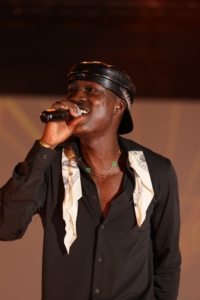
Ce samedi 30 août au Centennial Memorial Temple de Manhattan, le public burkinabè et les amoureux de musique africaine ont assisté à un moment historique : le tout premier concert d’Amzy aux États-Unis. Cet événement, qui marquait l’ouverture officielle de sa tournée américaine, a tenu toutes ses promesses. Plus qu’un simple concert, il a pris les allures d’une consécration.

Une salle comble et une communion patriotique

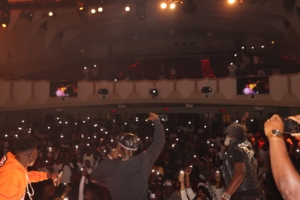
Dès les premières heures, le ton était donné : salle pleine à craquer, ferveur palpable. Le public, composé de fans venus de plusieurs États, attendait déjà l’artiste avec une impatience fiévreuse. La soirée s’est ouverte par des prestations d’invités qui ont préparé le terrain, avant que l’hymne national du Burkina Faso ne soit entonné par toute la salle. Un moment solennel, chargé d’émotion, ponctué d’une pensée collective pour la mère patrie, confrontée à de lourds défis sécuritaires

Avant même que ne retentissent les premières notes de musique, les musiciens d’Amzy de talentueux Burkinabè établis aux États-Unis se sont installés sur scène. Puis, une surprise a cueilli le public : une vidéo projetée en ouverture, où la voix grave et vibrante d’Amzy revenait sur la mémoire douloureuse des peuples noirs. Les images, crues et sans fard, retraçaient l’esclavage, la colonisation et l’exploitation, appelant à la dignité et à la résistance. Cette séquence a donné au concert une dimension mémorielle et militante, rappelant que l’art peut être un vecteur de conscience autant que de divertissement.

L’entrée du Gandaogo National

Et puis vint le moment tant attendu. Quand enfin retentit l’annonce d’Amzy, le public explose. Le Gandaogo national fit son entrée, porté par l’ovation d’une salle en ébullition. En guise d’ouverture, Amzy choisit M’ma guess fo biiga (“Maman, regarde ton fils”). Rien de plus symbolique pour ce moment unique : À New York la ville qui incarne le rêve américain, ce titre résonnait comme une consécration : un fils du Faso hissé sur l’une des plus grandes scènes du monde.


Un voyage musical riche en émotions

Le concert fut un véritable voyage, alternant entre mélancolie, énergie et fierté. Amzy a enchaîné plusieurs morceaux, chacun apportant une couleur et une émotion particulière. Il a su toucher les cœurs avec des titres intimistes comme Salop en version acoustique, faire monter l’adrénaline avec la puissance électrisante de Bolba, réveiller la nostalgie avec Na Gadamin, et enflammer la salle entière avec ses classiques incontournables tels que Wa Locké et Bienvenue à Ouaga, repris en chœur par un public en transe. Mais bien au-delà de ces morceaux phares, chaque chanson du répertoire proposé ce soir-là témoignait d’une richesse musicale et d’une authenticité qui ne laissent aucun doute : Amzy est un artiste qui refuse de se laisser enfermer dans un seul registre, et qui fait de la scène un espace de vérité et de communion.

Une fin qui annonce de grandes choses

À 23 heures, le rideau tomba. Le public, encore debout, en redemandait, mais comblé d’avoir assisté à un spectacle intense, généreux et historique. Pour un premier pas aux États-Unis, Amzy a fait bien plus que chanter : il a incarné une victoire, celle d’un artiste qui a réussi à transformer son parcours semé d’embûches en un cri de liberté universel.

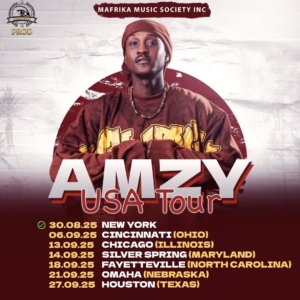
La tournée américaine ne fait que commencer. Prochain rendez-vous : Cincinnati, Ohio, le 6 septembre 2025, où ses fans attendent déjà de communier avec lui.

Hier soir, à Manhattan, Amzy n’a pas seulement donné un concert. Il a écrit une page d’histoire pour lui-même, pour le Burkina, et pour toute une génération.

Hiroshima, Nagasaki, and the moral duty to remember: 80 years later, the work of peace remains

On August 6, 1945, and again three days later on August 9th, the cities of Hiroshima and Nagasaki became silent witnesses to the darkest potential of human invention, and the world changed forever. Two bombs. Over 200,000 lives lost. And with them, the illusion that humanity could wield absolute power without consequence.

The threat of nuclear conflict is no longer a distant memory

Eighty years have passed since those harrowing days, and the scars are still visible. On landscapes, bodies, and collective memory. But remembrance alone is not enough.

In 2025, the threat of nuclear conflict is no longer a distant memory but a terrifying possibility. Global powers are modernizing their arsenals. Nuclear weapons echo in war rhetoric. Missiles are being tested. Wars in Gaza, Sudan, or Ukraine remind us how quickly violence escalates, how human life becomes collateral. Hiroshima is not ancient history. It is a mirror held up to today.

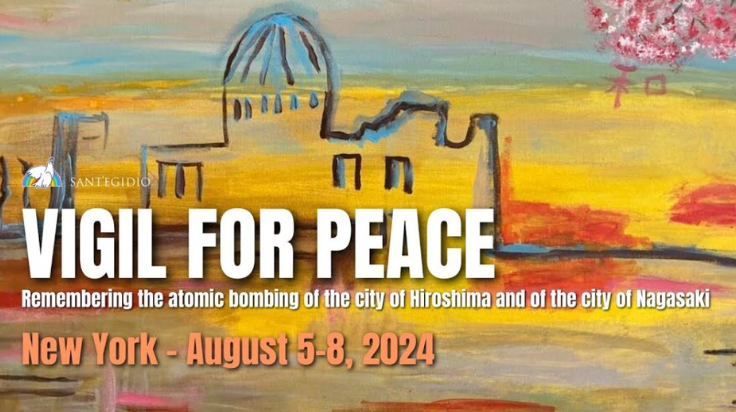
That’s why the Community of Sant’Egidio alongside the Archdiocese of Nagasaki is organizing a  Vigil for Peace from August 5 to 8, 2025. Two symbolic chapels: the Chapel of the Sacred Heart of Jesus and Mary in New York, and the Chapel of Our Lady of Nagasaki in Japan  will remain open day and night, as spiritual beacons of memory and hope.

It is not just a commemorative gesture; it is an act of resistance. For 75 continuous hours, people of different faiths and backgrounds will gather to pray, to reflect, and to recommit to peace. The vigil will stretch across time zones, linking the Basilica of Urakami ground zero of the second atomic bombing to cathedrals and community spaces across the globe.

The work of peace is not naïve. It is disciplined.

The Community of Sant’Egidio is not new to the work of peace. From brokering the 1992 peace accords in Mozambique, to interreligious dialogues in Sudan, Ukraine, and the Democratic Republic of Congo, their legacy proves that peace is not a naïve dream but a courageous discipline. Their presence at the site of unspeakable suffering is a reminder: the work of healing does not belong only to history, it belongs to us.

What began with a prophecy of annihilation must now evolve into a promise of solidarity. Hiroshima and Nagasaki are not just cautionary tales. They are the result of power unchecked, of grief unspoken, of silence turned into complicity. But they are also stories of survival, resilience, and the sacred urgency of saying “never again.”

Let us not forget that the statue of Our Lady of Nagasaki, charred and cracked from the blast, now stands as a symbol of hope and intercession. From her scorched hands to ours, the torch of peace must be carried forward.

On this anniversary, remembrance is not passive. It is a moral stance. A commitment to choose peace where others choose force. To defend life where others gamble with death. To speak truth where silence is more convenient.

80 years later, Hiroshima still asks the same question:
Will we remember enough to ensure it never happens again?

Katanga in Newark: A Burkinabè Masterpiece on Power, Tragedy, and the Fall of Tyrants

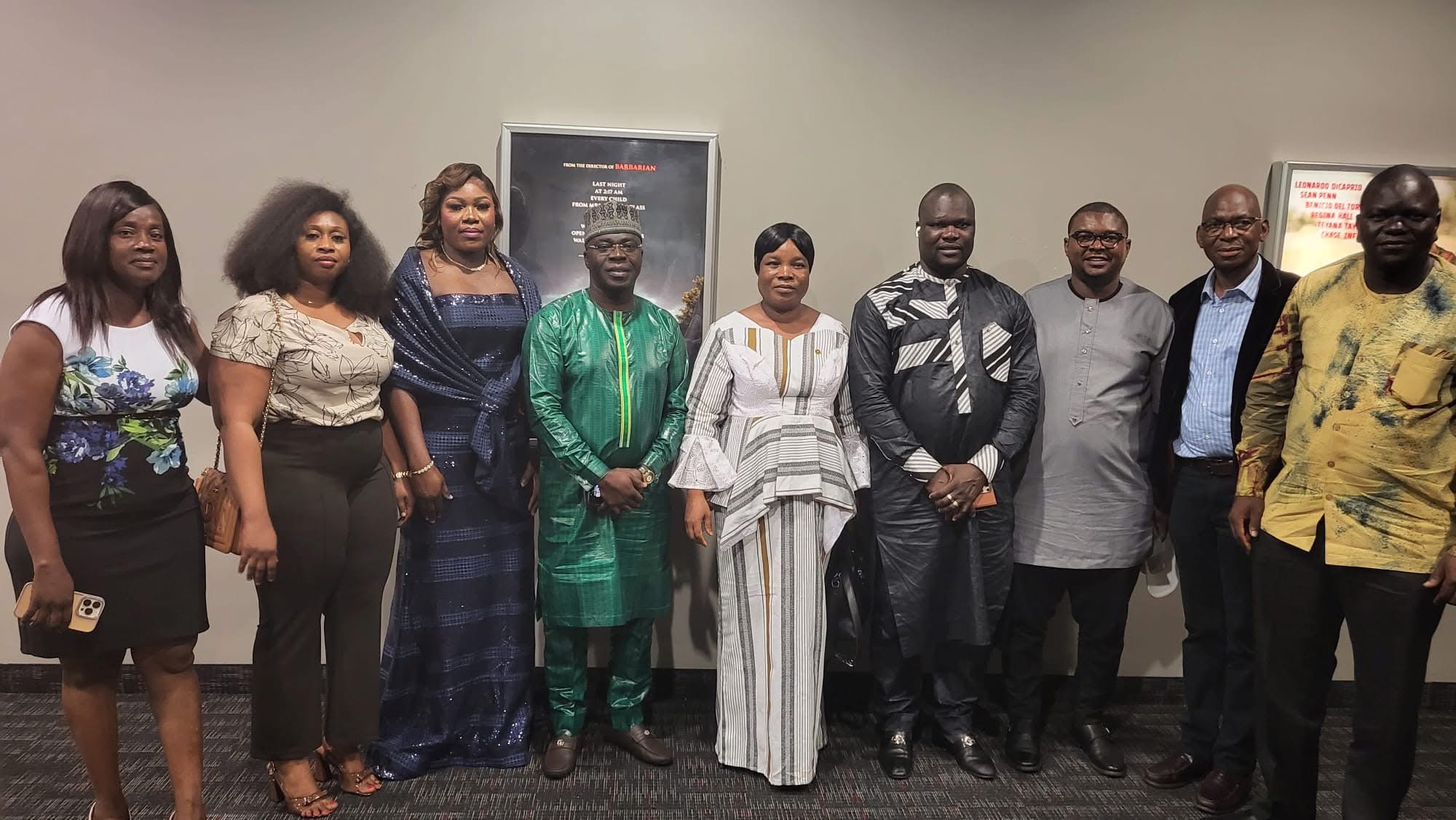
On Saturday, August 2, 2025, Citiplex 12 in Newark, New Jersey, hosted a special screening of Katanga: The Dance of the Scorpions, in the presence of several prominent members of the Burkinabè and African diaspora. Among them was the Consul General of Burkina Faso in New York, Mrs. Estelle Segda/Gando, as well as community leaders, association presidents, and cultural figures committed to promoting African cinema abroad.

The event was organized by Yennega Movies, under the leadership of young Burkinabè filmmaker Boukary Tiemtoré. Already known for bringing Bienvenue à Kikideni to audiences in the United States, and for directing films such as Le Rêve Américain de Malika and Le Regret Fatal, Tiemtoré has positioned himself as an important cultural bridge for Burkinabè cinema in America. His work is not only about showing films. It is about creating spaces where African stories can travel, meet their diaspora, and claim their rightful place in international cultural conversations.

A Political Tragedy Rooted in Shakespeare and Burkinabè Imagination

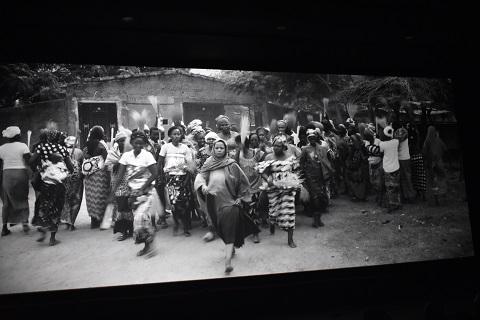
Directed by Dani Kouyaté, Katanga: The Dance of the Scorpions won the prestigious Étalon d’or de Yennenga at FESPACO 2025. Freely inspired by Shakespeare’s Macbeth, the film transposes the tragedy of ambition, betrayal, and moral collapse into an African political universe. Shot in black and white and performed in Mooré, the film unfolds in the fictional kingdom of Ganzurgu, where power is sacred, fragile, and dangerous.

After a failed conspiracy, King Pazouknaam appoints his cousin Katanga as head of the army. But under the influence of his wife Pougnéré, played with remarkable force by Hafissata Coulibaly, Katanga assassinates the king and seizes the throne. What follows is not simply the story of a man becoming king. It is the slow descent of a soul into paranoia, brutality, and spiritual isolation.

The film explores universal themes with striking intensity: the hunger for power, betrayal, guilt, fear, and the silence that grows around tyrants. Katanga’s tragedy is not only that he kills to rule. It is that, in eliminating those still brave enough to tell him the truth, he gradually loses contact with reality and with his own humanity. By the time his wife dies, he has become so hollowed out by power that he envies those still capable of crying.

The Prophecy: Destiny or Temptation?

At the heart of the film lies a disturbing prophecy: “You will be king, or you will die.” Spoken by the diviner, those words enter Katanga’s mind like a spark that will soon become a fire. The prophecy gives no date, no condition, no moral instruction. It simply places him between two extremes: power or death.

This is where the film becomes more than a political drama. It becomes a philosophical meditation. Is Katanga a man trapped by destiny, merely fulfilling what had already been written? Or is he a man who chooses evil and later hides behind fate to escape responsibility? The film leaves that tension alive, and that is part of its strength.

If the prophecy was truly the expression of a legitimate destiny, then why do the guardians of tradition, the sacred masks descending from the forest, eventually rise against him? Why do they speak of usurpation if he was only walking a path already traced by the invisible world? Perhaps the prophecy was not a sentence, but a mirror. Perhaps it did not create Katanga’s downfall. It simply revealed what was already inside him. He was not destroyed by destiny alone. He was destroyed by thirst, by ambition, and by the belief that power could be seized without consequence.

Women at the Center of Power and Resistance

One of the most powerful dimensions of Katanga: The Dance of the Scorpions is the central role given to women. They are not decorative figures in the background of a male tragedy. They are at the heart of the drama, the temptation of power, and the moral resistance that eventually rises against tyranny.

Pougnéré is the first force that changes the course of the kingdom. Manipulative, cynical, and fiercely ambitious, she embodies the seduction of absolute power. Through her, the film shows how ambition can become detached from compassion, from loyalty, and from the human cost of political conquest. She does not simply push Katanga toward the throne. She pushes him toward the abyss.

Katanga, la danse des scorpions de Dani Kouyaté : Au cœur des intrigues et complots politiques | Infos Sciences Culture

Image source: Infos Sciences Culture

But the film does not reduce women to manipulation or ambition. Other female figures carry a completely different moral power. One mother refuses exile and refuses to kneel before the tyrant. Her dignity is non-negotiable. She chooses death over submission, and in doing so, she becomes one of the film’s most haunting figures of courage.

Then come the women of the people, led by Soubila, the widow of Bougoum, Katanga’s former brother-in-arms and intimate friend, who is murdered with chilling cruelty. Armed with brooms, the women take to the streets to symbolically sweep away evil. Their gesture is simple, almost domestic, yet deeply political. They awaken consciences. They open the path to revolt. They prepare the fall of the regime.


When the authorities order soldiers to shoot, the soldiers hesitate. In front of them are not abstract protesters. They see their mothers, their aunts, their grandmothers, the women who gave life and who now stand as the last moral barrier against death. The soldiers disobey. They choose humanity over blind obedience.

In that moment, one is reminded of the words of Captain Thomas Sankara: “A soldier without political and ideological training is a potential criminal.” In Katanga, that moral training does not come through a classroom or a military doctrine. It comes through the gaze of women, through the courage of mothers, and through the memory of a people who still know the difference between authority and tyranny.

A Cinema of Beauty, Memory, and Political Warning

Beyond the strength of its story, Katanga is visually fascinating. The artistic direction is carefully crafted, blending tradition and modernity with intelligence and restraint. The black-and-white cinematography gives the film a timeless quality, as if the tragedy could belong to the past, the present, or any society where power becomes intoxicated with itself.

The costumes, hairstyles, lighting, and symbolic settings all contribute to a world that feels both deeply Burkinabè and universally readable. The film carries the soul of Burkinabè cinema: theatrical, spiritual, political, and rooted in oral tradition. It also benefits from a remarkable cast, with performances marked by precision, intensity, and emotional discipline. Even in the middle of such a grave subject, moments of humor appear, reminding us of Dani Kouyaté’s artistic intelligence and his understanding of life’s complexity.

Katanga is not simply a tragedy brought to the screen. It is a mirror held up to Africa, to humanity, and to power itself. It asks what happens when leaders confuse authority with ownership, loyalty with silence, and destiny with entitlement. It reminds us that tyranny does not begin only with violence. It often begins with the inability to hear the truth.

Why This Screening Mattered

The Newark screening mattered because it was more than a cultural event. It was an act of transmission. For the Burkinabè diaspora, seeing such a film on American soil was a reminder that our stories do not have to remain confined to our borders. They can travel. They can speak to the world. They can enter international spaces without losing their language, their symbols, or their soul.

In bringing Katanga to audiences in the United States, Yennega Movies helped create a bridge between homeland and diaspora, between African cinema and global spectatorship, between cultural memory and contemporary political reflection. This kind of initiative is necessary because African cinema is not secondary cinema. It is not cinema waiting for permission. It is cinema with its own intelligence, its own rhythm, and its own power to disturb, educate, and elevate.

Dani Kouyaté has given us a dense, beautiful, and necessary film. A work rooted in Burkinabè culture but open to the world. A film about power, but also about conscience. A film about tragedy, but also about resistance. A film that reminds us that the fall of tyrants is not always triggered by armies or speeches. Sometimes, it begins when the people, and especially the women, refuse to keep kneeling.

Thanks to Yennega Movies for offering this cinematic journey on American soil. Initiatives like this remind us that Burkinabè cinema has not said its last word. It watches. It remembers. It speaks. And sometimes, it confronts us.

La Nuit de l’Entrepreneur : la diaspora Burkinabé à l’honneur à New York

New York, 25 juillet 2025 – À l’occasion de la cinquième édition de la Foire Entrepreneuriale de la Diaspora, l’Union de la Diaspora Burkinabè-USA (UDB-USA) a tenu La Nuit de l’Entrepreneur, une soirée de gala à l’honneur les femmes et les hommes de la diaspora qui œuvrent, à travers l’entrepreneuriat, pour leur autonomisation et le développement de leurs communautés, des deux côtés de l’Atlantique.

La cérémonie a débuté dans une atmosphère solennelle avec l’hymne national du Burkina Faso, un moment empreint d’émotion et de fierté pour les nombreux invités présents. Dans son mot d’ouverture, le Secrétaire Général de l’UDB, Monsieur Hilaire Yaméogo, a salué la présence des autorités consulaires, des partenaires et des membres de la communauté. Il est revenu sur la genèse de l’Union, créée en 2018, et en a rappelé les objectifs : promouvoir l’entrepreneuriat au sein de la diaspora, créer un espace de mise en réseau et d’échange, le tout dans une dynamique apolitique et à but non lucratif.

La marraine de la soirée, Madame Blandine de Dieu, a pris la parole pour exprimer sa gratitude face à l’honneur qui lui était fait. Elle a salué l’initiative et encouragé les organisateurs à poursuivre cette mission noble de valorisation des compétences et des réussites issues de la diaspora.

Son Excellence Madame Estelle Pélagie Segda/Gando, Consule Générale du Burkina Faso à New York, est ensuite intervenue. Elle a ouvert son allocution par une minute de silence en hommage aux Forces de Défense et de Sécurité (FDS) et aux Volontaires pour la Défense de la Patrie (VDP) tombés au Burkina Faso. Dans un message empreint de dignité et d’engagement, elle a salué la dynamique portée par l’UDB et réaffirmé le soutien du consulat à toute initiative visant à structurer l’action de la diaspora.

Un moment fort de la soirée a été la remise de distinctions à plusieurs membres et soutiens historiques de l’UDB. Monsieur Daouda Zeguime, membre de l’équipe organisatrice, a remercié les anciens présidents ainsi que les figures de la communauté qui ont accompagné l’initiative depuis ses débuts. Parmi les personnalités mises à l’honneur figuraient notamment Gouem Abdoul, Boukary Zagré, Line Bassinga, Mouna Gouem et Jacob Nitiema. Un hommage appuyé a également été rendu aux sponsors, grâce à qui l’organisation de cette soirée et de l’ensemble des activités de la Foire a été rendue possible. Dans son intervention, Daouda Zeguime a tenu à rappeler que l’UDB œuvre à la fois pour l’insertion professionnelle des Burkinabè aux États-Unis, mais aussi pour leur réinsertion économique et sociale au Burkina Faso à travers des projets structurants.


La seconde partie de la soirée s’est déroulée dans une ambiance festive et chaleureuse. Plusieurs artistes vivant aux États-Unis et d’autres venus pour l’occasion ont offert des prestations remarquées, parmi lesquels Ivano, Manaja Confirmé, Lino 46, Fandy la Marraine et Queen Tifa. Le public a également eu droit à un élégant défilé de mode présenté par la styliste Caroline Nanéma, mettant en valeur des tenues en Faso Dan Fani, tissu emblématique de l’identité burkinabè. Entre musique, gastronomie et échanges conviviaux, les invités ont aussi pu assister à des partages d’expériences d’entrepreneurs de la diaspora, venus livrer leurs parcours et inspirer les générations présentes.

La Nuit de l’Entrepreneur a ainsi permis de célébrer la réussite dans toutes ses dimensions : économique, culturelle et communautaire. Plus qu’un gala, cet événement a réaffirmé la capacité de la diaspora burkinabè à se rassembler, à transmettre et à construire des ponts durables entre les réalités d’ici et les aspirations de là-bas.

Félicitations au comité d’organisation pour la qualité de l’événement, et sens de l’engagement. Rendez-vous est donné à toutes et à tous ce dimanche 28 juillet pour la suite des festivités, avec la grande foire, exposition et rue marchande, point d’orgue de cette 5e édition placée sous le signe de l’entrepreneuriat féminin et du rayonnement de la diaspora.

At Terminal 5, Mamdani and Ocasio-Cortez frame NYC Primary as a generational turning point

June 14 — New York

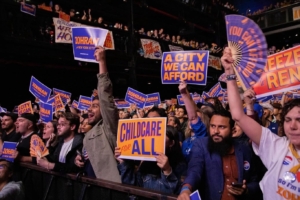
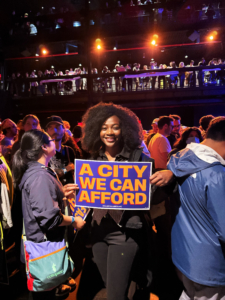
The line stretched down the block long before the doors opened. By early evening, Terminal 5 was packed wall to wall, balconies filled, supporters pressed shoulder to shoulder, and a live band playing from above as chants echoed through the venue. Even outside, the energy was electric.

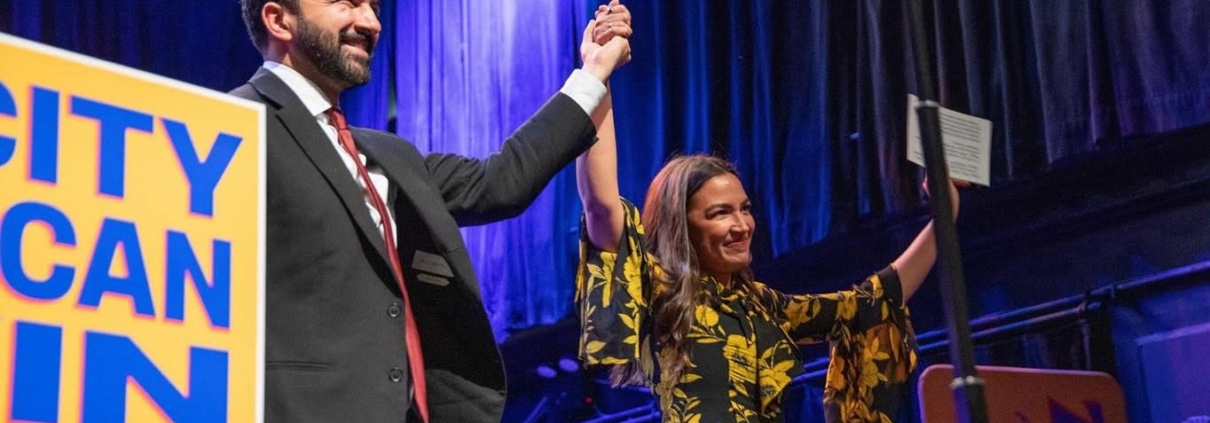
On the first day of early voting in the June 24 Democratic primary, Assemblymember Zohran Mamdani rallied alongside Rep. Alexandria Ocasio-Cortez in what felt less like a routine campaign stop and more like a moment charged with national implications.

More than 2,500 people filled the West Side concert hall. Community leaders, labor organizers, elected officials and grassroots volunteers were present. The crowd skewed young but was diverse in age, race and borough representation. Many described themselves as working-class New Yorkers struggling with rent, childcare, transit costs and healthcare.

Ocasio-Cortez framed the mayoral race as a broader referendum on the direction of the Democratic Party. Without mincing words, she argued that the choice before voters represents a generational shift. She criticized what she called entrenched leadership and urged supporters not to rank former Gov. Andrew Cuomo on their ballots, positioning the contest as an opportunity to “turn the page” politically.

When Mamdani took the stage, the reception was thunderous. His speech was disciplined but emotionally resonant, centered on affordability, housing, labor rights and what he repeatedly called “the everyday New Yorker.” He leaned into his identity as a Muslim immigrant and democratic socialist, presenting it not as a liability but as evidence of a changing city.

“We are building a movement that money cannot buy,” he said, referencing the influx of outside spending and recent endorsements for Cuomo from major business figures, including former Mayor Michael Bloomberg.

Mamdani urged attendees to volunteer and counter negative messaging in the final stretch before primary day. Speakers throughout the night echoed similar themes, including leaders from the Working Families Party and labor unions, who emphasized coalition politics and working-class solidarity.

What stood out in the room was not just applause lines, but conviction. The atmosphere felt organized, not chaotic. Strategic, not symbolic. There was choreography to the messaging and discipline in the turnout.

Whether that energy translates into votes remains to be seen. But on June 14, inside Terminal 5, it was clear that this mayoral primary has become more than a local contest. For many in that room, it felt like a statement about the future of power in New York — and perhaps within the Democratic Party itself.