
Namketa Media Mitown Shooting

Gunfire in broad daylight near Times Square leaves one man dead

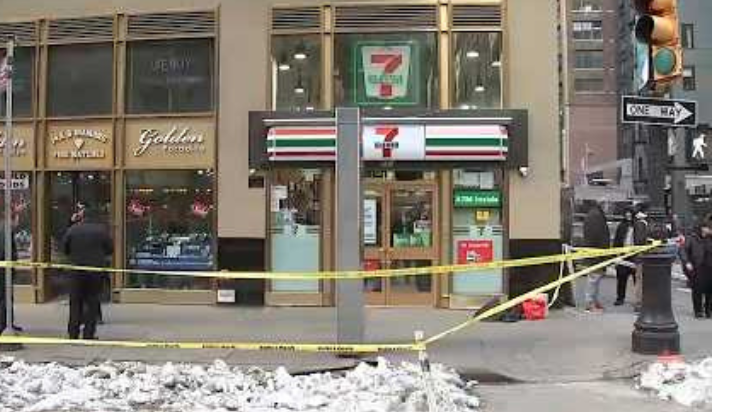
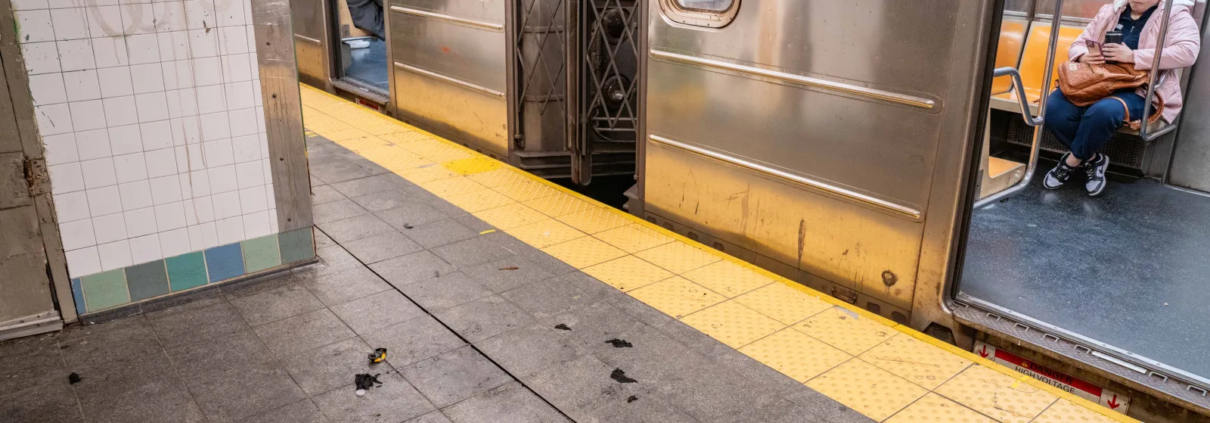
MIDTOWN, Manhattan — A fatal shooting inside a 7-Eleven near West 39th Street and Eighth Avenue disrupted a busy Midtown morning on Thursday, sending shockwaves through one of New York City’s most heavily trafficked corridors.

According to the NYPD, the incident occurred just before 10:30 a.m. Witnesses reported that two men entered the convenience store engaged in a heated argument. Within moments, one of the men pulled out a firearm and shot the other in the neck. The suspect fled the scene onto Eighth Avenue, while the victim collapsed inside the store. He was pronounced dead shortly thereafter.

By late morning, the area had been cordoned off with police tape. Detectives remained on site for hours, reviewing surveillance footage from the store and neighboring businesses in an effort to identify and locate the shooter. The Office of the Chief Medical Examiner removed the victim’s body within the hour, as officers examined personal belongings recovered outside the store.

Local residents told Namketa Media that the victim was a familiar presence in the area, often seen holding the door open for customers in exchange for small tips. A friend, speaking on condition of anonymity, said the man was homeless and originally from the Bronx. Authorities believe he was in his 40s, though his identity has not yet been released pending family notification.

The store is located just steps from the Port Authority Bus Terminal and within walking distance of Times Square and the Theater District, an area that draws thousands of commuters and tourists daily. The shooting left many visibly shaken. Some visitors paused in disbelief; nearby workers expressed frustration and concern over ongoing public safety challenges in the neighborhood.

As a resident of Midtown, I am struck by the stark contrast this area often presents. On one side, the energy of Broadway and global tourism. On the other, visible hardship,  homelessness, untreated mental illness, and escalating tensions that too often go unaddressed. Thursday’s shooting unfolded in broad daylight, underscoring the vulnerability of public spaces even in the city’s most iconic districts.

Police say they have obtained clear images of the suspect from surveillance cameras. He is described as a man wearing a green puffer coat and dark pants. The investigation remains ongoing.

Anyone with information is urged to contact the NYPD Crime Stoppers hotline.

VOTER ID

If only citizens can vote, why is voter ID controversial?

The debate around the SAVE America Act and Voter ID has moved from a technical discussion about election rules into a broader political battle that is now shaping the national agenda.

President Trump has made the bill a personal priority, publicly pressuring House Republicans to pass it. In the Senate, the bill likely faces a Democratic filibuster, prompting some Republicans to float reviving a talking filibuster. Senate Minority Leader Chuck Schumer has accused Republicans of trying to revive “Jim Crow–type laws,” arguing that the SAVE Act would roll back voting rights rather than protect them.

But What struck me most is not simply how polarized this conversation has become, but how little I actually understood about how voting currently works in the United States before this moment. For years, I’ve known that even green card holders could not vote and had to wait until they became  citizens. I also assumed, without questioning it, that there were already clear and consistent systems in place to ensure that only American citizens participated in American elections. The fight over voter ID and the SAVE America Act forced me to confront the fact that this assumption was incomplete.

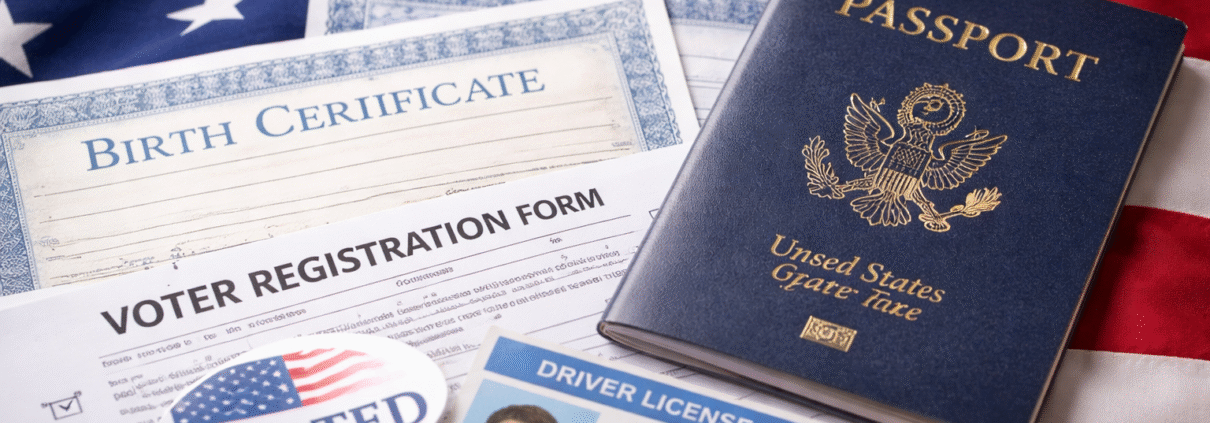
Let’s start with something everyone agrees on: under U.S. law, only American citizens can vote in federal elections. Since 1996, it has been a federal crime for noncitizens to vote, punishable by up to one year in prison. Voting is not just a formality. It is tied directly to what it means to be a citizen. Yet the way this rule is enforced is far less strict than I had imagined. In most states today, when someone registers to vote, they are not required to present documentary proof of citizenship such as a passport or birth certificate. Instead, they sign a statement affirming that they are a U.S. citizen under penalty of perjury. On Election Day, some states require identification, while others do not. Even in states that require ID, that identification usually proves who you are, not that you are a citizen. A driver’s license, for example, does not establish citizenship. In practice, this means the system relies primarily on people telling the truth when they register, and the possibility of punishment later rather than verifying citizenship upfront.

This is the context in which the SAVE America Act has become so controversial. At its core, the bill proposes a more straightforward system: require proof of citizenship such as a passport, birth certificate, or REAL ID indicating citizenship to register to vote, and require photo ID to vote in every state. It would also largely eliminate mail-only voter registration by requiring people to present documents in person. There is an exception process for people who cannot immediately provide documents, but the overall standard would be much stricter than what exists today.

Supporters of the bill argue that this is simply common sense. And I am increasingly inclined to agree with them. If voting is reserved for citizens which it legally is,  then asking for proof of citizenship should not be controversial. To me, that is not partisan. It is basic logic. We require proof of identity and eligibility for far less consequential things every single day, yet when it comes to choosing the leaders of a country, suddenly this becomes “extreme.”

Opponents warn that stricter requirements could disenfranchise millions of legitimate voters who may not have easy access to documents like passports or birth certificates. They argue that many elderly, rural, or low-income Americans could be unfairly excluded. I take that concern seriously because access matters in a democracy. But this is where I part ways with much of the opposition is that just as noncitizen voting is statistically rare, I also believe that Americans who genuinely want to vote but are completely unable to obtain any form of identification or proof of citizenship are also rare. In everyday life, ID is already required for so many ordinary activities: opening a bank account, boarding a plane, getting a job, entering many buildings, receiving medical care, picking up certain packages, and even buying alcohol at a bar. So when I hear that there is a massive population of Americans who function in society but somehow cannot obtain a single document proving who they are, I find that very difficult to accept.

Even if we assume that some people would struggle, I do not think the solution should be to abandon reasonable safeguards altogether. If the concern is that some Americans might not have easy access to documents, then the rational response is not to weaken election integrity, it is to make those documents easier, faster, and cheaper to obtain. We should put mechanisms in place to help people retrieve their birth certificates, get state IDs, or passports. Provide assistance, reduce fees, expand access points, and simplify processes. That, to me, would be the sensible compromise.

It is also important to be clear about the trade-off. Recent audits in several states have found real instances of noncitizens on voter rolls, and in some cases, evidence that a limited number may have cast ballots. These numbers are small relative to the overall electorate but they show that the issue is not imaginary. So we are weighing two risks: that of election fraud, and a risk of eligible voters facing hurdles. Between those two, the choice feels like a no-brainer to me. I think it makes more sense to tighten safeguards to protect the vote, while helping people get the documents they need, rather than leave a loophole in the system. If citizenship is the foundation of voting rights, then proof of citizenship should carry real meaning.

Ultimately, this debate is not just about paperwork or party politics. It raises deeper questions about what voting represents, how much trust we place in our institutions. So I end with a genuine challenge to readers: if you oppose voter ID and proof of citizenship requirements, explain your position in good faith. Is it that you are comfortable with some noncitizens voting? That you believe there is no real risk of that happening? Or do you truly think so many Americans are unable to get basic documents that stricter rules would be unjust?

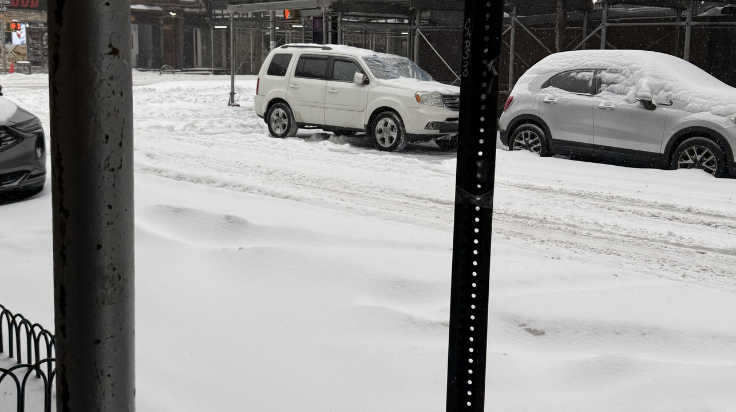
Namketa-Media-NYC-Snow-storm

10 deaths reported across New York City during winter storm fern

NEW YORK — At least 10 people were found dead outdoors across New York City during Winter Storm Fern, city officials confirmed Tuesday, as dangerously low temperatures settled over the region.

Mayor Zohran Mamdani announced the fatalities, noting that official causes of death are still under investigation. While authorities have not yet confirmed hypothermia in every case, the deaths occurred during one of the coldest stretches the city has experienced in recent years.

According to the Office of the Chief Medical Examiner, several of the deaths were recorded overnight as temperatures plunged below freezing, WPIX reported.. Among the victims was a 90-year-old Brooklyn woman living with dementia. Loved ones later identified her as Doreen Ellis according to Gothamist.

Family members say she left her apartment during the night and was later discovered in a backyard not far from her home. Neighbors told local reporters that she had previously wandered outside during warmer months but had never done so in such extreme cold. She was found lightly dressed despite the freezing conditions.

The storm brought snow, ice, and sustained sub-zero wind chills to the Northeast, creating hazardous conditions for those without stable housing and for elderly residents living alone. Emergency responders conducted welfare checks and cold-exposure calls throughout the weekend.

In response, city officials have expanded emergency protocols, increasing street outreach efforts and opening additional warming centers across all five boroughs. Intake procedures at shelters have also been eased to allow more individuals to come indoors during the cold snap.

“We may not yet know the precise medical determination in each case,” the mayor said, “but we know that vigilance saves lives.” He urged residents to check on elderly relatives and neighbors and to contact 311 or 911 if someone appears at risk.

Winter Storm Fern serves as a sobering reminder that extreme weather is not just an inconvenience in New York — it can be fatal.

22 years old shot

Police shoot 22-Year-Old man armed with kitchen knife in Briarwood, NYPD Says

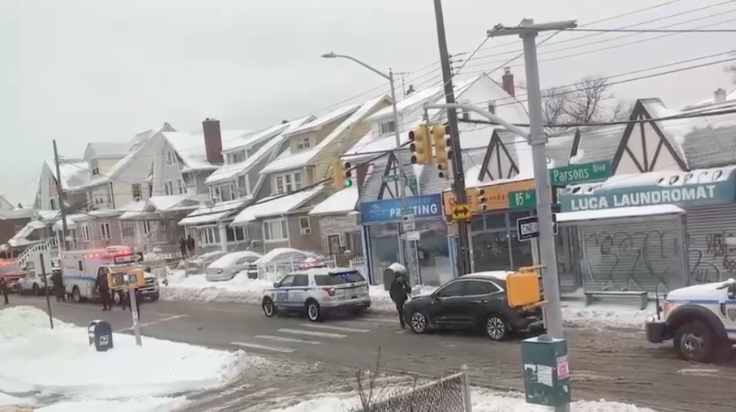
QUEENS — NYPD officers shot and wounded a 22-year-old man Monday morning in Briarwood after, police say, he advanced toward them with a large kitchen knife despite repeated commands to drop the weapon.

The incident unfolded around 10:30 a.m. on Parsons Boulevard after officers responded to a 911 call reporting a man throwing glass objects against a wall inside a residence.

According to Assistant Chief Christopher McIntosh, commanding officer of Patrol Borough Queens South, officers attempted to de-escalate the situation upon arrival. Police say the man retrieved a knife and moved toward responding officers. A relative inside the home reportedly tried to restrain him but was unsuccessful.

Authorities stated that officers repeatedly ordered the man to drop the knife and attempted to create distance by closing a door between rooms. However, police say the man forced his way through the door and continued advancing with the weapon.

“At that point, officers discharged their firearms,” McIntosh told to Eyewitness.

The man was struck multiple times and transported to Jamaica Hospital Medical Center with injuries described as non-life-threatening. Officers at the scene rendered aid, including applying a tourniquet, and requested emergency medical services. The responding officers are also being evaluated for minor injuries.

Police confirmed that the encounter was captured on body-worn camera footage. Officials declined to disclose how many shots were fired or comment on any possible mental health history of the individual, citing the ongoing investigation.

The case is now under review by the NYPD’s Force Investigation Division, the unit tasked with examining officer-involved shootings.

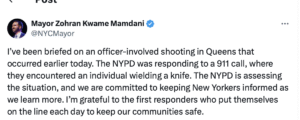
Mayor Zohran Mamdani addressed the incident on social media, stating that his administration is committed to transparency as more information becomes available.

The investigation remains active.

Free childcare was the promise. Today’s announcement is the beginning. And the Test.

Today, New York took a significant step toward reshaping how families experience work, parenthood, and economic survival.

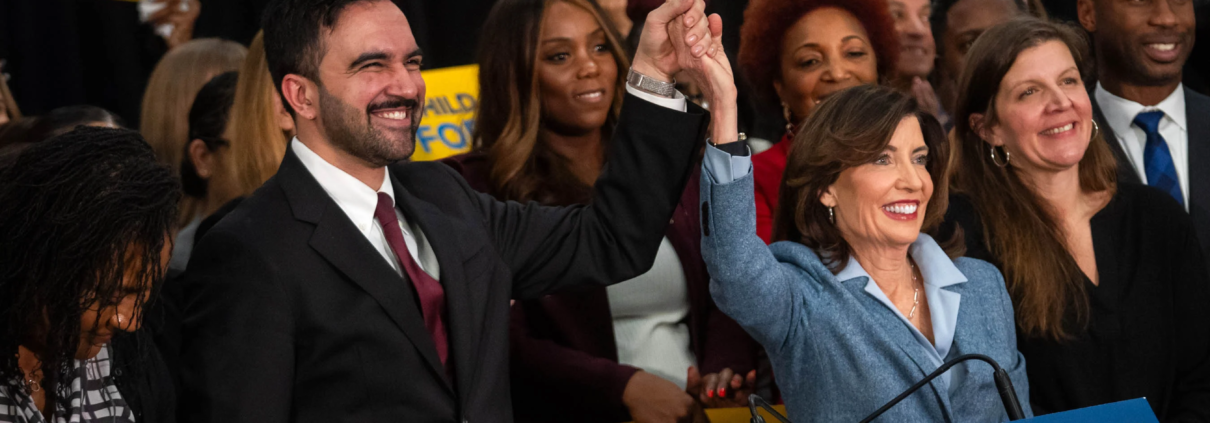
Governor Kathy Hochul and Mayor Zohran Mamdani announced a plan that would give New York City parents access to free childcare for 2-year-olds, marking a major expansion of the city’s early childhood education system and building on the existing universal Pre-K model. Governor Hochul has committed to fully funding the first two years of the program. The rollout will be phased, beginning in “high-need areas” before expanding citywide by the program’s fourth year. Hochul has also pledged to pursue a broader statewide free childcare initiative in the future.

For Mayor Mamdani, the announcement carries particular political weight. Making childcare free was one of his most visible and consistent campaign promises, and this plan represents the first concrete step toward delivering on that vision just days after taking office. In his words, the initiative is meant to demonstrate how government can “serve working families” more effectively and make New York a more affordable place to live.

The motivation behind the policy is hard to dispute. As Hochul put it, “the cost of childcare is simply too high.” Anyone who lives in New York already knows this. I know parents who want to work more hours, accept promotions, or return to school but cannot make the math work. I know single mothers who structure their entire lives around childcare availability. For many families, childcare is not just another bill, it is the gatekeeper to economic participation.

From that perspective, free childcare is a powerful and necessary idea and that is why why many New Yorkers responded positively to Mamdani’s promise. But ambition alone does not guarantee success. Implementation does.

The economic reality behind free child care New York

Free childcare for families does not mean free childcare to provide. Behind every childcare slot is a provider, often a woman, often an immigrant, frequently operating a home-based daycare with strict child-to-staff ratios, long hours, and real liability. Under this new system, many of these providers will effectively become contractors for the city, subject to fixed reimbursement rates, increased oversight, and higher expectations.

The risk is not theoretical. If reimbursement rates do not reflect the real cost of care in New York City: rent, food, insurance, labor, inflation; then the system will survive only by relying on underpaid or unpaid labor. That is how well-intentioned social policy quietly shifts its costs onto the very people delivering it.

A childcare system that depends on sacrifice rather than sustainability will eventually burn out its workforce, reduce quality, and shrink supply. That helps no one. If this program is to last, providers must be able to pay themselves, hire help when required, and operate without living on the edge of collapse. Otherwise, “free childcare” risks becoming free only because someone else is quietly absorbing the cost.

Free child care and the risk of excluding working families

There is another concern that deserves equal attention, and it requires nuance, not caricature. When officials say the rollout will begin in “high-need areas,” this often translates into strict income-based eligibility. In practice, this can mean that families with little or no declared income are prioritized. In many cases, this is entirely appropriate. People lose jobs. Families go through crises. Some parents are in transition, rebuilding, retraining, or genuinely struggling despite effort. Those situations deserve support, and no serious discussion about fairness should dismiss that reality.

At the same time, we cannot ignore how this system functions in practice over the long term.

In New York City, individuals with very low or no declared income often already have access to multiple forms of assistance — food stamps, cash assistance, subsidized or free housing, healthcare coverage, and other support programs. Meanwhile, parents with moderate earning, working full time, paying rent at market rates, receiving no housing assistance, no food assistance, and limited tax relief are frequently deemed “too rich” to qualify for help.

A parent making $40,000 – $70,000 in New York City is not wealthy. Those families are not comfortable. They are not secure. They are often one emergency away from collapse. And yet they are heavily taxed to fund the very systems from which they are excluded. This is where fairness becomes complicated and nuanced.

Support during hardship is one thing. But when someone has remained officially “poor” for many years or decades, fully embedded in multiple assistance programs, while others work continuously with no safety net, it is reasonable to ask difficult questions. At what point does a system designed to help people get back on their feet risk locking them in place? And at what point does that become unfair to those who are doing everything society asks of them?

This is not about blaming individuals. It is about designing policy that does not unintentionally reward permanent disengagement from work while penalizing effort and honesty.A childcare program meant to strengthen the economy should support work, not quietly undermine it. It should help people move forward, not trap them in static categories that benefit some while exhausting others.

A strong idea that demands careful execution

For this initiative to succeed — economically, politically, and morally — several principles must guide its implementation:

  • Reimbursement must be cost-based, not politically convenient, and indexed to real living costs.
  • Providers must have income stability, with predictable payments and protection from enrollment volatility.
  • Eligibility should avoid hard income cliffs, so families are not punished for earning more or accepting raises.
  • Oversight should prevent abuse without criminalizing honesty or survival, both for families and providers.
  • Support must accompany regulation, especially for home-based providers asked to meet public-system standards.

None of this contradicts the spirit of free childcare. In fact, it is what gives that spirit a chance to endure. I supported Zohran Mamdani’s vision because it spoke to a reality that cuts across ideology: affordability. Today’s announcement is a meaningful step toward that vision.

But bold promises require equally honest design. Free childcare can transform lives if it does not rest on invisible labor, exclude working families, or create cycles of dependency instead of mobility. Getting this right means refusing to romanticize sacrifice and insisting that fairness applies to everyone involved: parents, providers, and taxpayers alike.

Today was the beginning. What follows will determine whether this promise becomes a durable public good  or another well-intentioned idea strained by reality.


NYPD Searching for Suspect Accused of Setting Homeless Man on Fire on 3 Train

MANHATTAN — The NYPD is searching for a man accused of deliberately setting a homeless passenger on fire aboard a northbound 3 train early Monday morning at the 34th Street–Penn Station subway stop.

According to police, the incident occurred shortly after 3 a.m. when the suspect approached a 56-year-old man inside a subway car. Investigators say the individual briefly entered the train, ignited the victim, and then quickly exited onto the platform before the train departed.

The victim sustained serious burns and was transported to a nearby hospital. Authorities have not released his identity. His condition remains serious.

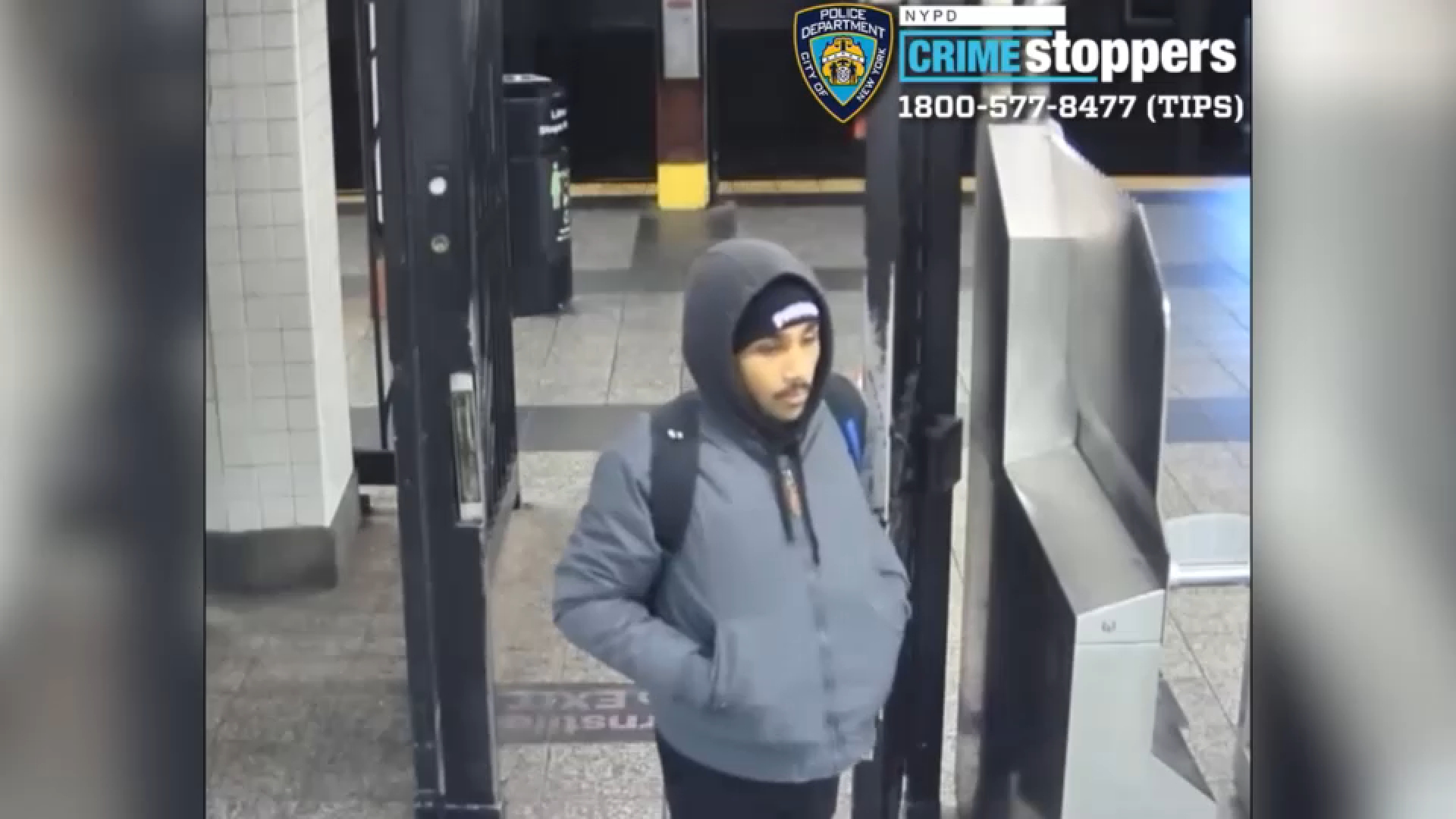
Surveillance footage released by the NYPD shows a man believed to be responsible for the attack. Police are asking the public for assistance in identifying and locating him. The motive has not yet been disclosed.

Homeless man set on fire on 3 train at 34th Street-Penn Station; NYPD  searching for suspect - ABC7 New York

The attack has renewed concerns about subway safety, particularly during overnight hours when trains are less crowded and vulnerable individuals often seek shelter inside cars. The 34th Street–Penn Station station is one of the city’s busiest transit hubs, serving thousands of commuters daily and connecting to Amtrak, LIRR, and NJ Transit.

While overall transit crime statistics fluctuate year to year, high-profile incidents such as this continue to fuel debate over public safety measures, mental health outreach, and protection for homeless riders who rely on the subway system for warmth and shelter.

The investigation remains ongoing. Anyone with information is urged to contact NYPD Crime Stoppers.

A Landmark exhibition closes ECOWAS golden jubilee celebration at the UN

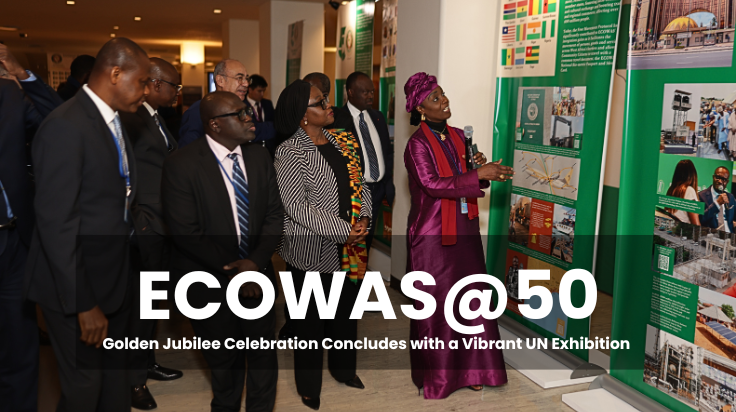
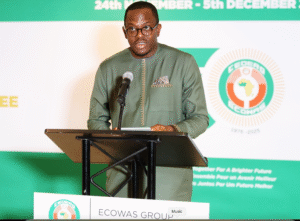
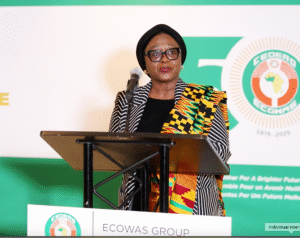
New York, November 25, 2025. The ECOWAS Permanent Observer Mission to the United Nations hosted the closing ceremony of the ECOWAS Golden Jubilee Commemoration with an exhibition at UN Headquarters, marking fifty years of regional integration, cooperation, and collective resilience across West Africa. Held under the theme “ECOWAS at 50: Stronger together for a brighter future — celebrating strength, resilience and progress,” the event brought together ambassadors, UN officials, partners, and members of the West African community for an evening of reflection, celebration, and renewed commitment to the region’s future.

Ambassador Kinza Jawara-Njai: Recalling the vision of the founders

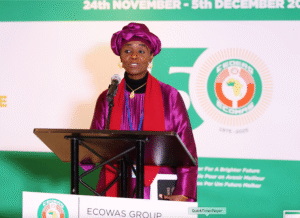
In her opening remarks, H.E. Amb. Kinza Jawara-Njai, ECOWAS Permanent Observer to the UN, reminded guests that ECOWAS was founded by visionary leaders who sought to unite a multilingual region of Portuguese-, French-, and English-speaking countries. She noted that “the goal of these leaders was simple: to promote cooperation, integration, and to unite a diverse citizenry.” Their collective ambition, she said, was to build a community rooted in self-sufficiency and economic prosperity.

Ambassador Jawara-Njai described the exhibition as a visual collage of ECOWAS’ interventions over 50 years, highlighting what has been achieved, the challenges faced, and the organization’s ongoing efforts to uphold peace, security, good governance, and sustainable development. She personally guided the audience through the exhibition, walking them through the institution’s history and impact across the region.

Ambassador Michal Imran Kanu: A call for renewed determination

H.E. Amb. Michal Imran Kanu, Permanent Representative of Sierra Leone and Chair of the ECOWAS Group at the UN, emphasized ECOWAS’ role as a cornerstone of multilateralism in Africa. He underscored the organization’s work in removing barriers to free movement, promoting trade and infrastructure, strengthening democratic governance, and leading early peacekeeping and mediation efforts in conflicts across Sierra Leone, Liberia, Nigeria, and beyond. He reminded attendees that the region continues to confront significant challenges, including unconstitutional changes of government, violent extremism, climate fragility, organized crime, and a fast-growing youth population seeking opportunities. Yet, he added, the ECOWAS story remains one of resilience, consultation, and determination, carried by institutions and communities that refuse to give up.

Calling the exhibition a powerful reminder of the region’s progress, he urged the international community to deepen cooperation with ECOWAS in pursuit of the UN 2030 Agenda, the African Union’s Agenda 2063, and ECOWAS Vision 2050. “This 50th anniversary is not just a moment to look back,” he said, “but a call to look forward with renewed determination.”

ASG Martha Ama Akyaa Pobee: A journey of strength, lessons, and hope

Delivering remarks on behalf of the United Nations, Ms. Martha Ama Akyaa Pobee, UN Assistant Secretary-General for Africa (DPPA-DPO), praised the partnership between the UN and ECOWAS and reaffirmed the UN’s commitment to supporting the region’s security, governance, and development priorities. She described the exhibition’s theme as one that captures the essence of West Africa’s journey, a story marked by unity, cultural diversity, and the determination to overcome challenges. She emphasized that, like any long journey, ECOWAS’ path has included highs and lows, yet continues to offer powerful lessons on resilience and transformation.

ASG Pobee noted that the exhibition is both a tribute to the founding fathers of ECOWAS and an inspiration for future action. She highlighted the strong collaboration between ECOWAS, the African Union, and the United Nations  particularly through the UN Office for West Africa and the Sahel (UNOWAS)  and encouraged continued joint efforts to address security threats, development challenges, and governance concerns.

“A united, integrated, prosperous, and peaceful West Africa remains possible,” she said, urging all partners to keep the vision alive.

A Celebration Shared by Leaders and the Public Alike

Throughout the evening, diplomats, guests, and members of the West African diaspora expressed deep pride and hope. Many reflected on how ECOWAS’ journey mirrors their own aspirations for unity and progress across the continent.

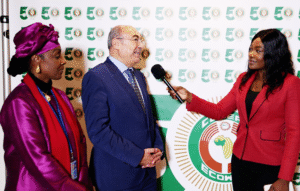
Among them was H.E. Ambassador Mohamed Edress, Permanent Representative of the African Union to the UN, who warmly congratulated ECOWAS and Ambassador Jawara-Njai on the Golden Jubilee. He noted that the “fifty years has been full of developments and events that have shaped our continent,” describing ECOWAS as “a positive example of the Africa we aspire to.”

He emphasized that as the OAU transformed into the African Union, the shared vision has remained the same: “a more integrated, more prosperous, more peaceful Africa.” The exhibition, he added, offers “inspiring landmarks of the ECOWAS project,” and he expressed hope that the progress showcased will “set the path for other regions of our beloved continent.”When asked for a message to Africans and friends of Africa, he responded:“Africa is on the rise. Africa is the future. And Africa is empowered by its youth and women.”

Guests echoed this sentiment throughout the night, hopeful that the next 50 years will bring deeper unity, stronger institutions, and greater opportunities for all West Africans. The evening concluded with a vibrant West African cocktail reception featuring live African music, symbolizing the creativity, spirit, and cultural richness of the region. As guests mingled, reflected, and celebrated, the atmosphere captured the essence of the exhibition: a community honoring its past while stepping confidently into its future.

As ECOWAS enters its next half-century, the exhibition stands as a powerful testament to what regional cooperation has made possible and what remains within reach. A peaceful, integrated, prosperous West Africa is not only possible, it is within our grasp.


Union Baristas Launch “Red Cup Rebellion” Strike During Starbucks’ Holiday Season

NEW YORK — Unionized Starbucks baristas across New York City joined a nationwide strike on November 13, launching what organizers have dubbed the “Red Cup Rebellion” during the company’s high-profile holiday drink season.

Workers affiliated with Starbucks Workers United walked off the job at select unionized locations in Manhattan and Brooklyn, protesting what they describe as stalled contract negotiations and unresolved labor complaints. The strike is open-ended, with organizers warning it could expand if talks do not move forward.

National framework bargaining between Starbucks and union representatives began in April 2024. According to union officials, early sessions produced tentative agreements on workplace standards, but negotiations reportedly broke down when economic proposals — including wage increases, improved benefits, and staffing guarantees — were rejected. Workers also allege that the company has implemented certain policies without bargaining, leading to additional unfair labor practice filings.

In New York, where cost of living remains among the highest in the country, baristas say inconsistent scheduling and limited hours make it difficult to meet rent and qualify for healthcare benefits. Several striking workers told supporters on picket lines that understaffing has increased pressure during peak hours, particularly during the busy holiday season.

Starbucks Workers United represents approximately 11,000 baristas at more than 550 organized stores nationwide, including dozens in New York State. Union leaders say the core demands remain consistent: increased hours to stabilize staffing, higher take-home pay, and resolution of outstanding labor complaints.

The timing of the strike — during Red Cup Season, one of Starbucks’ most profitable periods — adds financial and symbolic weight to the action. Holiday beverage launches typically draw heavy foot traffic in New York’s dense retail corridors.

Starbucks has stated in previous communications that it is prepared to continue negotiations. However, union representatives maintain that progress requires substantive economic proposals, not just meetings.

As the holiday season intensifies, New York customers may encounter picket lines or temporary closures at unionized stores. The outcome of the dispute could have broader implications for labor organizing efforts in the city’s service industry, where unionization campaigns have expanded in recent years.

An evening of elegance and urgency: The Water Ball returns to New York

On Tuesday October 21st, the iconic Cipriani 25 Broadway will open its doors to one of New York’s most anticipated philanthropic galas: The Water Ball, organized by the Georgie Badiel Foundation and hosted by Selita Ebanks and Jozef Naggiar. More than just an elegant evening, this event is a rallying cry for clean water access in Burkina Faso and beyond.

A personal story that sparked a movement

At the heart of this initiative is Georgie Badiel, former Miss Burkina Faso, international model, and humanitarian. As a child, she walked nearly nine miles every day to fetch water for her family. That experience inspired the bestselling children’s book The Water Princess and, ultimately, the creation of the Georgie Badiel Foundation.

A decade later, her vision has grown into a powerful, community-driven movement that continues to expand its impact across West Africa. The foundation builds and restores wells, trains women as water system maintainers, and brings safe, sustainable water access to rural communities across West Africa.

Culture, generosity, and impact

This year’s gala promises to be both elegant and deeply meaningful. The evening will feature live musical performances, powerful moments of gratitude, moving stories of impact, and special recognitions that highlight a decade of commitment to clean water access. Guests will also take part in an emotional pledge session, where they can directly contribute to well-building initiatives, and celebrate the individuals and partners whose support has sustained the Georgie Badiel Foundation’s mission over the years..

Yet behind the glamour of the night lies an urgent reality: 63% of rural communities in Burkina Faso still lack access to clean water, and more than 5,000 wells remain broken and out of service. Each year, over 4,000 children die from preventable water-related diseases.

Every dollar raised at The Water Ball fuels concrete, life-changing solutions — building and restoring wells, creating oases, supporting hygiene education, and advancing female-led water management that strengthens entire communities.    Get your tickets here

Numbers that speak for themselves

Over the past decade, the Georgie Badiel Foundation has grown from a single vision into a transformative force on the ground. Its work has reached more than 600,000 people, touching communities across rural Burkina Faso and beyond. Through 278 community projects, the foundation has not only built essential infrastructure but also invested in people—training 278 women to maintain water systems and ensure their sustainability. It has educated over 15,000 students on water, sanitation, and hygiene, and has built or restored more than 265 wells and 15 oases, creating lasting impact where it matters most.

A collective vision for change

The Water Ball has become more than a fundraiser. It’s a cultural moment. Each year, it brings together African professionals, entrepreneurs, allies, and change makers from across the U.S. diaspora who share one goal: investing in real, community-centered solutions.

As the lights dim and the pledges rise, The Water Ball stands as far more than a gala. It’s a powerful demonstration of how art, culture, and collective generosity can drive real change. Year after year, the event mobilizes a growing network of changemakers determined to turn a basic human need into a shared responsibility. To dive deeper into this vision, I sat down with Georgie Badiel to talk about her journey and her fight for clean water. You can listen to the full interview  below.

Together, we’re amplifying a message that goes beyond one night of fundraising. It’s about building a future where no child walks miles for water, and every community has access to this most essential resource.

Daring peace: Sant’egidio’s method of dialogue in a world at war

At a time when more than fifty armed conflicts rage across the globe, the urgency of peace could not be clearer. This was the message brought to New York University’s Casa Italiana Zerilli-Marimò, where Marco Impagliazzo, President of the Community of Sant’Egidio, delivered a powerful lecture entitled Daring Peace. The event, which also featured remarks from Andrea Bartoli, president of the Sant’Egidio Foundation for Peace and Dialogue and a Columbia University scholar, offered both a historical perspective and a call to action for peace building in today’s fractured world.

Sant’egidio’s legacy

Founded in Rome in 1968, Sant’Egidio is a lay Catholic movement rooted in prayer, service to the poor, and the pursuit of peace. Today, it is active in over 70 countries, working with marginalized communities while also mediating conflicts on the international stage. Its best-known achievement remains the Mozambique peace agreement of 1992, a landmark example of how patient dialogue can end years of bloodshed. Since then, Sant’Egidio has been involved in numerous other efforts, including initiatives in Algeria in the 1990s, and more recently in South Sudan.

The human cost of war

Professor Impagliazzo underscored why the theme of peace is so pressing today. In every war, he reminded the audience, “the first victims are the defenseless: children, women, the elderly, the disabled, and the poor.” War, he said, “continues to kill long after it has ended,” leaving deep wounds in societies where almost all casualties are civilians. Whether in Syria, Yemen, Libya, or South Sudan, the devastation has counted in the hundreds of thousands, if not millions, of lives lost or displaced.

Quoting Pope Pius XII’s famous words “everything is lost in war, nothing is lost in peace”, he invited listeners to reflect on the futility of violence and the enduring hope that dialogue offers.

The path of peace

From Mozambique’s experience, Impagliazzo emphasized that “peace is not achieved with a magic wand. It is built little by little.” Far from being naïve, peace requires realism, sacrifice, and perseverance. War may feel more instinctive, more logical, especially when fueled by the mentality of victimhood, but as he reminded the audience, “war begins long before weapons are used. Hate and propaganda begin in the mind.”

Building peace, therefore, means confronting the culture of the enemy and daring to see the other not as a stranger but as a brother. He stressed: “peacemaking is not synonymous with surrender. Politics can achieve what war cannot. History teaches us that war does not resolve crises; it multiplies them through revenge and more wars.”

Friendship as resistance

What can ordinary people do in such a bleak context? Impagliazzo urged resistance to hatred and nationalism. He insisted on the underestimated power of friendship, sympathy, and human connection: “We need the force of sympathy. We need to stop people from being infected with hatred. True resistance is taking the time to understand each other, exploring other ways, and giving peace a chance.”

Peace, he concluded, is inseparable from hope. “There is no peace without hope, but peace itself gives hope”. He adds that those who believe in peace are not the idealists. They are the realists. The true idealists are those who think you can magically solve problems through war.

A call to action

One distinctive aspect of Sant’Egidio’s method is confidentiality: creating discreet spaces where adversaries can meet, listen, and begin to articulate a shared vision for peace. Much of its work takes place away from the headlines, but its quiet impact has transformed nations.

In our current environment where the temptation to resort to arms remains strong, Sant’Egidio’s example is a reminder that the courage to dialogue is perhaps the most daring and the most necessary form of resistance.