L’éducation au Burkina Faso reste un luxe. Chaque rentrée révèle la même tragédie : des milliers d’enfants rejetés aux portes de l’école.
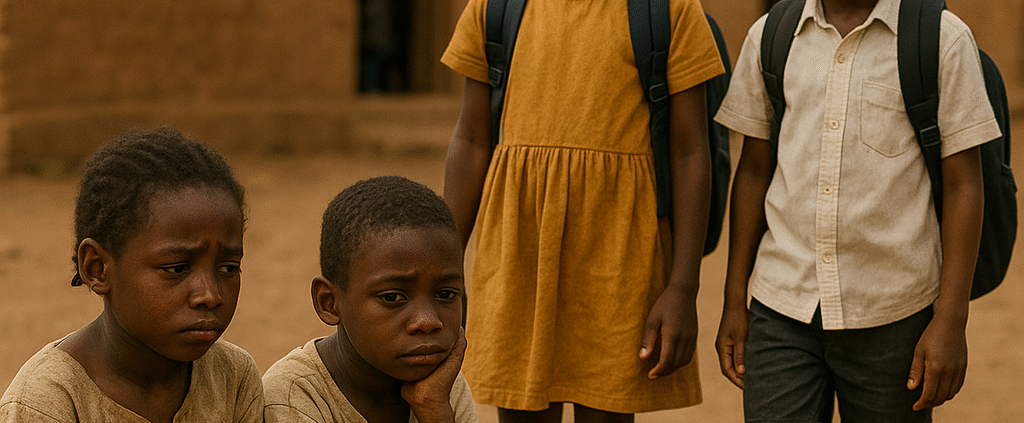
En cette rentrée des classes, ma pensée va à toutes ces familles qui, en ce moment précis, vivent l’angoisse de ne pas savoir comment scolariser leurs enfants. À ces petits à qui l’on répètera, une fois de plus, qu’« il n’y a plus de place ». À ces mères qui se lèvent à 4 heures du matin, qui marchent des dizaines de kilomètres, enfants au dos ou à la main, jusqu’à la localité la plus proche qui dispose d’une école. Pour attendre, des heures durant, dans la poussière et la chaleur, pour finalement entendre cette phrase assassine : « Il n’y a pas de place pour votre enfant ».
Une génération abandonnée
Aujourd’hui au Burkina Faso, plus d’un million d’enfants ne sont pas scolarisés (UNICEF). Une génération entière laissée au bord du chemin. Mon cœur saigne pour ces milliers d’enfants Burkinabè pour qui l’éducation n’est pas un droit, mais un privilège réservé à ceux qui naissent au bon endroit, dans les bonnes conditions. Pour eux, la route du succès s’amincit, leurs rêves s’effritent. Chaque refus les rapproche un peu plus de la précarité, de l’errance, de la criminalité, et les livre, vulnérables, aux mains de ceux qui recrutent pour alimenter les groupes armés qui nous terrorisent. Un enfant qu’on refuse d’éduquer aujourd’hui, c’est une bombe à retardement sociale et sécuritaire que l’on pose pour demain.
Des infrastructures insuffisantes
Le drame de notre système éducatif n’est pas seulement dans l’accès, mais aussi dans l’absence de moyens. Certains départements ne disposent que d’une seule école depuis plus de vingt ans. Des villages entiers n’ont jamais vu une salle de classe construite en dur. Là où il y a une école, elle est souvent en ruine : toitures effondrées, tables-bancs manquants, latrines inexistantes. Comment parler d’éducation de qualité dans de telles conditions ?
À cela s’ajoutent les écoles fermées à cause du terrorisme, dans les zones les plus fragiles du pays. Des centaines d’établissements sont aujourd’hui hors service, vidés de leurs enseignants et de leurs élèves, aggravant une crise déjà insoutenable.
Dans les écoles encore ouvertes, l’espoir se transforme en cauchemar : des classes qui devraient accueillir 40 élèves en regroupent parfois plus de 100. Dans un tel entassement, l’enseignant est impuissant. Comment suivre, encadrer, corriger, encourager un enfant perdu au milieu de cette foule compacte ? Ces conditions ne forment pas des citoyens éclairés, mais des générations bâclées.
Soixante-cinq ans après…
Soixante-cinq ans après les indépendances, comment expliquer que nous n’ayons pas su – ou pas voulu – nous donner les moyens de garantir un droit aussi élémentaire que l’école pour nos enfants ? Comment justifier que nous soyons encore incapables de protéger les plus vulnérables de notre société ? Nous portons tous une part de cette responsabilité.
Les dirigeants qui, depuis des décennies, ont géré ce pays en faisant de l’éducation un slogan plutôt qu’une priorité. Les parents ensuite, qui continuent à mettre au monde des dizaines d’enfants tout en sachant qu’ils n’ont ni les moyens ni les structures pour les encadrer. Et nous-mêmes, citadins confortablement installés dans nos vies modernes, préoccupés par nos futilités quotidiennes, fermant les yeux sur une réalité qui n’est pourtant pas si éloignée de nous.
Assez d’excuses
Assez d’excuses. Assez de rejeter la faute uniquement sur l’héritage colonial. Oui, la colonisation nous a laissés des blessures profondes. Mais l’incapacité, en plus d’un demi-siècle, à bâtir un système éducatif digne, inclusif et solide n’est plus la faute d’hier, elle est la nôtre, aujourd’hui.
L’irresponsabilité, le manque de vision et l’oubli des priorités collectives nous condamnent à tourner en rond dans ce cercle vicieux. Et pendant que nous nous complaisons dans ce rôle de victimes de l’Histoire, des générations entières d’enfants voient leur avenir se refermer devant elles. Voilà le vrai scandale.
Quelles solutions ?
Pourtant, rien n’est irréversible. L’éducation peut être sauvée si elle devient une priorité nationale réelle.
-
Construire des infrastructures scolaires modernes et accessibles dans chaque commune, pas seulement dans les grandes villes.
-
Recruter et former davantage d’enseignants, afin de réduire la taille des classes et garantir un suivi individuel.
-
Sécuriser véritablement les zones attaquées par le terrorisme, pour rouvrir les écoles fermées et protéger élèves et professeurs.
-
Mobiliser la diaspora et les partenaires internationaux, non pas pour des dons ponctuels, mais pour bâtir des fonds stables, orientés exclusivement vers l’éducation de base.
-
Responsabiliser les communautés locales, afin qu’elles deviennent actrices de l’éducation de leurs enfants, au lieu de spectatrices impuissantes.
L’avenir du Burkina Faso ne se joue pas dans les discours politiques, mais dans les salles de classe. Chaque enfant laissé derrière est une défaite nationale. Et n’oublions jamais cette vérité brutale :
Un enfant sans école aujourd’hui, c’est un terroriste potentiel demain. Et ce sera notre faute.