Tag Archive for: Commentary

VOTER ID

If only citizens can vote, why is voter ID controversial?

The debate around the SAVE America Act and Voter ID has moved from a technical discussion about election rules into a broader political battle that is now shaping the national agenda.

President Trump has made the bill a personal priority, publicly pressuring House Republicans to pass it. In the Senate, the bill likely faces a Democratic filibuster, prompting some Republicans to float reviving a talking filibuster. Senate Minority Leader Chuck Schumer has accused Republicans of trying to revive “Jim Crow–type laws,” arguing that the SAVE Act would roll back voting rights rather than protect them.

But What struck me most is not simply how polarized this conversation has become, but how little I actually understood about how voting currently works in the United States before this moment. For years, I’ve known that even green card holders could not vote and had to wait until they became  citizens. I also assumed, without questioning it, that there were already clear and consistent systems in place to ensure that only American citizens participated in American elections. The fight over voter ID and the SAVE America Act forced me to confront the fact that this assumption was incomplete.

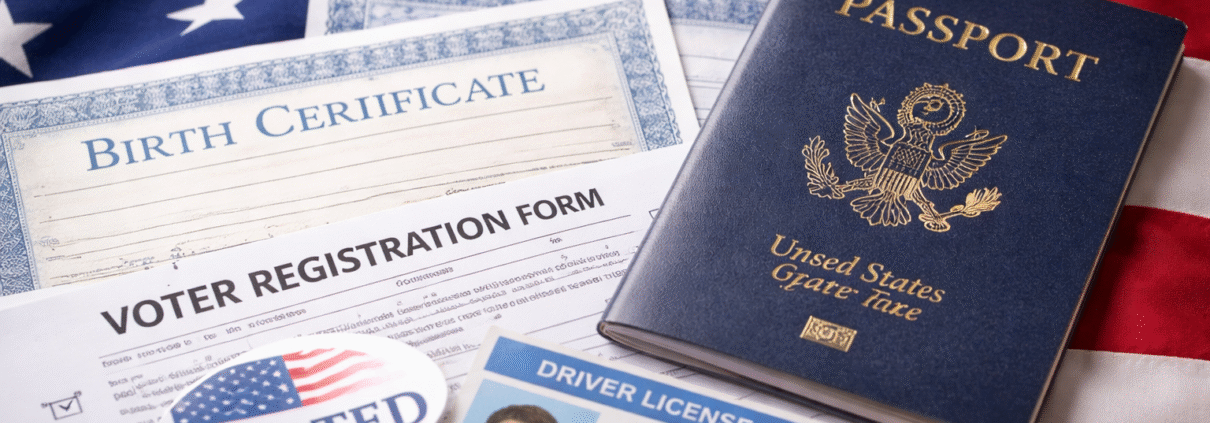
Let’s start with something everyone agrees on: under U.S. law, only American citizens can vote in federal elections. Since 1996, it has been a federal crime for noncitizens to vote, punishable by up to one year in prison. Voting is not just a formality. It is tied directly to what it means to be a citizen. Yet the way this rule is enforced is far less strict than I had imagined. In most states today, when someone registers to vote, they are not required to present documentary proof of citizenship such as a passport or birth certificate. Instead, they sign a statement affirming that they are a U.S. citizen under penalty of perjury. On Election Day, some states require identification, while others do not. Even in states that require ID, that identification usually proves who you are, not that you are a citizen. A driver’s license, for example, does not establish citizenship. In practice, this means the system relies primarily on people telling the truth when they register, and the possibility of punishment later rather than verifying citizenship upfront.

This is the context in which the SAVE America Act has become so controversial. At its core, the bill proposes a more straightforward system: require proof of citizenship such as a passport, birth certificate, or REAL ID indicating citizenship to register to vote, and require photo ID to vote in every state. It would also largely eliminate mail-only voter registration by requiring people to present documents in person. There is an exception process for people who cannot immediately provide documents, but the overall standard would be much stricter than what exists today.

Supporters of the bill argue that this is simply common sense. And I am increasingly inclined to agree with them. If voting is reserved for citizens which it legally is,  then asking for proof of citizenship should not be controversial. To me, that is not partisan. It is basic logic. We require proof of identity and eligibility for far less consequential things every single day, yet when it comes to choosing the leaders of a country, suddenly this becomes “extreme.”

Opponents warn that stricter requirements could disenfranchise millions of legitimate voters who may not have easy access to documents like passports or birth certificates. They argue that many elderly, rural, or low-income Americans could be unfairly excluded. I take that concern seriously because access matters in a democracy. But this is where I part ways with much of the opposition is that just as noncitizen voting is statistically rare, I also believe that Americans who genuinely want to vote but are completely unable to obtain any form of identification or proof of citizenship are also rare. In everyday life, ID is already required for so many ordinary activities: opening a bank account, boarding a plane, getting a job, entering many buildings, receiving medical care, picking up certain packages, and even buying alcohol at a bar. So when I hear that there is a massive population of Americans who function in society but somehow cannot obtain a single document proving who they are, I find that very difficult to accept.

Even if we assume that some people would struggle, I do not think the solution should be to abandon reasonable safeguards altogether. If the concern is that some Americans might not have easy access to documents, then the rational response is not to weaken election integrity, it is to make those documents easier, faster, and cheaper to obtain. We should put mechanisms in place to help people retrieve their birth certificates, get state IDs, or passports. Provide assistance, reduce fees, expand access points, and simplify processes. That, to me, would be the sensible compromise.

It is also important to be clear about the trade-off. Recent audits in several states have found real instances of noncitizens on voter rolls, and in some cases, evidence that a limited number may have cast ballots. These numbers are small relative to the overall electorate but they show that the issue is not imaginary. So we are weighing two risks: that of election fraud, and a risk of eligible voters facing hurdles. Between those two, the choice feels like a no-brainer to me. I think it makes more sense to tighten safeguards to protect the vote, while helping people get the documents they need, rather than leave a loophole in the system. If citizenship is the foundation of voting rights, then proof of citizenship should carry real meaning.

Ultimately, this debate is not just about paperwork or party politics. It raises deeper questions about what voting represents, how much trust we place in our institutions. So I end with a genuine challenge to readers: if you oppose voter ID and proof of citizenship requirements, explain your position in good faith. Is it that you are comfortable with some noncitizens voting? That you believe there is no real risk of that happening? Or do you truly think so many Americans are unable to get basic documents that stricter rules would be unjust?

Free childcare was the promise. Today’s announcement is the beginning. And the Test.

Today, New York took a significant step toward reshaping how families experience work, parenthood, and economic survival.

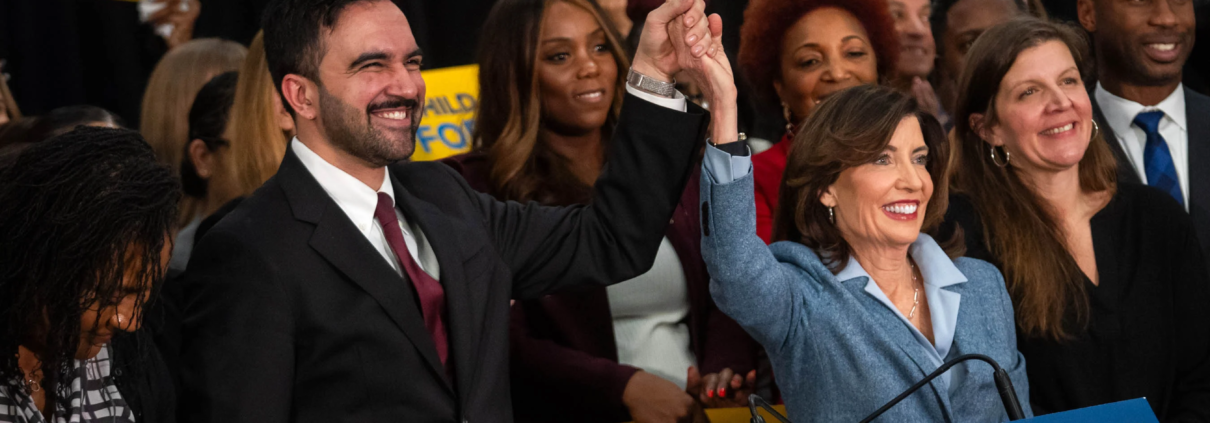
Governor Kathy Hochul and Mayor Zohran Mamdani announced a plan that would give New York City parents access to free childcare for 2-year-olds, marking a major expansion of the city’s early childhood education system and building on the existing universal Pre-K model. Governor Hochul has committed to fully funding the first two years of the program. The rollout will be phased, beginning in “high-need areas” before expanding citywide by the program’s fourth year. Hochul has also pledged to pursue a broader statewide free childcare initiative in the future.

For Mayor Mamdani, the announcement carries particular political weight. Making childcare free was one of his most visible and consistent campaign promises, and this plan represents the first concrete step toward delivering on that vision just days after taking office. In his words, the initiative is meant to demonstrate how government can “serve working families” more effectively and make New York a more affordable place to live.

The motivation behind the policy is hard to dispute. As Hochul put it, “the cost of childcare is simply too high.” Anyone who lives in New York already knows this. I know parents who want to work more hours, accept promotions, or return to school but cannot make the math work. I know single mothers who structure their entire lives around childcare availability. For many families, childcare is not just another bill, it is the gatekeeper to economic participation.

From that perspective, free childcare is a powerful and necessary idea and that is why why many New Yorkers responded positively to Mamdani’s promise. But ambition alone does not guarantee success. Implementation does.

The economic reality behind free child care New York

Free childcare for families does not mean free childcare to provide. Behind every childcare slot is a provider, often a woman, often an immigrant, frequently operating a home-based daycare with strict child-to-staff ratios, long hours, and real liability. Under this new system, many of these providers will effectively become contractors for the city, subject to fixed reimbursement rates, increased oversight, and higher expectations.

The risk is not theoretical. If reimbursement rates do not reflect the real cost of care in New York City: rent, food, insurance, labor, inflation; then the system will survive only by relying on underpaid or unpaid labor. That is how well-intentioned social policy quietly shifts its costs onto the very people delivering it.

A childcare system that depends on sacrifice rather than sustainability will eventually burn out its workforce, reduce quality, and shrink supply. That helps no one. If this program is to last, providers must be able to pay themselves, hire help when required, and operate without living on the edge of collapse. Otherwise, “free childcare” risks becoming free only because someone else is quietly absorbing the cost.

Free child care and the risk of excluding working families

There is another concern that deserves equal attention, and it requires nuance, not caricature. When officials say the rollout will begin in “high-need areas,” this often translates into strict income-based eligibility. In practice, this can mean that families with little or no declared income are prioritized. In many cases, this is entirely appropriate. People lose jobs. Families go through crises. Some parents are in transition, rebuilding, retraining, or genuinely struggling despite effort. Those situations deserve support, and no serious discussion about fairness should dismiss that reality.

At the same time, we cannot ignore how this system functions in practice over the long term.

In New York City, individuals with very low or no declared income often already have access to multiple forms of assistance — food stamps, cash assistance, subsidized or free housing, healthcare coverage, and other support programs. Meanwhile, parents with moderate earning, working full time, paying rent at market rates, receiving no housing assistance, no food assistance, and limited tax relief are frequently deemed “too rich” to qualify for help.

A parent making $40,000 – $70,000 in New York City is not wealthy. Those families are not comfortable. They are not secure. They are often one emergency away from collapse. And yet they are heavily taxed to fund the very systems from which they are excluded. This is where fairness becomes complicated and nuanced.

Support during hardship is one thing. But when someone has remained officially “poor” for many years or decades, fully embedded in multiple assistance programs, while others work continuously with no safety net, it is reasonable to ask difficult questions. At what point does a system designed to help people get back on their feet risk locking them in place? And at what point does that become unfair to those who are doing everything society asks of them?

This is not about blaming individuals. It is about designing policy that does not unintentionally reward permanent disengagement from work while penalizing effort and honesty.A childcare program meant to strengthen the economy should support work, not quietly undermine it. It should help people move forward, not trap them in static categories that benefit some while exhausting others.

A strong idea that demands careful execution

For this initiative to succeed — economically, politically, and morally — several principles must guide its implementation:

  • Reimbursement must be cost-based, not politically convenient, and indexed to real living costs.
  • Providers must have income stability, with predictable payments and protection from enrollment volatility.
  • Eligibility should avoid hard income cliffs, so families are not punished for earning more or accepting raises.
  • Oversight should prevent abuse without criminalizing honesty or survival, both for families and providers.
  • Support must accompany regulation, especially for home-based providers asked to meet public-system standards.

None of this contradicts the spirit of free childcare. In fact, it is what gives that spirit a chance to endure. I supported Zohran Mamdani’s vision because it spoke to a reality that cuts across ideology: affordability. Today’s announcement is a meaningful step toward that vision.

But bold promises require equally honest design. Free childcare can transform lives if it does not rest on invisible labor, exclude working families, or create cycles of dependency instead of mobility. Getting this right means refusing to romanticize sacrifice and insisting that fairness applies to everyone involved: parents, providers, and taxpayers alike.

Today was the beginning. What follows will determine whether this promise becomes a durable public good  or another well-intentioned idea strained by reality.


Charlie Kirk’s death and the hypocrisy of tolerance

Charlie Kirk’s assassination is a tragedy period. A young man, barely 31 years old, gunned down while doing what he always did: speaking his truth in public. I did not agree with Charlie on everything. I often found his stance on guns too extreme, his nationalism too rigid, his immigration policies too harsh for someone like me, an immigrant who knows the long wait and the sacrifices to build a life here, and much more. But admiration does not require blind loyalty. I followed him because he was sharp, brilliant in debate, and unafraid to say what he believed, even when it made him unpopular. That courage deserves respect.

What devastates me more than the bullet that ended his life is the reaction I see from many who claim the banner of tolerance. Celebrating a man’s death because he was your political opponent is not justice. It is cruelty. It is hypocrisy. To mock his death because he opposed gun control is to treat a tragedy as a punchline. To cheer because you disliked his worldview is to reveal that your so-called tolerance was only a mask, one that falls the moment someone dares to think differently. And this celebration is not harmless noise on the internet; it reflects a deeper sickness in our society, a culture that has lost the ability to separate disagreement from dehumanization.

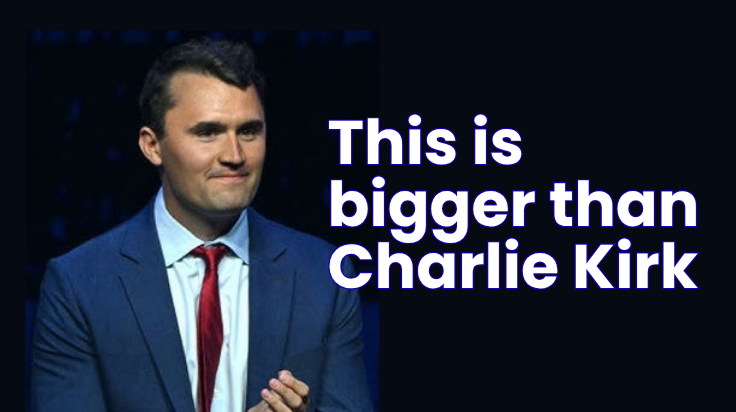
This is bigger than Charlie Kirk. This is about who we are becoming as a society. We are entering a dangerous age where disagreement equals dehumanization, where debate is replaced by cancellation, and where violence is justified if the target is the “enemy.” But what future can we build on that foundation? If every life is only as valuable as its ideology, then none of us are safe. The same logic that excuses violence against one opponent today can be used to excuse violence against another tomorrow. A society that normalizes selective empathy is a society that prepares its own downfall.

And let us not forget: Charlie Kirk was not only a commentator; he was a husband and the father of two young children. Behind the headlines and the controversies is a family whose life has been irreparably shattered. Two children will now grow up without their father, a wife will bury her partner, and yet some among us see only a political victory. If we cannot pause to recognize the human cost of this tragedy, then our moral compass is broken beyond repair.

I am African, I am Christian, I am an immigrant, and I hold views that put me on neither extreme of the political spectrum. I believe in compassion for the vulnerable and in responsibility for the able. I believe in protecting life while respecting pluralism. I believe in family, faith, democracy, fairness and individual freedom. And precisely because of those values, I cannot stand by silently when hatred masquerades as justice. Democracy itself cannot survive if we only grant empathy to those who agree with us. Freedom means nothing if we use it to cheer the silencing of others.

Charlie Kirk is gone, but the real test remains for the rest of us: will we use moments like this to deepen the spiral of division, or will we step back and remember the humanity of those we oppose? If we cannot mourn the death of someone we disagreed with, then we have lost something far greater than a political battle. We have lost our soul. And if a nation loses its soul, no amount of progress, no accumulation of wealth, and no victories in the culture wars will save it from collapse.

  We are not moving forward. We are marching backward into barbarism.

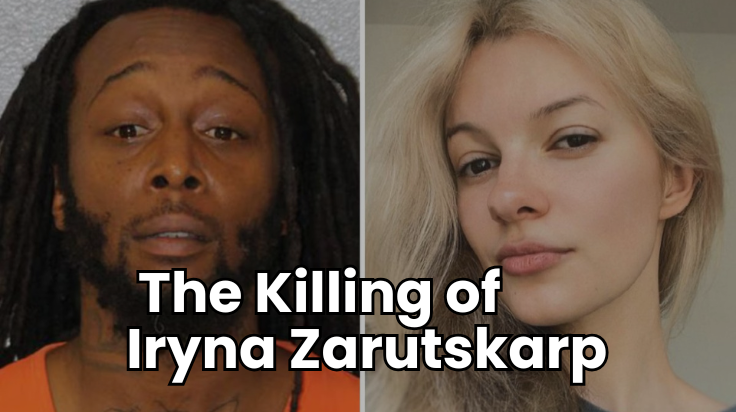
The Killing of Iryna Zarutska

Killing of Iryna Zarutska: violence, racism, and the silence around Us

A death that should haunt us all

I’ve seen too much online to think that a single video could still shake me. But the footage of Iryna Zarutska’s final moments did. She was just minding her business on a train, when her life was suddenly stolen. The way she looked up at her attacker in shock and fear, the way she clutched herself and cried into her hands while people sat around in silence. The scene broke something in me.

She didn’t die instantly. She bled, terrified, as if waiting for someone, anyone, to acknowledge her humanity. But no one did. Men and women sat feet away, eyes glued to their phones, unwilling to lift a finger. Some even stood up and walked past her without so much as a glance. That image of indifference in the face of dying haunts me as much as the attack itself.

And what makes it unbearable is knowing she had fled a war in her homeland, only to be killed in a place where she thought she might find safety. The cruelty of that irony is almost too much to bear.

The tired excuse of “mental illness”

We’ve all heard it before: the attacker was “mentally ill.” I reject that explanation outright. Evil is not a medical condition. When someone has been arrested fourteen times for violent behavior and is still walking the streets, that’s not about health. It’s about a broken justice system.

North Carolina had the chance to keep this man contained, but instead, he was free to take a life. And he’s not the only one. Just months ago, another repeat offender killed three people in New York without provocation. How many times must we read the same headline before we admit that this pattern of leniency is a policy failure? A society that values excuses over accountability is a society that chooses predators over victims.

When racism finds its opportunity

As if her death wasn’t painful enough, the aftermath was poisoned further by the reaction online. Scroll through the comments under censored versions of the video and you’ll find an avalanche of racism:

  • “Survived war but not black America.”

  • “They should introduce white and black sections on public transport again.”

  • “These people were the worst purchase in American history.”

There are hundreds like these. One man commits a crime, and suddenly an entire race is on trial. Racists wait for these moments, lurking in the shadows, ready to seize on tragedy as their green light to spew hatred. They don’t care about Iryna, they don’t care about justice. They wait for moments like this, tragedies that should unite people in grief and outrage, and instead they twist them into weapons to validate their hate, to stigmatize, and feed their ideology.

As a Black woman, I cannot describe the exhaustion of watching this cycle. Racists grab onto the worst behavior of a single Black man and inflate it into a narrative about all Black people.We are not a monolith. We are not represented by the worst among us. And yet, the moment one of “ours” commits a horrific act, it’s suddenly open season. The hate pours out eager to say “See, we told you so.”

Our own responsibility

Still, the death of Iryna Zarutska forces hard questions within the Black community, too.We can’t keep pretending that violent criminals don’t come from our own community, or that every act of brutality can be explained away by “systemic racism.” That excuse is tired, and it hasn’t saved us.

The reality is that too many Black neighborhoods are ruled by fear. People are scared of their own neighbors, the very people we love to excuse. Why do the most successful Black families do is leave the hood? They don’t want to raise their kids around gangs, dysfunction, and violence. And let’s be honest: the danger is real, and denying it only makes it worse.

If we want progress, we’ve got to break the cycle ourselves. Stop glorifying thugs. Stop raising kids where crime is the soundtrack of daily life. Stop living off government scraps and calling it survival. That’s not “cheating the system.” That’s doing exactly what the system designed you to do: stay stuck, stay dependent, stay powerless.

We can’t rewrite slavery, but we sure as hell don’t need to keep reenacting its consequences. At some point, we have to choose a different path. One where our children inherit discipline, opportunity, and pride instead of excuses, poverty, and fear.

Katanga in Newark: A Burkinabè Masterpiece on Power, Tragedy, and the Fall of Tyrants

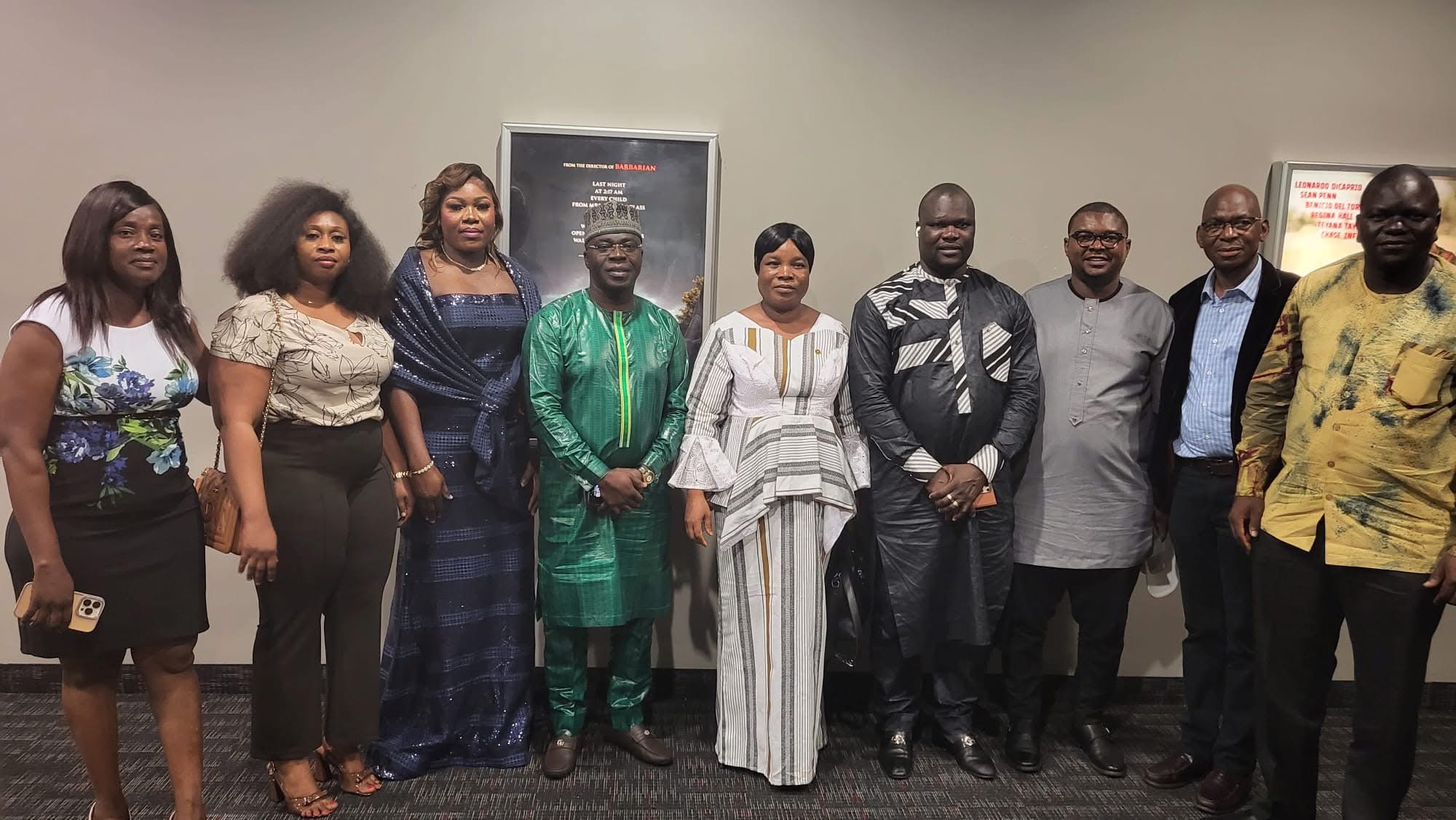
On Saturday, August 2, 2025, Citiplex 12 in Newark, New Jersey, hosted a special screening of Katanga: The Dance of the Scorpions, in the presence of several prominent members of the Burkinabè and African diaspora. Among them was the Consul General of Burkina Faso in New York, Mrs. Estelle Segda/Gando, as well as community leaders, association presidents, and cultural figures committed to promoting African cinema abroad.

The event was organized by Yennega Movies, under the leadership of young Burkinabè filmmaker Boukary Tiemtoré. Already known for bringing Bienvenue à Kikideni to audiences in the United States, and for directing films such as Le Rêve Américain de Malika and Le Regret Fatal, Tiemtoré has positioned himself as an important cultural bridge for Burkinabè cinema in America. His work is not only about showing films. It is about creating spaces where African stories can travel, meet their diaspora, and claim their rightful place in international cultural conversations.

A Political Tragedy Rooted in Shakespeare and Burkinabè Imagination

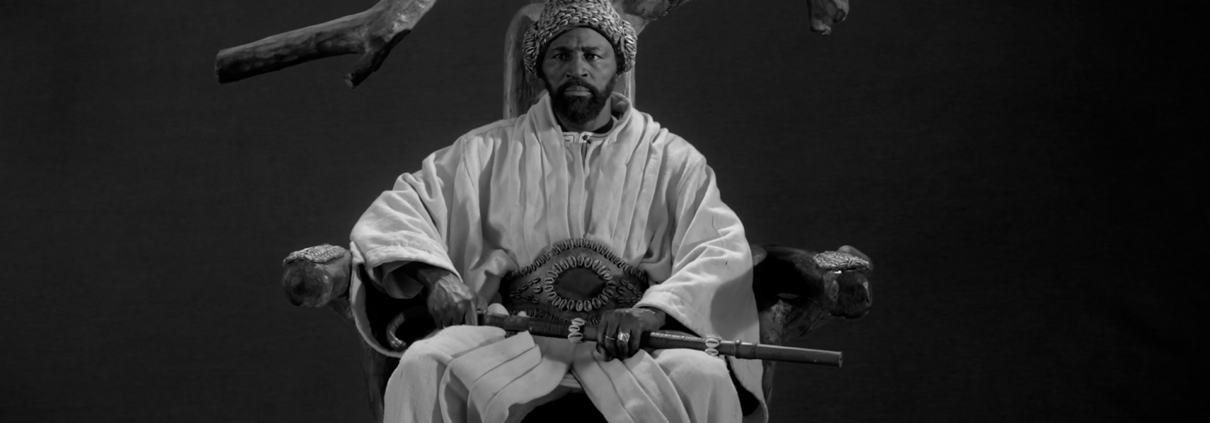
Directed by Dani Kouyaté, Katanga: The Dance of the Scorpions won the prestigious Étalon d’or de Yennenga at FESPACO 2025. Freely inspired by Shakespeare’s Macbeth, the film transposes the tragedy of ambition, betrayal, and moral collapse into an African political universe. Shot in black and white and performed in Mooré, the film unfolds in the fictional kingdom of Ganzurgu, where power is sacred, fragile, and dangerous.

After a failed conspiracy, King Pazouknaam appoints his cousin Katanga as head of the army. But under the influence of his wife Pougnéré, played with remarkable force by Hafissata Coulibaly, Katanga assassinates the king and seizes the throne. What follows is not simply the story of a man becoming king. It is the slow descent of a soul into paranoia, brutality, and spiritual isolation.

The film explores universal themes with striking intensity: the hunger for power, betrayal, guilt, fear, and the silence that grows around tyrants. Katanga’s tragedy is not only that he kills to rule. It is that, in eliminating those still brave enough to tell him the truth, he gradually loses contact with reality and with his own humanity. By the time his wife dies, he has become so hollowed out by power that he envies those still capable of crying.

The Prophecy: Destiny or Temptation?

At the heart of the film lies a disturbing prophecy: “You will be king, or you will die.” Spoken by the diviner, those words enter Katanga’s mind like a spark that will soon become a fire. The prophecy gives no date, no condition, no moral instruction. It simply places him between two extremes: power or death.

This is where the film becomes more than a political drama. It becomes a philosophical meditation. Is Katanga a man trapped by destiny, merely fulfilling what had already been written? Or is he a man who chooses evil and later hides behind fate to escape responsibility? The film leaves that tension alive, and that is part of its strength.

If the prophecy was truly the expression of a legitimate destiny, then why do the guardians of tradition, the sacred masks descending from the forest, eventually rise against him? Why do they speak of usurpation if he was only walking a path already traced by the invisible world? Perhaps the prophecy was not a sentence, but a mirror. Perhaps it did not create Katanga’s downfall. It simply revealed what was already inside him. He was not destroyed by destiny alone. He was destroyed by thirst, by ambition, and by the belief that power could be seized without consequence.

Women at the Center of Power and Resistance

One of the most powerful dimensions of Katanga: The Dance of the Scorpions is the central role given to women. They are not decorative figures in the background of a male tragedy. They are at the heart of the drama, the temptation of power, and the moral resistance that eventually rises against tyranny.

Pougnéré is the first force that changes the course of the kingdom. Manipulative, cynical, and fiercely ambitious, she embodies the seduction of absolute power. Through her, the film shows how ambition can become detached from compassion, from loyalty, and from the human cost of political conquest. She does not simply push Katanga toward the throne. She pushes him toward the abyss.

Katanga, la danse des scorpions de Dani Kouyaté : Au cœur des intrigues et complots politiques | Infos Sciences Culture

Image source: Infos Sciences Culture

But the film does not reduce women to manipulation or ambition. Other female figures carry a completely different moral power. One mother refuses exile and refuses to kneel before the tyrant. Her dignity is non-negotiable. She chooses death over submission, and in doing so, she becomes one of the film’s most haunting figures of courage.

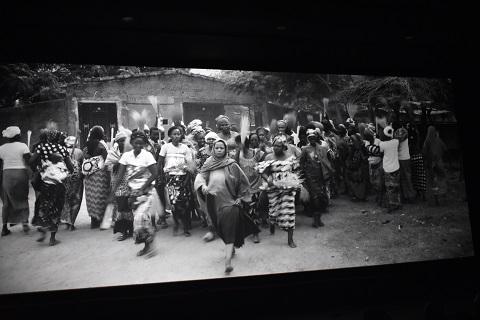
Then come the women of the people, led by Soubila, the widow of Bougoum, Katanga’s former brother-in-arms and intimate friend, who is murdered with chilling cruelty. Armed with brooms, the women take to the streets to symbolically sweep away evil. Their gesture is simple, almost domestic, yet deeply political. They awaken consciences. They open the path to revolt. They prepare the fall of the regime.


When the authorities order soldiers to shoot, the soldiers hesitate. In front of them are not abstract protesters. They see their mothers, their aunts, their grandmothers, the women who gave life and who now stand as the last moral barrier against death. The soldiers disobey. They choose humanity over blind obedience.

In that moment, one is reminded of the words of Captain Thomas Sankara: “A soldier without political and ideological training is a potential criminal.” In Katanga, that moral training does not come through a classroom or a military doctrine. It comes through the gaze of women, through the courage of mothers, and through the memory of a people who still know the difference between authority and tyranny.

A Cinema of Beauty, Memory, and Political Warning

Beyond the strength of its story, Katanga is visually fascinating. The artistic direction is carefully crafted, blending tradition and modernity with intelligence and restraint. The black-and-white cinematography gives the film a timeless quality, as if the tragedy could belong to the past, the present, or any society where power becomes intoxicated with itself.

The costumes, hairstyles, lighting, and symbolic settings all contribute to a world that feels both deeply Burkinabè and universally readable. The film carries the soul of Burkinabè cinema: theatrical, spiritual, political, and rooted in oral tradition. It also benefits from a remarkable cast, with performances marked by precision, intensity, and emotional discipline. Even in the middle of such a grave subject, moments of humor appear, reminding us of Dani Kouyaté’s artistic intelligence and his understanding of life’s complexity.

Katanga is not simply a tragedy brought to the screen. It is a mirror held up to Africa, to humanity, and to power itself. It asks what happens when leaders confuse authority with ownership, loyalty with silence, and destiny with entitlement. It reminds us that tyranny does not begin only with violence. It often begins with the inability to hear the truth.

Why This Screening Mattered

The Newark screening mattered because it was more than a cultural event. It was an act of transmission. For the Burkinabè diaspora, seeing such a film on American soil was a reminder that our stories do not have to remain confined to our borders. They can travel. They can speak to the world. They can enter international spaces without losing their language, their symbols, or their soul.

In bringing Katanga to audiences in the United States, Yennega Movies helped create a bridge between homeland and diaspora, between African cinema and global spectatorship, between cultural memory and contemporary political reflection. This kind of initiative is necessary because African cinema is not secondary cinema. It is not cinema waiting for permission. It is cinema with its own intelligence, its own rhythm, and its own power to disturb, educate, and elevate.

Dani Kouyaté has given us a dense, beautiful, and necessary film. A work rooted in Burkinabè culture but open to the world. A film about power, but also about conscience. A film about tragedy, but also about resistance. A film that reminds us that the fall of tyrants is not always triggered by armies or speeches. Sometimes, it begins when the people, and especially the women, refuse to keep kneeling.

Thanks to Yennega Movies for offering this cinematic journey on American soil. Initiatives like this remind us that Burkinabè cinema has not said its last word. It watches. It remembers. It speaks. And sometimes, it confronts us.

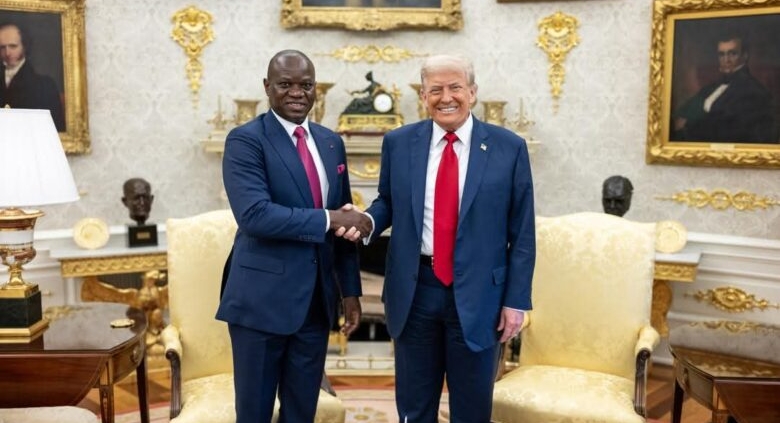
The Power of Posture: How Gabon’s President Turned an Awkward Trump Meeting into a Strategic Moment

The recent meeting between Donald Trump and several African heads of state has generated plenty of commentary. Much of the attention focused on the awkwardness of the scene, the diplomatic missteps, and the symbolic imbalance of African leaders appearing in a room where the hierarchy seemed already established before anyone even spoke. Yes, there were uncomfortable moments. But reducing the whole meeting to a sterile controversy over a photo or a few embarrassing exchanges misses the deeper political lesson.

The scene itself was undeniably awkward. Heads of state were asked to introduce themselves. Trump complimented the president of Liberia, an English-speaking country, on his command of English. Several remarks were filled with excessive flattery, and the conversation around the Nobel Peace Prize only added another layer of discomfort. It was a moment that revealed, once again, the strange theater of international diplomacy when power is unevenly distributed and protocol becomes a performance.

But in the middle of that clumsy theater, one man understood how to use the room instead of being swallowed by it. Brice Clotaire Oligui Nguema, the president of Gabon, did not come across as a leader begging for favors or waiting for validation. He did not spend his moment denouncing the imbalance, even though the imbalance was obvious. He did something more strategic. He entered the logic of the room, read the psychology of the man in front of him, and spoke in a language Donald Trump understands: power, business, pragmatism, national interest, jobs, and leverage.

That is where the political intelligence of the moment lies. In certain arenas, dignity is not always defended through protest. Sometimes, it is defended through posture. Nguema understood that appearing wounded, offended, or dependent would not shift the dynamic. It would only reinforce it. Instead, he positioned himself as a leader with something to offer, not someone asking to be rescued. That distinction matters deeply in diplomacy, because the person who appears desperate weakens his own position before the negotiation even begins.

Robert Greene once wrote: “Never appear as the one who is asking. Offer, propose, but never submit.” Whether consciously or instinctively, Nguema seemed to apply that principle with remarkable precision. He did not present Gabon as a poor country waiting for American generosity. He presented Gabon as a country of opportunity, a country with resources, a country with options, and a country ready to do business with those who understand the value of showing up early.

What made his intervention effective was his use of the mirror. He reflected Trump’s own political language back to him, but used it to advance Gabon’s priorities. Trump likes pragmatism, so Nguema emphasized that he, too, is a pragmatic man. Trump speaks constantly about bringing production home and defending national industry, so Nguema spoke about Gabon’s desire to transform its raw materials locally instead of exporting them without added value. Trump talks about jobs and immigration, so Nguema connected local industrial development to youth employment and the reduction of forced migration.

This was not a sentimental appeal. It was strategic framing. Nguema was essentially saying that young Africans do not risk their lives at sea because they enjoy leaving home, family, culture, and dignity behind. They leave because opportunities are absent or insufficient where they are. If the West truly wants fewer migration crises, then it must take seriously the creation of economic value inside African countries. In that sense, investing in African industrialization is not charity. It is also a way of serving Western interests before the crisis reaches Western borders.

The strongest moment came when he made it clear that Gabon’s market was open, but not waiting indefinitely. “If you do not come, others will.” That sentence was simple, but strategically powerful, because it quietly reversed the relationship. Africa was no longer being framed as the continent chasing investors, approval, and attention. Instead, Gabon was presented as an opportunity that the United States could either seize or lose to others.

This is especially important in today’s multipolar world. The United States is no longer the only center of influence. China, Russia, Turkey, the Gulf states, India, and other powers are all competing for access, resources, markets, and partnerships across Africa. African countries may not always negotiate from a position of perfect strength, but they are no longer without alternatives. The leaders who understand this reality can stop performing dependency and start practicing leverage.

That is what made Nguema stand out. He did not deny the imbalance of the room, but he refused to be defined by it. He did not respond with arrogance, but he did not submit either. He spoke as a partner, not as a subordinate. He understood that Trump is not primarily moved by moral lectures or diplomatic poetry. Trump responds to strength, transactions, and people who appear to know what they want. So Nguema did not ask for pity. He presented a deal.

There is a broader lesson here, beyond Gabon and beyond that meeting. In politics, business, diplomacy, and even personal life, power often belongs to those who understand the room faster than others. It belongs to those who can enter an imperfect setting without losing their composure, their message, or their sense of value. Sometimes, the smartest move is not to reject the stage, but to step onto it with enough self-control to change the meaning of your presence.

The meeting may have been awkward. It may even have exposed once again the uncomfortable asymmetry that still shapes many encounters between African leaders and Western power. But within that imbalance, Brice Clotaire Oligui Nguema managed to carve out a moment of strategic dignity. He turned discomfort into positioning. He turned a protocol imbalance into a business argument. He turned a scene many perceived as humiliating into an opportunity to project confidence, clarity, and leverage.

That does not mean one speech changes the structure of global power. It does not erase the deeper questions surrounding governance, legitimacy, democracy, or the future of Gabon. But in that specific moment, Nguema understood something many leaders forget: respect is rarely given to those who simply demand it. It is often earned by those who know how to stand, how to speak, and how to make others understand that they are not coming empty-handed.

In a room shaped by power, he chose not to appear small. And that, in itself, was a silent but meaningful victory.