Tag Archive for: Politics

Hunter Biden

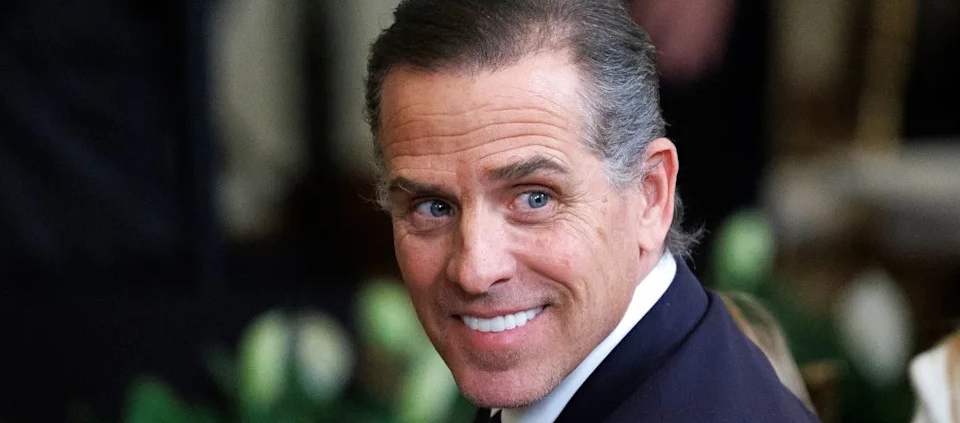
Hunter Biden Stopped Trying to Be Respectable. It May Be the Best Rebrand in Politics Right Now.

For years, Hunter Biden was not really a person in the public imagination. He was a punchline. Crack. Hookers. Motels. The laptop. Burisma. The pictures nobody ever needed to see. A gun charge. Tax problems. A presidential son who somehow managed to become both a Republican obsession and a Democratic embarrassment. Even people who had no idea what Hunter Biden had actually done could tell you what he represented: trouble. For Joe Biden, he was the son you loved fiercely and probably wished the country would stop talking about. For Republicans, he was evidence of everything rotten about the Biden family. For Democrats, he was often something to be explained away as quickly as possible before returning to the subject of Donald Trump.

And now, somehow, everybody wants to hear Hunter Biden talk. That transformation did not happen because he hired an extraordinary crisis-communications team and successfully rehabilitated his image. It happened because he stopped acting rehabilitated. Hunter Biden has quietly—or maybe not so quietly anymore—pulled off one of the most fascinating personal rebrands in recent political culture, not by convincing America that everything it heard about him was false, not by pretending the crack years were exaggerated, and not by exchanging profanity for presidential diction and showing up with a new haircut, a therapist and a carefully rehearsed redemption story. He did something much harder: he owned the mess.

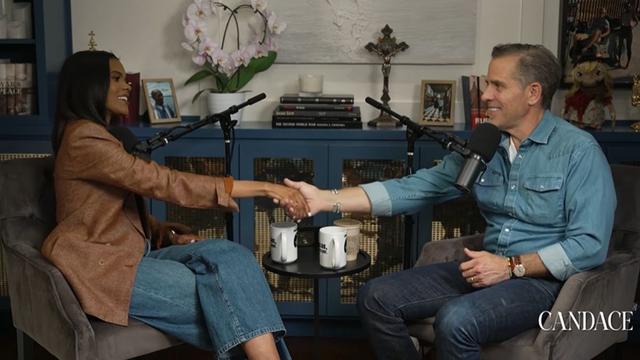
When Candace Owens reminded him, in effect, that she had spent years calling him a crackhead, Hunter did not recoil from the word. “I was a crackhead.” That is an extraordinary sentence precisely because there is nowhere to go after it. What are you going to do, call him a crackhead? He already did. Owens had spent years publicly mocking him, and then in May, Hunter Biden walked into her world and sat with her for nearly two hours. The conversation which has now accumulated 2.4 millions views on Yotube alone, covered his addiction, his family, the laptop, corruption allegations, politics, Gaza and even some of Owens’ controversial questions surrounding Charlie Kirk’s assassination. At points, the conversation became emotional enough that Hunter cried. Owens herself apologized for some of the way she had spoken about him. That interview mattered precisely because Candace Owens was not a friendly Democratic interviewer offering Hunter Biden a redemption tour. She had been part of the firing squad, and he walked into the room anyway. That, more than any polished image makeover could have done, is where his new brand starts.
When everybody knows your worst story, secrecy loses its power

There is a strange kind of freedom that comes from already having been publicly humiliated. Hunter Biden’s addiction was not revealed through a tasteful memoir excerpt accompanied by a black-and-white portrait. America saw him at his worst. We saw the photographs. We heard the allegations. We watched his private life become political entertainment. His addiction became a meme before many people ever stopped to consider what addiction actually looks like. So when Hunter talks now, he has remarkably little incentive to pretend, and that is magnetic—not because addiction is cool, because it obviously isn’t, but because shame normally makes people perform.

We hide. We edit. We give the acceptable version. We say, “I was going through a difficult period,” when what we really mean is: I was destroying myself and terrifying everyone who loved me. Hunter does not seem particularly interested in giving us the tasteful version anymore. On Armchair Expert with Dax Shepard, he talked about addiction narrowing your entire existence around a single need, about self-destruction, public humiliation and the people who continued loving him when he could not love himself. Before that came his appearance on the Shawn Ryan Show—an astonishing five-plus-hour conversation on a show whose audience is hardly the natural constituency for a Biden. The full interview passed 1.17 million views on YouTube.

Think about that for a minute. A man who was once treated as the thing Joe Biden’s campaign desperately needed everyone to stop asking about can now sit behind a microphone for more than five hours and more than a million people will watch. That is not merely reputation management. Something else has happened: Hunter Biden has humanized himself, and in doing so he has humanized millions of people whose families have lived some version of his story without the Secret Service, congressional hearings or tabloid photographs.

Anyone who has loved an addict knows there is a particular kind of despair involved. You watch someone you know disappear while their body is still standing in front of you. You reason with them, you threaten them, you pray, you get angry, you rescue them, you swear you will never rescue them again, and then the phone rings at 2 a.m. and you rescue them again. You start mourning somebody who is not dead. Hunter’s story gives language to that, and his survival gives something else: hope. Not the cheap inspirational kind, but the uncomfortable kind—the kind that says a human being can become nearly unrecognizable, destroy things, hurt people, humiliate himself on a scale most of us thankfully will never experience, and still not be finished. That is powerful.

The profanity is part of the brand—but not for the reason you think

Yes, Hunter Biden swears. A lot. And somehow it works. But the lesson is not that swearing makes you authentic. Plenty of people swear and remain completely full of shit. The reason Hunter’s profanity works is that it reinforces the broader impression that there is very little distance between what he thinks and what comes out of his mouth.

Modern political communication has become so sterilized that you can practically hear the consultant standing behind the candidate. Every sentence has been focus-grouped, every controversial word replaced, every opinion sanded down until it can technically survive on CNN without offending donors, activists, suburban voters, party leadership, three demographic groups and whichever person is trending angrily on X that afternoon. Then Hunter Biden arrives and says people are getting “fucking screwed,” and you believe, at minimum, that Hunter Biden actually believes what Hunter Biden just said. There is value in that.

After New York’s June Democratic primaries, Hunter posted his own lessons from the results. He argued that authenticity is measurable, that Democratic-establishment endorsements are increasingly liabilities, that “conviction beats caution,” that “the middle is not a strategy,” and that Democrats should stop being terrified of their own base. About Zohran Mamdani, his conclusion was simple: he did not ask permission. He took the field. Whether you agree with Hunter’s political analysis is almost beside the point. He sounds like somebody who has an opinion, and that bar has apparently become revolutionary.

On Gavin Newsom’s podcast, he similarly defended Maine Senate candidate Graham Platner amid controversy over leaked private material. Hunter’s argument was basically: hand over your phone. Give us your iCloud. Let us dig through every drunken selfie, off-color text and private embarrassment you have ever accumulated, and then let us see how many people are still eligible for public office. He then shifted to what he thought actually mattered about Platner: healthcare, changing the political system and his message that working Americans are getting “fucking screwed.” Again, agree or disagree. You know what he thinks.

Talk to everybody

Maybe the most interesting part of Hunter Biden’s new media strategy is that there barely seems to be a media strategy. The rule appears to be: talk to everybody. Candace Owens, Shawn Ryan, Dax Shepard, Gavin Newsom, Andrew Callaghan and, in one of the stranger political-media crossovers of the year, Nick Fuentes. The Channel 5 conversation with Fuentes was not some polite exercise in manufactured bipartisan harmony either. They talked about Trump, censorship and deplatforming, race, Israel, antisemitism, political alienation and the collapse of trust, and there were moments when Hunter pushed him hard. When Fuentes tried to contextualize some of his past rhetoric as trolling or humor, Hunter was blunt: he did not find some of it funny then and did not find it funny now. He even brought up things Fuentes had said about him personally. But the disagreement did not become a reason to end the conversation. That was the point. Hunter could tell him, essentially, I think some of what you say is bullshit, I don’t appreciate the joke, and I am still willing to sit here and hear you out.
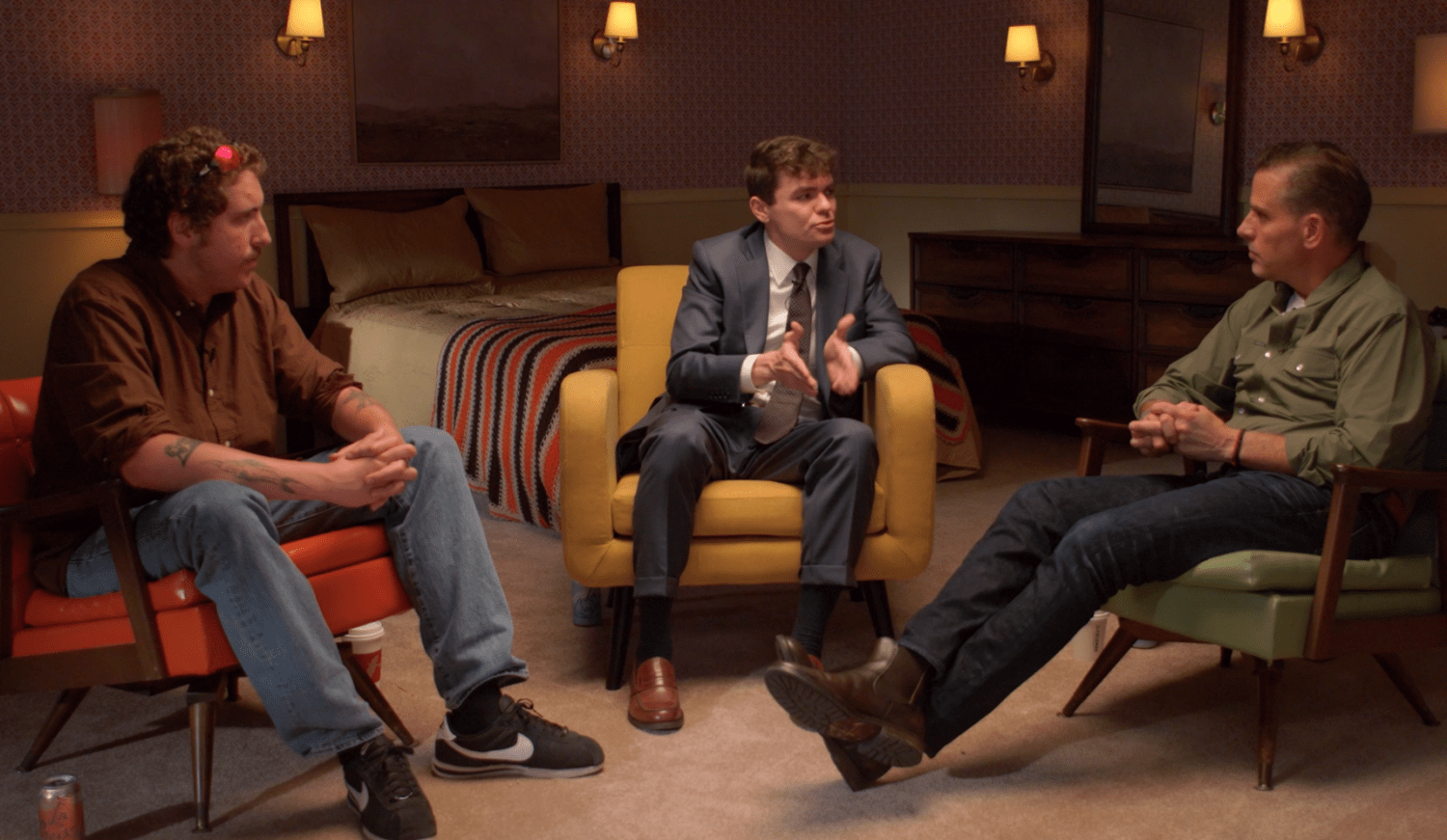
Hunter seems increasingly uninterested in the political fear of contamination by association. That is also what made his conversation with Candace Owens so interesting. When the discussion turned to Charlie Kirk’s assassination and the questions Owens has continued raising around it, Hunter did not do what most people with his political background would have done: distance himself from her immediately, or make sure everyone knew he belonged to the “respectable side of the conversation”. He sided with Candace on some of those questions. Whatever you think of her theories—and I happen to think some of the questions she is asking deserve to be asked—that was a courageous position for Hunter Biden to take, precisely because he knew what it would look like coming from him.

That is becoming one of the most compelling things about this version of Hunter. He seems increasingly willing to follow an argument where it takes him instead of first calculating whether the conclusion is acceptable to Democrats, Republicans, the mainstream press or whichever political tribe is supposed to claim him. It is the same instinct that allows him to sit with Candace Owens after years of being mocked by her, talk to Gavin Newsom, enter a conversation with Nick Fuentes, criticize his own party and speak about foreign policy without constantly signaling which camp he belongs to. You can disagree with him, sometimes strongly, but you are not left wondering whether the opinion survived six advisers before reaching the microphone.

Authenticity is not the same thing as telling us everything

There are also obvious zones d’ombre in Hunter Biden’s new radical-candor era. His daughter is one. His treatment of his father’s legacy is another. Hunter has shown considerable courage criticizing Democrats, Democratic consultants and the political establishment. He has gone after the people he believes abandoned his father. He has been willing to criticize American foreign policy and speak aggressively about war. But his candor becomes noticeably more complicated when the subject is Joe Biden himself.

That was visible in his exchange with Owens over Gaza. Hunter attacked Trump’s vision for Gaza and defended his father against the idea that Joe Biden belonged to the same corrupt political class he despises. Even in an interview built around candor, Hunter’s instinct to protect his father remained very much alive.

That does not invalidate his authenticity. In some ways, it makes it more human. Most of us have places where our principles suddenly encounter somebody we love. The interesting question is not whether Hunter Biden has become perfectly transparent. Nobody is. The question is whether an imperfect, selective honesty can still create a more authentic public identity than carefully constructed perfection. I think the answer is obviously yes.

He stopped allowing other people to define him

Personal branding is often discussed as though it means logos, colors, headshots, taglines and making sure your LinkedIn profile says the same thing as your website. That is not a brand, at least not the important part. A personal brand is the collection of associations people immediately attach to your name, and for years Hunter Biden surrendered that completely. Other people told his story. Republicans defined him. Tabloids defined him. The laptop defined him. His addiction defined him. His father defined him. His last name defined him.

Now he is talking enough that the public has to reconcile the caricature with the person, and that is the achievement. He has not erased the crack addict; he integrated him. He has not said, That wasn’t me. He has said, That was me. Now listen to what I have to say. And strangely, people are listening.

His social-media presence exploded again this summer as he began posting hundreds of times, fighting with critics, defending his father, joking about himself and openly revisiting his addiction. The surprise at his resurgence is now its own internet phenomenon. Under clips of Hunter discussing politics, people regularly ask some variation of: Where the hell did this Hunter Biden come from? The political speculation has become inevitable precisely because the person once considered a devastating electoral liability has become culturally interesting.

I do not know that Hunter Biden should run for anything, and that is not really what interests me here. What interests me is how quickly the emotional meaning of his name has changed. A national joke became interesting. A liability developed a voice. A man millions of people thought they already knew finally started introducing himself, and he did it without becoming cleaner, safer or easier to explain. If anything, he became more Hunter.

There is a branding lesson there that goes far beyond politics. We spend an extraordinary amount of energy trying to control what people might discover about us. We polish away the weird parts, soften opinions and copy whatever already seems successful. We create professional versions of ourselves so generic that nobody could possibly hate them, and then we wonder why nobody remembers us.

Hunter Biden’s resurgence suggests the opposite possibility: maybe the parts of your story that make you hardest to package are sometimes the exact things that make you impossible to replace. That does not mean confess everything. It does not mean controversy is a strategy, and it certainly does not mean every flaw should be repackaged as a superpower. It means people connect to humanity before they connect to perfection.

Hunter Biden did not rebuild his personal brand by persuading America that the motel rooms, the drugs, the prostitutes, the humiliations and the disasters never happened. He rebuilt it by standing in front of all of it and continuing the sentence. After years of watching politicians speak without ever really saying anything, perhaps that is why so many people suddenly cannot stop listening.


Mamdani, Hochul Announce New York’s First Pied-à-Terre Tax on Luxury Secondary Homes

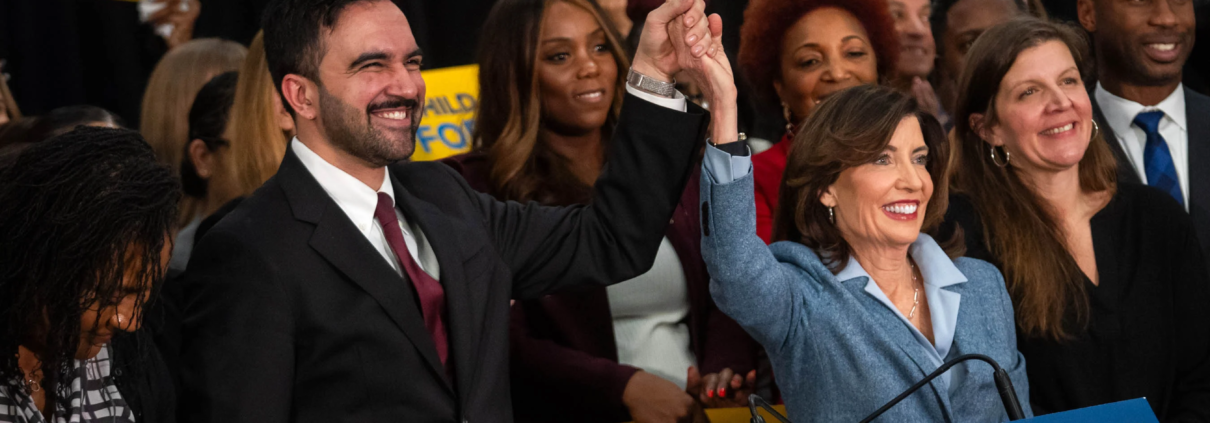
Mayor Zohran Mamdani and Governor Kathy Hochul announced a proposal to create New York State’s first pied-à-terre tax, a measure aimed at raising revenue by taxing high-value secondary properties owned by people whose primary residence is outside New York City.

According to the announcement, the tax would apply to one- to three-family homes, condominiums, and co-ops valued above $5 million when the owner’s main home is located outside the city. City and state leaders say the measure is designed to target ultrawealthy individuals who keep luxury New York properties as secondary residences or investment assets rather than as full-time homes.

The administration says the new tax could generate about $500 million a year, money that would help address New York City’s budget gap while protecting public services. Officials also noted that similar proposals had been discussed for years under previous administrations, but this would be the first time such a tax is actually enacted in New York State.

In a video posted on X, Mamdani tied the announcement directly to one of the core promises of his campaign. “When I ran for mayor, I said I was going to tax the rich. Well, today, we’re taxing the rich,” he said. He described the measure as targeting the “richest of the rich,” specifically people who “store their wealth in New York City real estate but who don’t actually live here.”

Mamdani also said the revenue would help fund initiatives such as free childcare, cleaner streets, and safer neighborhoods. Framing the issue as one of fairness, he said everyone has a role to play in contributing to the city, “and some a little bit more than others.” He also called the current structure “a fundamentally unfair system that hurts working New Yorkers” and said, “Now, it’s coming to an end.”

In a statement, Mamdani said the measure would help balance the budget in a fairer way by requiring wealthy property owners to contribute more, rather than placing the burden on working New Yorkers. Hochul also defended the proposal, saying that owners of multimillion-dollar second homes should contribute more to the city they benefit from.

The announcement is politically notable because it reflects themes Mamdani emphasized during his rise in city politics. Running as a democratic socialist, he has consistently argued that New York should ask more of the wealthy in order to fund public services and ease pressure on ordinary residents facing the city’s high cost of living.

If approved, the pied-à-terre tax would mark a significant shift in how New York taxes luxury real estate tied to out-of-city and global wealth.

Trump Removes Homeland Security Secretary Kristi Noem After Mounting Controversies

President Donald Trump announced Thursday that he is removing Kristi Noem from her role as Secretary of the Department of Homeland Security, replacing her with Republican Senator Markwayne Mullin of Oklahoma. The transition is expected to take effect on March 31 and represents the first major cabinet shakeup of Trump’s second presidential term.

In a message posted on Truth Social, Trump praised Noem’s work on border security, stating that she had delivered “numerous and spectacular results.” However, the decision comes after weeks of political pressure tied to controversies surrounding her leadership of the department.

Noem, a former governor of South Dakota and longtime Trump ally, had become one of the most visible figures behind the administration’s immigration enforcement strategy. The Department of Homeland Security oversees Immigration and Customs Enforcement (ICE), Border Patrol and several other agencies that have played a central role in Trump’s mass deportation policy.

Her tenure took a dramatic turn after two U.S. citizens, Renee Good and Alex Pretti, were killed in Minneapolis during operations involving federal immigration agents. Noem publicly described both individuals as “domestic terrorists,” a characterization that was quickly challenged by civil liberties groups and lawmakers who said the evidence did not support the claim. The incidents triggered investigations and calls for accountability from Democrats and some Republicans, who questioned the department’s conduct and leadership.

At the same time, reports surfaced about an alleged personal relationship between Noem and Corey Lewandowski, a former Trump campaign manager who served as a senior adviser within the department. According to reporting by the Wall Street Journal, the relationship and internal management tensions contributed to an increasingly unstable atmosphere at DHS.

Questions also emerged about spending decisions inside the department, including approximately $220 million awarded to a firm linked to Noem’s former spokesperson to produce advertising campaigns prominently featuring the secretary. The growing scrutiny placed the department under unusual bipartisan pressure. Senator Thom Tillis of North Carolina threatened to block Senate business if DHS did not answer oversight questions, while Senator John Kennedy of Louisiana publicly questioned the advertising contracts during congressional hearings.

Despite the controversies, Trump did not criticize Noem in his announcement. Instead, he said she would take on a new role as special envoy for what he called the “Shield of the Americas,” a security initiative that the administration plans to unveil in the coming days.The appointment of Senator Mullin suggests the White House is seeking to reset leadership at a department that remains central to Trump’s political agenda.

For an administration that has made immigration enforcement one of its defining policies, the leadership change signals both the political sensitivity of the issue and the high stakes surrounding the agencies tasked with carrying it out.

VOTER ID

If only citizens can vote, why is voter ID controversial?

The debate around the SAVE America Act and Voter ID has moved from a technical discussion about election rules into a broader political battle that is now shaping the national agenda.

President Trump has made the bill a personal priority, publicly pressuring House Republicans to pass it. In the Senate, the bill likely faces a Democratic filibuster, prompting some Republicans to float reviving a talking filibuster. Senate Minority Leader Chuck Schumer has accused Republicans of trying to revive “Jim Crow–type laws,” arguing that the SAVE Act would roll back voting rights rather than protect them.

But What struck me most is not simply how polarized this conversation has become, but how little I actually understood about how voting currently works in the United States before this moment. For years, I’ve known that even green card holders could not vote and had to wait until they became  citizens. I also assumed, without questioning it, that there were already clear and consistent systems in place to ensure that only American citizens participated in American elections. The fight over voter ID and the SAVE America Act forced me to confront the fact that this assumption was incomplete.

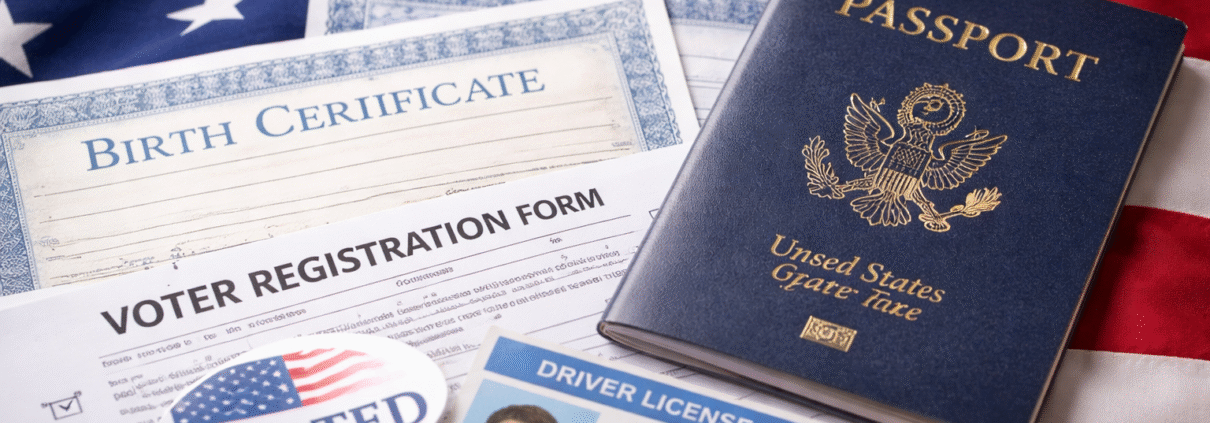
Let’s start with something everyone agrees on: under U.S. law, only American citizens can vote in federal elections. Since 1996, it has been a federal crime for noncitizens to vote, punishable by up to one year in prison. Voting is not just a formality. It is tied directly to what it means to be a citizen. Yet the way this rule is enforced is far less strict than I had imagined. In most states today, when someone registers to vote, they are not required to present documentary proof of citizenship such as a passport or birth certificate. Instead, they sign a statement affirming that they are a U.S. citizen under penalty of perjury. On Election Day, some states require identification, while others do not. Even in states that require ID, that identification usually proves who you are, not that you are a citizen. A driver’s license, for example, does not establish citizenship. In practice, this means the system relies primarily on people telling the truth when they register, and the possibility of punishment later rather than verifying citizenship upfront.

This is the context in which the SAVE America Act has become so controversial. At its core, the bill proposes a more straightforward system: require proof of citizenship such as a passport, birth certificate, or REAL ID indicating citizenship to register to vote, and require photo ID to vote in every state. It would also largely eliminate mail-only voter registration by requiring people to present documents in person. There is an exception process for people who cannot immediately provide documents, but the overall standard would be much stricter than what exists today.

Supporters of the bill argue that this is simply common sense. And I am increasingly inclined to agree with them. If voting is reserved for citizens which it legally is,  then asking for proof of citizenship should not be controversial. To me, that is not partisan. It is basic logic. We require proof of identity and eligibility for far less consequential things every single day, yet when it comes to choosing the leaders of a country, suddenly this becomes “extreme.”

Opponents warn that stricter requirements could disenfranchise millions of legitimate voters who may not have easy access to documents like passports or birth certificates. They argue that many elderly, rural, or low-income Americans could be unfairly excluded. I take that concern seriously because access matters in a democracy. But this is where I part ways with much of the opposition is that just as noncitizen voting is statistically rare, I also believe that Americans who genuinely want to vote but are completely unable to obtain any form of identification or proof of citizenship are also rare. In everyday life, ID is already required for so many ordinary activities: opening a bank account, boarding a plane, getting a job, entering many buildings, receiving medical care, picking up certain packages, and even buying alcohol at a bar. So when I hear that there is a massive population of Americans who function in society but somehow cannot obtain a single document proving who they are, I find that very difficult to accept.

Even if we assume that some people would struggle, I do not think the solution should be to abandon reasonable safeguards altogether. If the concern is that some Americans might not have easy access to documents, then the rational response is not to weaken election integrity, it is to make those documents easier, faster, and cheaper to obtain. We should put mechanisms in place to help people retrieve their birth certificates, get state IDs, or passports. Provide assistance, reduce fees, expand access points, and simplify processes. That, to me, would be the sensible compromise.

It is also important to be clear about the trade-off. Recent audits in several states have found real instances of noncitizens on voter rolls, and in some cases, evidence that a limited number may have cast ballots. These numbers are small relative to the overall electorate but they show that the issue is not imaginary. So we are weighing two risks: that of election fraud, and a risk of eligible voters facing hurdles. Between those two, the choice feels like a no-brainer to me. I think it makes more sense to tighten safeguards to protect the vote, while helping people get the documents they need, rather than leave a loophole in the system. If citizenship is the foundation of voting rights, then proof of citizenship should carry real meaning.

Ultimately, this debate is not just about paperwork or party politics. It raises deeper questions about what voting represents, how much trust we place in our institutions. So I end with a genuine challenge to readers: if you oppose voter ID and proof of citizenship requirements, explain your position in good faith. Is it that you are comfortable with some noncitizens voting? That you believe there is no real risk of that happening? Or do you truly think so many Americans are unable to get basic documents that stricter rules would be unjust?

Free childcare was the promise. Today’s announcement is the beginning. And the Test.

Today, New York took a significant step toward reshaping how families experience work, parenthood, and economic survival.

Governor Kathy Hochul and Mayor Zohran Mamdani announced a plan that would give New York City parents access to free childcare for 2-year-olds, marking a major expansion of the city’s early childhood education system and building on the existing universal Pre-K model. Governor Hochul has committed to fully funding the first two years of the program. The rollout will be phased, beginning in “high-need areas” before expanding citywide by the program’s fourth year. Hochul has also pledged to pursue a broader statewide free childcare initiative in the future.

For Mayor Mamdani, the announcement carries particular political weight. Making childcare free was one of his most visible and consistent campaign promises, and this plan represents the first concrete step toward delivering on that vision just days after taking office. In his words, the initiative is meant to demonstrate how government can “serve working families” more effectively and make New York a more affordable place to live.

The motivation behind the policy is hard to dispute. As Hochul put it, “the cost of childcare is simply too high.” Anyone who lives in New York already knows this. I know parents who want to work more hours, accept promotions, or return to school but cannot make the math work. I know single mothers who structure their entire lives around childcare availability. For many families, childcare is not just another bill, it is the gatekeeper to economic participation.

From that perspective, free childcare is a powerful and necessary idea and that is why why many New Yorkers responded positively to Mamdani’s promise. But ambition alone does not guarantee success. Implementation does.

The economic reality behind free child care New York

Free childcare for families does not mean free childcare to provide. Behind every childcare slot is a provider, often a woman, often an immigrant, frequently operating a home-based daycare with strict child-to-staff ratios, long hours, and real liability. Under this new system, many of these providers will effectively become contractors for the city, subject to fixed reimbursement rates, increased oversight, and higher expectations.

The risk is not theoretical. If reimbursement rates do not reflect the real cost of care in New York City: rent, food, insurance, labor, inflation; then the system will survive only by relying on underpaid or unpaid labor. That is how well-intentioned social policy quietly shifts its costs onto the very people delivering it.

A childcare system that depends on sacrifice rather than sustainability will eventually burn out its workforce, reduce quality, and shrink supply. That helps no one. If this program is to last, providers must be able to pay themselves, hire help when required, and operate without living on the edge of collapse. Otherwise, “free childcare” risks becoming free only because someone else is quietly absorbing the cost.

Free child care and the risk of excluding working families

There is another concern that deserves equal attention, and it requires nuance, not caricature. When officials say the rollout will begin in “high-need areas,” this often translates into strict income-based eligibility. In practice, this can mean that families with little or no declared income are prioritized. In many cases, this is entirely appropriate. People lose jobs. Families go through crises. Some parents are in transition, rebuilding, retraining, or genuinely struggling despite effort. Those situations deserve support, and no serious discussion about fairness should dismiss that reality.

At the same time, we cannot ignore how this system functions in practice over the long term.

In New York City, individuals with very low or no declared income often already have access to multiple forms of assistance — food stamps, cash assistance, subsidized or free housing, healthcare coverage, and other support programs. Meanwhile, parents with moderate earning, working full time, paying rent at market rates, receiving no housing assistance, no food assistance, and limited tax relief are frequently deemed “too rich” to qualify for help.

A parent making $40,000 – $70,000 in New York City is not wealthy. Those families are not comfortable. They are not secure. They are often one emergency away from collapse. And yet they are heavily taxed to fund the very systems from which they are excluded. This is where fairness becomes complicated and nuanced.

Support during hardship is one thing. But when someone has remained officially “poor” for many years or decades, fully embedded in multiple assistance programs, while others work continuously with no safety net, it is reasonable to ask difficult questions. At what point does a system designed to help people get back on their feet risk locking them in place? And at what point does that become unfair to those who are doing everything society asks of them?

This is not about blaming individuals. It is about designing policy that does not unintentionally reward permanent disengagement from work while penalizing effort and honesty.A childcare program meant to strengthen the economy should support work, not quietly undermine it. It should help people move forward, not trap them in static categories that benefit some while exhausting others.

A strong idea that demands careful execution

For this initiative to succeed — economically, politically, and morally — several principles must guide its implementation:

  • Reimbursement must be cost-based, not politically convenient, and indexed to real living costs.
  • Providers must have income stability, with predictable payments and protection from enrollment volatility.
  • Eligibility should avoid hard income cliffs, so families are not punished for earning more or accepting raises.
  • Oversight should prevent abuse without criminalizing honesty or survival, both for families and providers.
  • Support must accompany regulation, especially for home-based providers asked to meet public-system standards.

None of this contradicts the spirit of free childcare. In fact, it is what gives that spirit a chance to endure. I supported Zohran Mamdani’s vision because it spoke to a reality that cuts across ideology: affordability. Today’s announcement is a meaningful step toward that vision.

But bold promises require equally honest design. Free childcare can transform lives if it does not rest on invisible labor, exclude working families, or create cycles of dependency instead of mobility. Getting this right means refusing to romanticize sacrifice and insisting that fairness applies to everyone involved: parents, providers, and taxpayers alike.

Today was the beginning. What follows will determine whether this promise becomes a durable public good  or another well-intentioned idea strained by reality.


A Landmark exhibition closes ECOWAS golden jubilee celebration at the UN

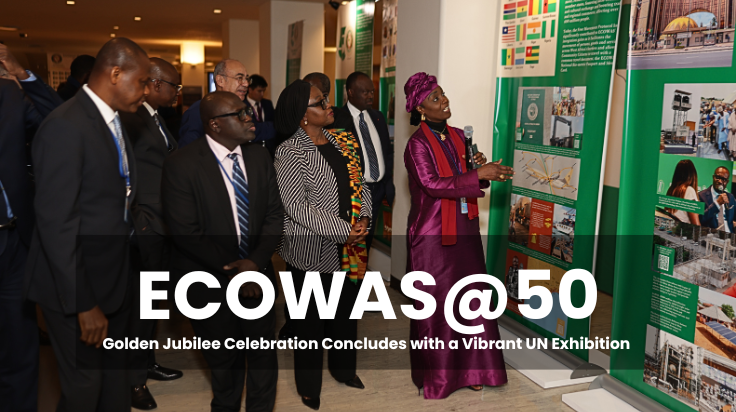
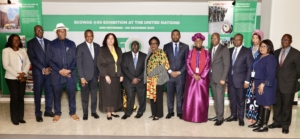
New York, November 25, 2025. The ECOWAS Permanent Observer Mission to the United Nations hosted the closing ceremony of the ECOWAS Golden Jubilee Commemoration with an exhibition at UN Headquarters, marking fifty years of regional integration, cooperation, and collective resilience across West Africa. Held under the theme “ECOWAS at 50: Stronger together for a brighter future — celebrating strength, resilience and progress,” the event brought together ambassadors, UN officials, partners, and members of the West African community for an evening of reflection, celebration, and renewed commitment to the region’s future.

Ambassador Kinza Jawara-Njai: Recalling the vision of the founders

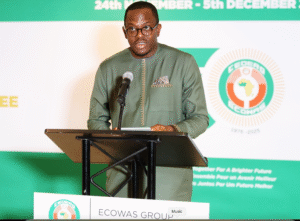
In her opening remarks, H.E. Amb. Kinza Jawara-Njai, ECOWAS Permanent Observer to the UN, reminded guests that ECOWAS was founded by visionary leaders who sought to unite a multilingual region of Portuguese-, French-, and English-speaking countries. She noted that “the goal of these leaders was simple: to promote cooperation, integration, and to unite a diverse citizenry.” Their collective ambition, she said, was to build a community rooted in self-sufficiency and economic prosperity.

Ambassador Jawara-Njai described the exhibition as a visual collage of ECOWAS’ interventions over 50 years, highlighting what has been achieved, the challenges faced, and the organization’s ongoing efforts to uphold peace, security, good governance, and sustainable development. She personally guided the audience through the exhibition, walking them through the institution’s history and impact across the region.

Ambassador Michal Imran Kanu: A call for renewed determination

H.E. Amb. Michal Imran Kanu, Permanent Representative of Sierra Leone and Chair of the ECOWAS Group at the UN, emphasized ECOWAS’ role as a cornerstone of multilateralism in Africa. He underscored the organization’s work in removing barriers to free movement, promoting trade and infrastructure, strengthening democratic governance, and leading early peacekeeping and mediation efforts in conflicts across Sierra Leone, Liberia, Nigeria, and beyond. He reminded attendees that the region continues to confront significant challenges, including unconstitutional changes of government, violent extremism, climate fragility, organized crime, and a fast-growing youth population seeking opportunities. Yet, he added, the ECOWAS story remains one of resilience, consultation, and determination, carried by institutions and communities that refuse to give up.

Calling the exhibition a powerful reminder of the region’s progress, he urged the international community to deepen cooperation with ECOWAS in pursuit of the UN 2030 Agenda, the African Union’s Agenda 2063, and ECOWAS Vision 2050. “This 50th anniversary is not just a moment to look back,” he said, “but a call to look forward with renewed determination.”

ASG Martha Ama Akyaa Pobee: A journey of strength, lessons, and hope

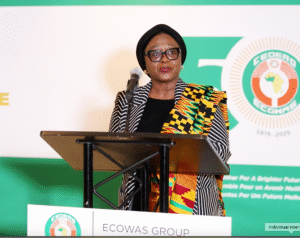
Delivering remarks on behalf of the United Nations, Ms. Martha Ama Akyaa Pobee, UN Assistant Secretary-General for Africa (DPPA-DPO), praised the partnership between the UN and ECOWAS and reaffirmed the UN’s commitment to supporting the region’s security, governance, and development priorities. She described the exhibition’s theme as one that captures the essence of West Africa’s journey, a story marked by unity, cultural diversity, and the determination to overcome challenges. She emphasized that, like any long journey, ECOWAS’ path has included highs and lows, yet continues to offer powerful lessons on resilience and transformation.

ASG Pobee noted that the exhibition is both a tribute to the founding fathers of ECOWAS and an inspiration for future action. She highlighted the strong collaboration between ECOWAS, the African Union, and the United Nations  particularly through the UN Office for West Africa and the Sahel (UNOWAS)  and encouraged continued joint efforts to address security threats, development challenges, and governance concerns.

“A united, integrated, prosperous, and peaceful West Africa remains possible,” she said, urging all partners to keep the vision alive.

A Celebration Shared by Leaders and the Public Alike

Throughout the evening, diplomats, guests, and members of the West African diaspora expressed deep pride and hope. Many reflected on how ECOWAS’ journey mirrors their own aspirations for unity and progress across the continent.

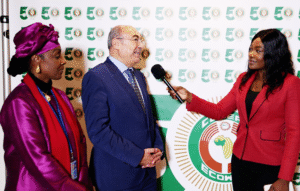
Among them was H.E. Ambassador Mohamed Edress, Permanent Representative of the African Union to the UN, who warmly congratulated ECOWAS and Ambassador Jawara-Njai on the Golden Jubilee. He noted that the “fifty years has been full of developments and events that have shaped our continent,” describing ECOWAS as “a positive example of the Africa we aspire to.”

He emphasized that as the OAU transformed into the African Union, the shared vision has remained the same: “a more integrated, more prosperous, more peaceful Africa.” The exhibition, he added, offers “inspiring landmarks of the ECOWAS project,” and he expressed hope that the progress showcased will “set the path for other regions of our beloved continent.”When asked for a message to Africans and friends of Africa, he responded:“Africa is on the rise. Africa is the future. And Africa is empowered by its youth and women.”

Guests echoed this sentiment throughout the night, hopeful that the next 50 years will bring deeper unity, stronger institutions, and greater opportunities for all West Africans. The evening concluded with a vibrant West African cocktail reception featuring live African music, symbolizing the creativity, spirit, and cultural richness of the region. As guests mingled, reflected, and celebrated, the atmosphere captured the essence of the exhibition: a community honoring its past while stepping confidently into its future.

As ECOWAS enters its next half-century, the exhibition stands as a powerful testament to what regional cooperation has made possible and what remains within reach. A peaceful, integrated, prosperous West Africa is not only possible, it is within our grasp.


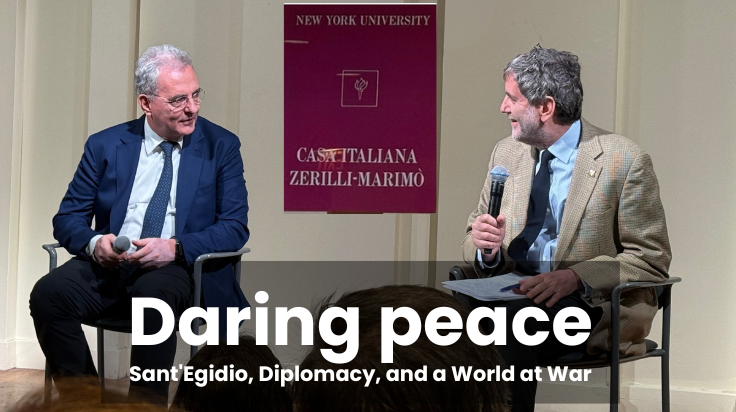
Daring peace: Sant’egidio’s method of dialogue in a world at war

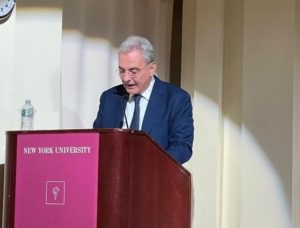
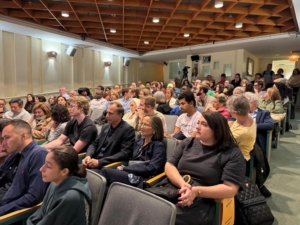
At a time when more than fifty armed conflicts rage across the globe, the urgency of peace could not be clearer. This was the message brought to New York University’s Casa Italiana Zerilli-Marimò, where Marco Impagliazzo, President of the Community of Sant’Egidio, delivered a powerful lecture entitled Daring Peace. The event, which also featured remarks from Andrea Bartoli, president of the Sant’Egidio Foundation for Peace and Dialogue and a Columbia University scholar, offered both a historical perspective and a call to action for peace building in today’s fractured world.

Sant’egidio’s legacy

Founded in Rome in 1968, Sant’Egidio is a lay Catholic movement rooted in prayer, service to the poor, and the pursuit of peace. Today, it is active in over 70 countries, working with marginalized communities while also mediating conflicts on the international stage. Its best-known achievement remains the Mozambique peace agreement of 1992, a landmark example of how patient dialogue can end years of bloodshed. Since then, Sant’Egidio has been involved in numerous other efforts, including initiatives in Algeria in the 1990s, and more recently in South Sudan.

The human cost of war

Professor Impagliazzo underscored why the theme of peace is so pressing today. In every war, he reminded the audience, “the first victims are the defenseless: children, women, the elderly, the disabled, and the poor.” War, he said, “continues to kill long after it has ended,” leaving deep wounds in societies where almost all casualties are civilians. Whether in Syria, Yemen, Libya, or South Sudan, the devastation has counted in the hundreds of thousands, if not millions, of lives lost or displaced.

Quoting Pope Pius XII’s famous words “everything is lost in war, nothing is lost in peace”, he invited listeners to reflect on the futility of violence and the enduring hope that dialogue offers.

The path of peace

From Mozambique’s experience, Impagliazzo emphasized that “peace is not achieved with a magic wand. It is built little by little.” Far from being naïve, peace requires realism, sacrifice, and perseverance. War may feel more instinctive, more logical, especially when fueled by the mentality of victimhood, but as he reminded the audience, “war begins long before weapons are used. Hate and propaganda begin in the mind.”

Building peace, therefore, means confronting the culture of the enemy and daring to see the other not as a stranger but as a brother. He stressed: “peacemaking is not synonymous with surrender. Politics can achieve what war cannot. History teaches us that war does not resolve crises; it multiplies them through revenge and more wars.”

Friendship as resistance

What can ordinary people do in such a bleak context? Impagliazzo urged resistance to hatred and nationalism. He insisted on the underestimated power of friendship, sympathy, and human connection: “We need the force of sympathy. We need to stop people from being infected with hatred. True resistance is taking the time to understand each other, exploring other ways, and giving peace a chance.”

Peace, he concluded, is inseparable from hope. “There is no peace without hope, but peace itself gives hope”. He adds that those who believe in peace are not the idealists. They are the realists. The true idealists are those who think you can magically solve problems through war.

A call to action

One distinctive aspect of Sant’Egidio’s method is confidentiality: creating discreet spaces where adversaries can meet, listen, and begin to articulate a shared vision for peace. Much of its work takes place away from the headlines, but its quiet impact has transformed nations.

In our current environment where the temptation to resort to arms remains strong, Sant’Egidio’s example is a reminder that the courage to dialogue is perhaps the most daring and the most necessary form of resistance.


Women leaders gather in New York for high-level forum on political leadership

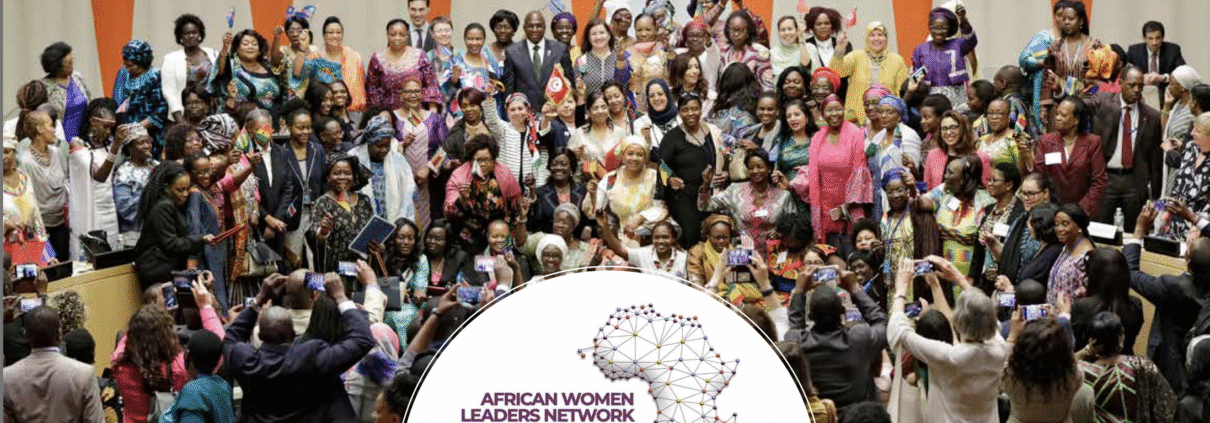
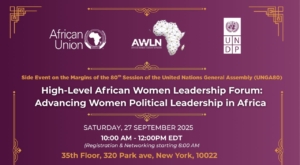
New York, September 27, 2025 — The Africa Women Leaders Network (AWLN) is set to host a landmark high-level forum on women’s political leadership in New York, on the margins of the 80th Session of  United Nations General Assembly(UNGA80). This event will bring together government delegates, parliamentarians, civil society actors, and youth leaders to chart a bold path forward for women’s leadership across Africa and the world under the theme, “High-Level Africa Women’s Leadership Forum: Advancing Women’s Political Leadership in Africa.”

Background

The timing of the forum is both symbolic and urgent. It comes as the international community reflects on the 30th anniversary of the Beijing Declaration, a milestone agreement that set the global agenda for gender equality. While progress has been made since 1995, across Africa, women are increasingly taking up leadership roles in governance, business, civil society, academia, and community development. Despite progress, barriers such as gender inequality, limited access to resources, and underrepresentation in decision-making spaces persist. The High-Level Africa Women Leadership Forum seeks to provide a platform for dialogue, networking, and strategic action to amplify women’s voices and leadership across sectors.

This gathering will therefore focus on accelerating change, not only by celebrating trailblazers but also by building alliances, mobilizing resources, and equipping women to step into political leadership.

The Africa Facility for Women in Political Leadership

Central to this effort is the Africa Facility for Women in Political Leadership, a flagship initiative in partnership with the United Nations Development Programme (UNDP) and the African Union (AU) under AWLN’s Governance and Political Participation pillar. The initiative aims to create a robust support system for women in politics through:

  • Leveraging leadership training to strengthen campaign management,
  • Conducting research and policy analysis to dismantle structural barriers
  • Establishing safe spaces to protect women against gender-based political violence

Distinguished leaders and trailblazers

The Forum will feature the voices of prominent leaders who have shaped the course of women’s leadership in Africa and globally, including:

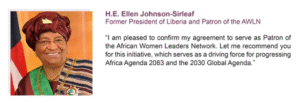
  • H.E. Ellen Johnson Sirleaf, Former President of the Republic of Liberia & AWLN Patron
  • H.E. Sahle-Work Zewde, Former President of the Republic of Ethiopia & AWLN Elder
  • H.E. Amina Mohammed, Deputy Secretary-General of the United Nations
  • Ms. Ahunna Eziakonwa, Assistant Administrator, Assistant Secretary General, and Director of the UNDP Regional Bureau for Africa

A platform for change

Beyond the policy discussions and institutional frameworks, this Forum is above all a gathering of women who carry stories, resilience, and vision. From presidents to young leaders, their presence in New York is a reminder that every step forward is hard-won, and every voice matters.

As the world reflects on 30 years since Beijing, this moment is not only about commitments: it is about courage, solidarity, and the belief that when women lead, the entire societies rise.

Charlie Kirk’s death and the hypocrisy of tolerance

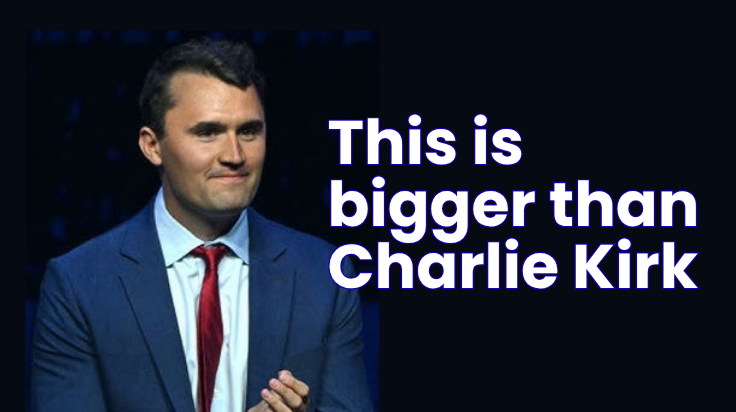
Charlie Kirk’s assassination is a tragedy period. A young man, barely 31 years old, gunned down while doing what he always did: speaking his truth in public. I did not agree with Charlie on everything. I often found his stance on guns too extreme, his nationalism too rigid, his immigration policies too harsh for someone like me, an immigrant who knows the long wait and the sacrifices to build a life here, and much more. But admiration does not require blind loyalty. I followed him because he was sharp, brilliant in debate, and unafraid to say what he believed, even when it made him unpopular. That courage deserves respect.

What devastates me more than the bullet that ended his life is the reaction I see from many who claim the banner of tolerance. Celebrating a man’s death because he was your political opponent is not justice. It is cruelty. It is hypocrisy. To mock his death because he opposed gun control is to treat a tragedy as a punchline. To cheer because you disliked his worldview is to reveal that your so-called tolerance was only a mask, one that falls the moment someone dares to think differently. And this celebration is not harmless noise on the internet; it reflects a deeper sickness in our society, a culture that has lost the ability to separate disagreement from dehumanization.

This is bigger than Charlie Kirk. This is about who we are becoming as a society. We are entering a dangerous age where disagreement equals dehumanization, where debate is replaced by cancellation, and where violence is justified if the target is the “enemy.” But what future can we build on that foundation? If every life is only as valuable as its ideology, then none of us are safe. The same logic that excuses violence against one opponent today can be used to excuse violence against another tomorrow. A society that normalizes selective empathy is a society that prepares its own downfall.

And let us not forget: Charlie Kirk was not only a commentator; he was a husband and the father of two young children. Behind the headlines and the controversies is a family whose life has been irreparably shattered. Two children will now grow up without their father, a wife will bury her partner, and yet some among us see only a political victory. If we cannot pause to recognize the human cost of this tragedy, then our moral compass is broken beyond repair.

I am African, I am Christian, I am an immigrant, and I hold views that put me on neither extreme of the political spectrum. I believe in compassion for the vulnerable and in responsibility for the able. I believe in protecting life while respecting pluralism. I believe in family, faith, democracy, fairness and individual freedom. And precisely because of those values, I cannot stand by silently when hatred masquerades as justice. Democracy itself cannot survive if we only grant empathy to those who agree with us. Freedom means nothing if we use it to cheer the silencing of others.

Charlie Kirk is gone, but the real test remains for the rest of us: will we use moments like this to deepen the spiral of division, or will we step back and remember the humanity of those we oppose? If we cannot mourn the death of someone we disagreed with, then we have lost something far greater than a political battle. We have lost our soul. And if a nation loses its soul, no amount of progress, no accumulation of wealth, and no victories in the culture wars will save it from collapse.

  We are not moving forward. We are marching backward into barbarism.

The Political orphanhood of african immigrant voters and Why this NYC race feels different

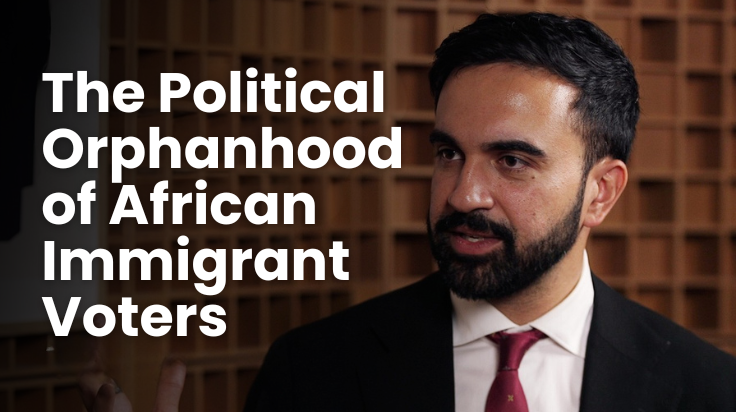
African immigrants in New York City live a paradox. We are visible in the workforce, in churches, in community associations — yet invisible when political campaigns draw their maps. We are nurses, Uber drivers, small business owners, home health aides, engineers, and teachers. We fill the city’s arteries with our labor. But politically, we remain unclaimed.

Split between two incomplete choices

We do not vote as a bloc. Some of us lean toward the Democratic Party because of its pro-immigration policies. Others quietly agree with Republican rhetoric on personal responsibility, entrepreneurship, and the dignity of hard work. But neither party has fully spoken to us. Democrats too often stop at representation and identity politics. Posing for photos in our cultural clothing, but rarely returning to discuss policy after the campaign is over. Republicans often speak to our values on work and family, but alienate us with rhetoric and policies that seem blind to our immigrant realities.

This is why, even in deep-blue New York, I have met African voters — many of them first-generation immigrants — who were drawn to Donald Trump. Not because they embraced every policy or every word, but because he spoke, loudly and unapologetically, about work, affordability, and the feeling that “everyday people” had been forgotten. In immigrant barber shops in the Bronx, over attiéké in Harlem restaurants, and in Sunday church gatherings, I have heard uncles and aunties say the same thing: “I don’t agree with everything, but he talks about real life.”

Our political orphanhood is compounded by the way our lives straddle two worlds. We send money back home while paying sky-high rent here. We juggle double shifts not only to survive, but to build enough credit to own a home. We dream of starting businesses but spend months navigating city bureaucracy. Many of us are registered to vote, yet don’t see ourselves in campaign messaging, so we quietly abstain.

A different kind of leftist candidate

That is why the candidacy of Assemblymember Zohran Mamdani feels different. He is from the left, yet his campaign is not built on baiting controversial identity battles and baseless fear mongering. Instead, he is talking about the kitchen-table issues that shape the lives of working-class families: fare-free buses so workers keep more of their paycheck; rent-stabilization that actually protects tenants; higher wages that match the real cost of living in New York; universal childcare so parents can work without fear of losing everything to daycare bills.

These are not abstract promises. They touch daily life. For the Ghanaian home health aide in the Bronx who spends $132 a month on a MetroCard. For the Senegalese father in Queens who pays half his salary in rent. For the young Burkinabè graduate in Harlem juggling two part-time jobs because entry-level wages can’t cover student loans.

In my 11 years in the United States, I have seen many politicians pass through our spaces: shaking hands, speaking a few words in our languages, posing for photos, only to vanish after Election Day. I have never felt truly comfortable aligning with one, until now. Not because of party loyalty, but because the conversation is about life, not labels.

This race is not about left versus right, progressive versus moderate. It is about whether New York City can elect a leader who understands that its future depends on those who still believe in its promise enough to keep building here. The African diaspora in NYC is large enough to matter, diverse enough to shape outcomes, and tired of being politically invisible. This election could be the moment we step forward.